4 Dealer Checks Before Buying Used: Santa Fe vs Sorento
If you want more interior room, stronger towing, and a punchier turbo option, the Hyundai Santa Fe is the better pick. If you want a lower starting price and more hybrid or plug-in hybrid choices, the Kia Sorento makes more sense. Trim level changes some of these trade-offs, so the right answer depends on which powertrain and package you actually plan to buy. The sections below walk through the numbers and give you a checklist for the test drive.
TL;DR:
- Buyers needing more interior space, towing power, and a punchier turbo should consider the Santa Fe, especially for short trips in the third row.
- The Sorento's lower starting price and wider hybrid and plug-in hybrid lineup make it a better choice for budget-conscious shoppers and electrified options.
- Towing capacity varies significantly by trim and equipment, so verify the specific tow package on each vehicle before purchase.
- Fuel savings from hybrid and PHEV trims depend on driving habits, with plug-in hybrids offering electric-only range ideal for short commutes.
- Used vehicle reliability concerns and recent recalls mean VIN checks are essential before buying either model.
Table of Contents
- Headline differences at a glance: size, engines, fuel, and price
- How the base, turbo, hybrid, and PHEV powertrains compare
- Real differences in passenger room, third-row practicality, and cargo space
- EPA MPG, hybrid efficiency, PHEV range, and ownership trade-offs
- Safety ratings, warranty coverage, and recent recall signals
- How starting price and optioning affect real-world value
- Matching each SUV to the right kind of buyer
- A dealer's view on Santa Fe and Sorento trade-offs
- How Clearwater Largo Automotive helps you land the right one
- FAQ
- Sources
Headline differences at a glance: size, engines, fuel, and price
Both SUVs compete in the same midsize family lane, but they split in a few clear ways once you look past the brochure photos. According to KBB's comparison, the Santa Fe is roomier and generally more powerful, while the Sorento answers back with plug-in hybrid availability and a friendlier entry price.
- The Santa Fe's third row works better for adults on short trips, while the Sorento's third row is tighter and better suited to kids.
- Hyundai offers a hybrid Santa Fe, while Kia sells both a hybrid and a plug-in hybrid Sorento, giving Kia the wider electrified lineup.
- The Sorento typically starts lower than the Santa Fe, though adding AWD, hybrid, or PHEV hardware closes that gap quickly.
- Both brands back their new vehicles with similar warranty coverage, but towing capacity varies by trim and drivetrain, not just by nameplate.
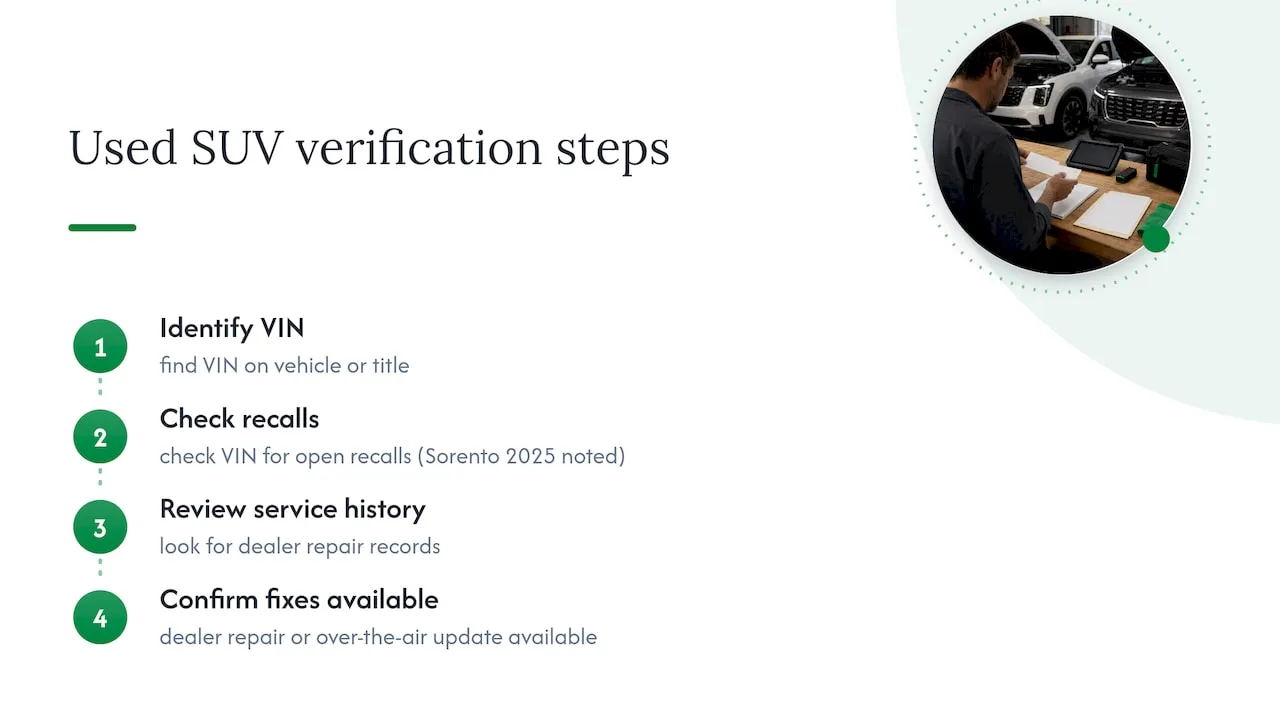
If you're shopping used, pull the VIN before you fall in love with a listing. A quick check against Nhtsa tells you whether a recall is still open on that specific vehicle.
How the base, turbo, hybrid, and PHEV powertrains compare
The base engines in both SUVs are adequate for daily driving but feel strained once you load up passengers and cargo. Step up to the turbo trims and the difference is noticeable: quicker merges, more confident passing, and a Santa Fe that Car and Driver rates as the stronger performer in head-to-head testing.
Electrified options split the two brands in different directions. Hyundai sells a hybrid Santa Fe aimed at buyers who want better fuel economy without plugging in, while Kia offers both a hybrid and a PHEV Sorento, giving plug-in shoppers an option Hyundai doesn't match in this comparison.
- Base trims suit light-duty commuting and errands, not frequent towing or heavy cargo runs.
- Turbo trims add real power but usually carry a price premium and a fuel economy penalty.
- The Sorento PHEV offers electric-only range for short trips, though AFDC guidance suggests sizing that benefit around your actual daily miles rather than assuming a federal rebate will offset the cost.
Pro Tip: Towing capacity depends heavily on trim and factory equipment, so always confirm the specific tow package on the vehicle you're considering before you assume it can handle your trailer.
Real differences in passenger room, third-row practicality, and cargo space
Numbers on a spec sheet only tell part of the story, so it helps to think about who actually sits where. The Santa Fe's extra inches in the second and third rows translate into real comfort for taller passengers, while the Sorento's third row works best for kids or short adults on quick errands.
Cargo space follows the same pattern. The Santa Fe generally holds more behind the third row and with seats folded flat, which matters if you haul strollers, sports gear, or luggage for a full family. KBB's spec tables back up the Santa Fe's cargo advantage across trims.
- Adults can ride comfortably in the Santa Fe's third row for short trips; the Sorento's third row fits kids more easily than grown-ups.
- The Santa Fe typically offers more cargo volume behind the third row, useful for stroller-and-grocery runs.
- Both models offer family-friendly touches like rear climate vents and easy-access second-row folding, worth testing in person.
If you're still narrowing down body style and seating needs, our guide for parents choosing an SUV walks through the gear-and-cargo math in more detail.
EPA MPG, hybrid efficiency, PHEV range, and ownership trade-offs
Fuel economy is where the electrified options start to pay for themselves, assuming your commute matches the technology. Hybrid versions of both SUVs post better combined EPA figures than their gas-only counterparts, and the Sorento PHEV adds a stretch of electric-only driving on top of that.
- Gas-only trims deliver the lowest sticker price but the highest fuel costs over time for daily commuters.
- Hybrid trims close that gap with better combined fuel economy, no plugging in required.
- The Sorento PHEV's electric-only range fits short commutes well, though AFDC's incentive guidance cautions against counting on a large federal credit to offset the upfront cost.
Whether the hybrid or PHEV premium pays back for you depends on how many miles you drive and how you drive them. Our hybrid vs. gas cost comparison breaks down that math for a range of commuting patterns.
Safety ratings, warranty coverage, and recent recall signals
Both SUVs come with a similar lineup of driver-assistance features, including automatic emergency braking and lane-keeping assist, and both carry the same general shape of new-vehicle warranty: a shorter bumper-to-bumper term paired with a longer powertrain term, consistent with the 5-year/60,000-mile and 10-year/100,000-mile structure common across these brands.
Reliability is where the two diverge. Consumer Reports flags reliability concerns for the 2025 Kia Sorento and documents multiple recalls, a reminder that model year and trim matter as much as the nameplate.
Before you buy either model used, check the VIN against open recalls. Some recent Sorento campaigns involve instrument panel software and engine-related fixes, and a dealer repair or over-the-air update may already be available depending on the vehicle's service history.
How starting price and optioning affect real-world value
The Sorento's lower entry price is real, but it narrows fast once you start adding the features most family buyers actually want. KBB's 2026 comparison notes that a turbo upgrade, AWD, or hybrid/PHEV powertrain adds cost on both vehicles, and the gap between a well-equipped Santa Fe and a well-equipped Sorento often shrinks to a few thousand dollars.
- Compare similarly equipped trims, not base-to-base prices, before deciding which SUV actually costs less.
- Budget for fuel, maintenance, and insurance differences tied to powertrain choice, not just the sticker price.
- On a used example, a thorough inspection and vehicle history report protect you from inheriting someone else's deferred maintenance.
A payment calculator can help you see how trim and powertrain choices shift your monthly number before you commit.
Matching each SUV to the right kind of buyer
Specs only matter once you map them to how you actually drive and live. A family that tows a boat or trailer regularly and needs real third-row room will get more out of the Santa Fe's power and cargo space. A commuter chasing lower fuel costs without a towing need fits the hybrid trims on either model. A budget-conscious buyer who wants a plug-in option leans toward the Sorento PHEV.
- Confirm third-row access and legroom with your actual passengers, not just the spec sheet.
- Test acceleration merging onto a highway, since turbo and base engines feel very different under load.
- Check infotainment response and phone pairing, since screen size alone doesn't tell you much about usability.
- Run the VIN for open recalls before you sign anything, especially on a used Sorento.
A dealer's view on Santa Fe and Sorento trade-offs
We see buyers torn between these two more than almost any other matchup, and the trims that tend to hold up best as used buys are the ones with factory tow packages and documented service records, not the cheapest listing on the lot. A thorough inspection and history check before you buy saves you from surprises a clean exterior can hide. Negotiate on total price, not monthly payment, and line up financing before you fall for a specific unit.
— CL Auto
How Clearwater Largo Automotive helps you land the right one
Comparing specs only gets you so far when every used Santa Fe or Sorento on the market has a different history behind it. Vehicles are hand-inspected before listing, prices are posted upfront without hidden fees, and a history report is provided.

- Browse our hand-picked used cars already inspected and priced with no surprises.
- Ask us to source a specific Santa Fe or Sorento trim if you don't see the right one in stock.
- Talk to us about financing options before you commit to a trim or powertrain.
If you know the trim and powertrain you want, tell us and we'll go find it for you.
FAQ
What is more reliable, Kia Sorento or Hyundai Santa Fe?
Reliability varies by model year and trim, but Consumer Reports has flagged reliability concerns for the 2025 Kia Sorento, including multiple recalls. Always check the specific VIN and recent recall history before buying either model used.
Is Kia Sorento bigger than Santa Fe?
No, the Hyundai Santa Fe is generally the larger and roomier of the two, according to KBB's comparison. The Santa Fe typically offers more third-row space and cargo volume behind the rear seats.
What is better, Kia Sorento or Santa Fe?
It depends on your priorities: the Santa Fe suits buyers who want more room, power, and towing capability, while the Sorento suits buyers who want a lower starting price and more hybrid or plug-in hybrid choices. Trim and powertrain selection can shift that balance, so compare similarly equipped versions before deciding.
What are the negatives of a Hyundai Santa Fe?
The Santa Fe typically starts at a higher price than the Sorento, and its turbo and hybrid trims add further cost. Buyers considering a used Santa Fe should still verify recall history and transmission type, since older DCT-equipped units are less smooth at low speeds than newer automatic-equipped examples.
Sources
- 2025 Kia Sorento Reliability - Consumer Reports
- 2026 Kia Sorento vs. 2026 Hyundai Santa Fe Comparison - Kelley Blue Book
- 2026 Hyundai Santa Fe vs. 2026 Kia Sorento - Car and Driver
- Alternative Fuels Data Center — Laws & Incentives: Federal EV tax credits