
Sell Before 50,000–70,000 Miles: When to Sell Your Car in the U.S.

The best time to sell your car is when you have positive equity and before a major repair, mileage milestone, or warranty expiration eats into its value. That means checking your loan payoff against your car's worth before anything else. Seasonal timing can nudge your price higher, but it is a secondary factor compared to catching that window.
TL;DR:
- Selling during seasons of higher demand, such as spring for sedans or fall for trucks, can boost your selling price, but your equity matters more.
- When your car's market value surpasses your loan payoff, especially after 3 to 6 years of ownership or 50,000 to 70,000 miles, it becomes a good selling window.
- Avoid trading in underwater vehicles to prevent rolling negative equity into your next car, and obtain multiple dealer offers to benchmark your car’s true value.
- Preparing your car with repairs for safety issues, thorough cleaning, and detailed documentation can increase your sale price and streamline the process.
- Carefully measure your loan payoff versus car value and act promptly if facing costly repairs, expired warranties, or urgent cash needs.
Table of Contents
- Timing windows: season, age, and mileage that affect resale value
- Financial check: equity, negative equity, and the crossover point
- Private sale, trade-in, or instant offer: which fits your situation?
- Getting your car ready to list or trade in
- Legal and paperwork essentials for selling a car in the U.S.
- How to decide right now: a quick checklist
- How Clearwater Largo Automotive helps sellers in Clearwater
- A practical take on timing versus equity
- Get a transparent quote for your car today
- FAQ
- Sources
Timing windows: season, age, and mileage that affect resale value
Spring and early summer tend to bring stronger demand for sedans and commuter cars, as buyers shop ahead of summer road trips and tax refunds hit bank accounts. Trucks and AWD vehicles often see a demand bump in fall and winter, when buyers start thinking about winter driving and hauling needs.
Ownership length matters too. Consumer-facing depreciation analysis points to a sweet spot around the 3 to 6 year mark, after the steepest depreciation curve has passed but before major repair bills or mileage thresholds start dragging down offers. That same analysis flags 50,000 to 70,000 miles as a common point where retail value softens, with another drop once you cross 100,000 miles.
A few patterns to keep in mind:
- Convertibles and sporty cars often sell better in late spring through summer.
- Luxury vehicles depreciate faster early on, so selling before year four or five can preserve more value.
- Trucks hold value longer than average but see the most competitive offers in fall.
These windows help you decide when, but your equity position decides whether.
Financial check: equity, negative equity, and the crossover point
Before you list anything, run the math. Here is how:
- Pull your car's trade-in and retail values using Kelley Blue Book's tools.
- Call your lender or check your loan app for your exact payoff balance, not just your monthly statement figure.
- Subtract the payoff from the value estimate. A positive number is equity you can walk away with or roll into a down payment.
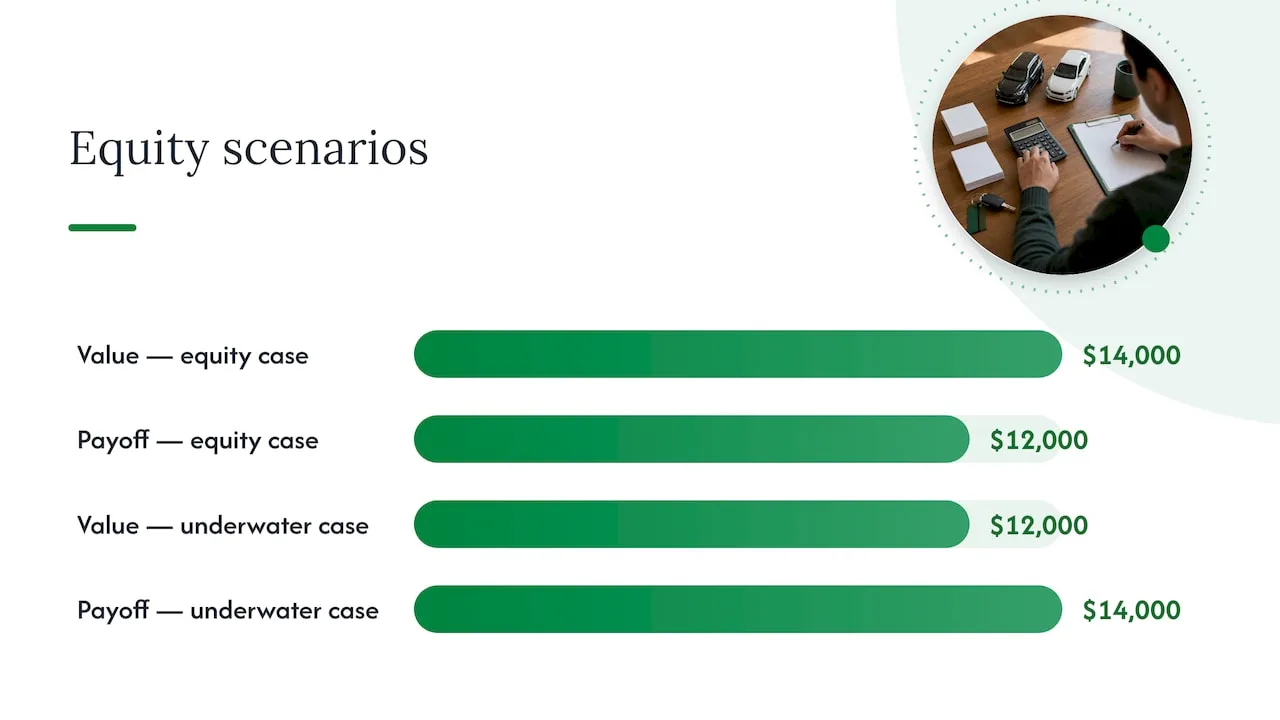
- If the payoff is higher than the value, you are underwater, and trading in usually rolls that gap into your next loan, raising the total cost of your new car.
Say your car's trade-in value comes back at $14,000 and you owe $12,000. You would walk away with $2,000 in equity on a trade-in, or potentially more through a private sale. Flip those numbers, owing $14,000 against a $12,000 value, and trading in means carrying a $2,000 deficiency into your next purchase.
This is the crossover point sellers should track: the moment your car's market value overtakes what you still owe. It usually lands in the second half of a typical loan term.
Pro Tip: Get two or three dealer offers in writing before you sell privately. Even if you do not take them, they give you a real floor to negotiate against.
If your loan is still active, our guide to selling a car with a loan walks through the payoff steps in more detail.
Private sale, trade-in, or instant offer: which fits your situation?
Each selling method trades speed for profit differently, and the right pick depends on what you need most right now.
- Private sale usually nets the highest payout but takes the most time, plus you'll need to screen buyers and arrange a safe meeting and payment method.
- Trade-in is the fastest and most convenient option, and in some states it can lower the sales tax you owe on your next vehicle, though Kelley Blue Book notes it typically pays less than selling privately.
- Instant cash offers give you a fast, no-haggle number, useful when you need cash quickly or just want the car gone, but the convenience usually costs you some of the top end of your car's value.
If you are already underwater, a trade-in paired with a backup cash offer limits how much deficiency you carry forward. If you have strong equity and time on your side, a private sale often makes the most financial sense. For hands-on comparisons, our piece on selling to a dealer covers how to negotiate a fair trade-in number.
Getting your car ready to list or trade in
A little prep work ahead of a sale almost always pays for itself.
- Fix anything safety-related, such as worn brakes or a cracked windshield, since buyers and dealers will flag these fast.
- Skip cosmetic fixes that cost more than they add to the sale price, but disclose them honestly.
- Wash, detail, and take clear photos in daylight, inside and out, including the odometer and VIN plate.
- Pull a vehicle history report so buyers can verify mileage and accident history themselves.
- Set your asking price using the gap between trade and retail estimates, then use any dealer offers you collected as a floor.
Before sinking money into repairs, compare a few shop quotes. Kwik Kar Spring Valley's guide to comparing repair estimates is a useful resource for figuring out which fixes are worth doing before a sale.
Pro Tip: If you're selling privately, meet buyers in daylight at a public location, and only accept certified funds or a verified bank transfer before handing over the keys.
Legal and paperwork essentials for selling a car in the U.S.
A handful of disclosures and documents protect you and the buyer during the handoff.
Disclose the accurate odometer reading in writing; NHTSA notes that odometer fraud still affects hundreds of thousands of vehicles each year and offers tips for spotting tampering.
If you are buying from or selling through a dealer, the FTC's Used Car Rule requires a Buyers Guide to be posted on any vehicle at dealers who sell more than five used cars a year.
Transfer the title through your state's DMV process, which varies by state, so check your state's specific form and fee requirements.
If your car is leased or still financed, review the Federal Reserve's guidance on early termination and payoff options before you commit to selling.
Our guide to Florida title and release paperwork walks through same-day filing steps for sellers in our area.
How to decide right now: a quick checklist
Run through this in the next few minutes to know where you stand.
- Sell now if you're facing a safety-related repair, an expired warranty with costly fixes ahead, or an urgent need for cash.
- Hold off if you're still underwater on your loan, there's no major expense looming, and a seasonal demand window for your vehicle type is approaching.
- Either way, get your exact payoff balance from your lender today.
- Collect two or three valuations, including a trade estimate and a private-sale comparison, using a tool like our payment calculator to see how payoff affects your next purchase.
- Gather your title, maintenance records, and odometer disclosure so you're ready to move the moment you decide.
How Clearwater Largo Automotive helps sellers in Clearwater
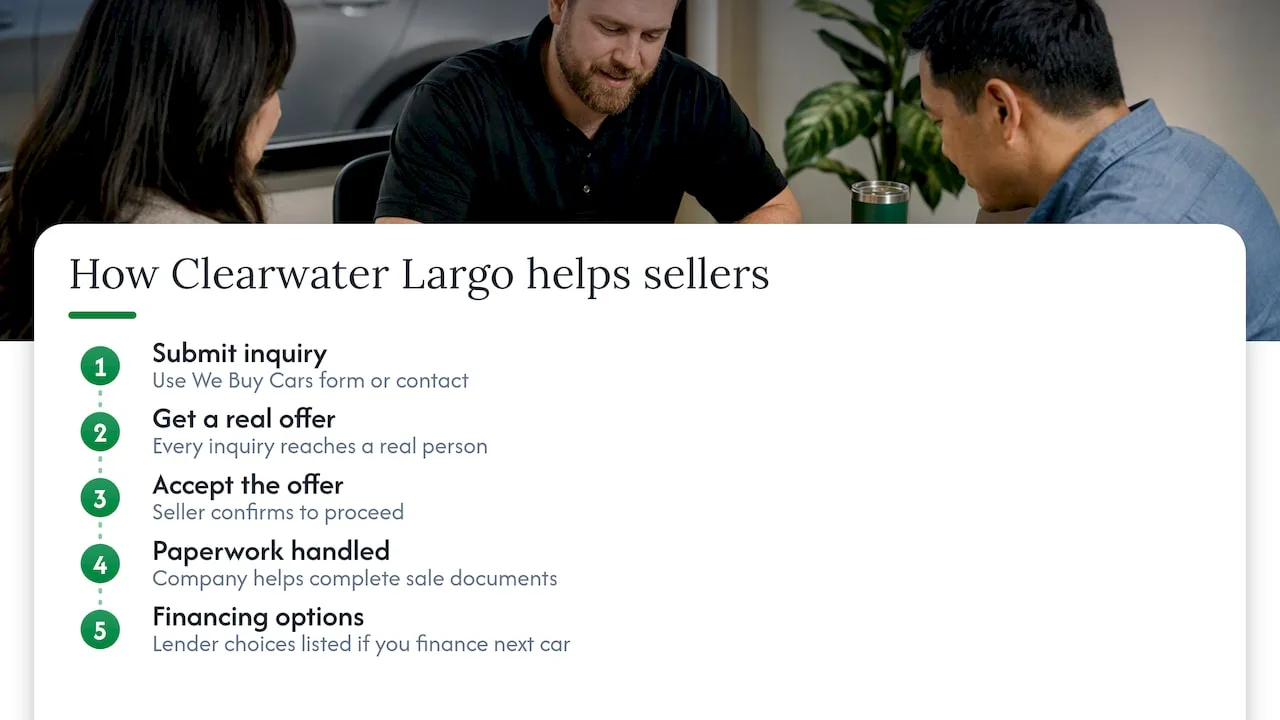
Through our We Buy Cars service, we make offers on vehicles purchased directly from local owners. Every inquiry goes to a real person, so you get a straight answer on your car's value. We also help with paperwork once you accept an offer, and if you're financing your next vehicle, our financing page covers available lender options.
A practical take on timing versus equity
Chasing the perfect season to sell sounds smart, but it rarely beats the math of your actual equity position. We'd rather see a seller sell in a slow month with cash in hand than wait for spring while sliding further underwater. Run the equity check first. Let the calendar be a tiebreaker, not the deciding factor.
— CL Auto
Get a transparent quote for your car today
If you'd rather skip the private-sale hassle, we buy cars directly from local owners with the same transparent pricing we put on every vehicle we sell.
Request a no-obligation quote through our sell your car page, and a real person on our team will walk you through your offer and next steps.
FAQ
What is the $3,000 rule for cars?
This common rule of thumb suggests avoiding a repair that costs more than your car's current trade or resale value, since the fix may not be worth the investment. It's a rough guideline, not a fixed formula, so always weigh the repair cost against your specific car's current market value first.
At what point should I sell my car?
Sell when you have positive equity and before a major repair, mileage milestone, or warranty expiration is likely to reduce your car's value. Many sellers find the window between 3 and 6 years of ownership, or before 50,000 to 70,000 miles, balances depreciation against reliability.
How much does a car salesman make on a $10,000 car?
Dealer profit margins vary widely by vehicle, location, and negotiation, and this figure isn't publicly standardized. Your best move as a seller or trade-in customer is to get a written trade-in offer and compare it against a private-sale estimate to see where the real value gap sits.
What is the 30-60-90 rule for cars?
This isn't a standard, widely recognized rule in the auto industry, and definitions of it vary depending on the source. If you've seen it referenced for financing or depreciation timing, it's worth confirming the specific context before relying on it.
Sources
- Keep or trade in: What to do with your current vehicle
- Vehicle Leasing: Leasing vs. Buying: Early Termination
- Dealer's guide to the used car rule | Federal Trade Commission
- Odometer fraud