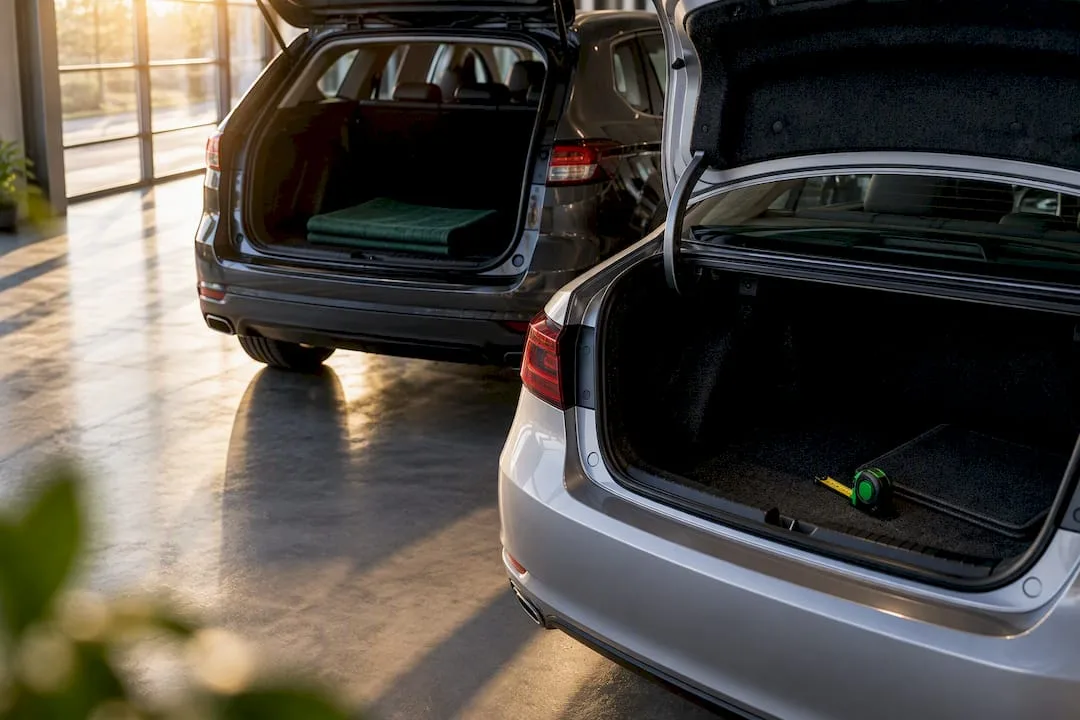
4 Routines That Decide: Hatchback vs Sedan and a Used Car Checklist
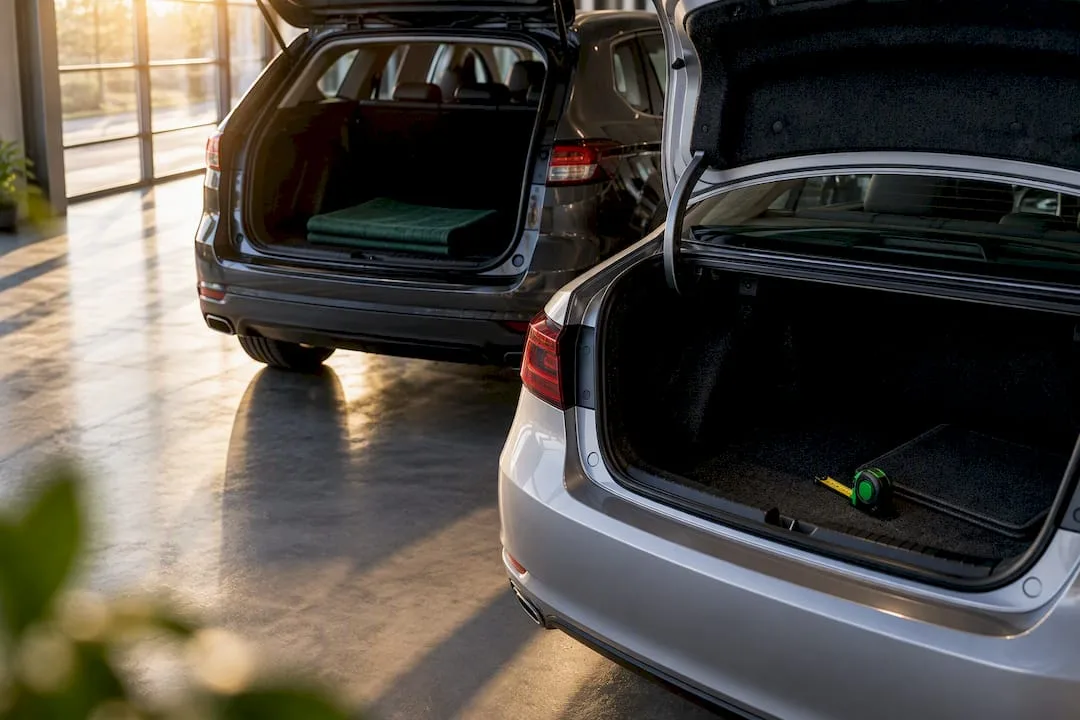
Choose a hatchback if you routinely haul bulky gear and park in tight city spots. Choose a sedan if you want a sealed trunk, a quieter cabin, and classic rear-seat comfort. For most shoppers, the real differences show up in cargo flexibility, passenger space, and resale value, not in fuel economy or horsepower. We'll walk through cargo, comfort, safety, cost, and a checklist you can use on your next test drive.
TL;DR:
- Cargo capacity differences are more about opening design and seat flexibility than raw volume, with hatchbacks accommodating bulky items more easily through taller openings.
- Rear-seat headroom often favors hatchbacks due to their upright roofline, but sedans usually offer more legroom, making the choice depend on passenger comfort priorities.
- Fuel economy differences between hatchbacks and sedans with the same platform are minimal, often influenced more by weight, aerodynamics, and trim-specific features.
- Safety and visibility are more affected by engineering and safety features than body style, though hatchbacks typically provide better rear visibility.
- Used hatchbacks may require inspection of hatch seals and struts, while sedans need thorough checks for trunk water intrusion; ownership costs depend more on trim and safety equipment than trunk shape.
Table of Contents
- Hatchback vs Sedan: The Design Difference That Drives Everything Else
- Cargo Capability: Why the Bigger Number on Paper Doesn't Always Win
- Rear-Seat Comfort: Legroom vs Headroom Tradeoffs
- Performance and Fuel Economy: Don't Expect a Big Gap
- Safety, Visibility, and Cabin Noise
- Cost, Pricing Patterns, and Resale Value
- Which Should You Choose? Match the Body Style to Your Routine
- Buying Used: How Body Style Changes What You Should Inspect
- Impact on Insurance Costs and Coverage Differences
- Market Trends and Popularity Shifts Between Hatchbacks and Sedans
- Environmental Impact: Emissions and Recyclability
- A Local Dealer's View on How Buyers Actually Decide
- Sources
- FAQ
Hatchback vs Sedan: The Design Difference That Drives Everything Else
Every debate about hatchback vs sedan practicality traces back to one engineering choice: how the trunk connects to the cabin. Sedans use a three-box design. You've got the engine bay, the passenger cabin, and a separate, enclosed trunk, each its own compartment. Hatchbacks use a two-box design, where the cargo area and passenger cabin share one open space behind a rear door that swings up instead of out, as Car and Driver explains.
That separation (or lack of it) changes how the car feels in daily use:
- A sedan's trunk stays sealed off from the cabin, so road noise, exhaust smell, and rattling cargo stay out of earshot.
- A hatchback's rear door opens into one continuous space, which is why you can slide a bike in at an angle a sedan's trunk opening would never allow.
- Sedans generally keep cargo out of sight from outside the car; hatchbacks show whatever's back there through the rear glass unless you use a cargo cover.
Think of a Honda Civic sedan next to a Honda Civic hatchback. Same platform, same engine choices, same badge. The sedan gives you a locked box behind the back seat. The hatchback gives you a wide-open bay that swallows a stroller, a golf bag, and a case of water without much thought.
Cargo Capability: Why the Bigger Number on Paper Doesn't Always Win
Trunk specs lie, or at least they mislead. A sedan might advertise more total cubic feet than a hatchback's cargo hold, and on a spec sheet, that looks like a win. In practice, the shape of the opening matters more than the volume behind it.
Hatchbacks typically use a taller liftgate opening and fold-flat rear seats, which means bulky items that would never fit through a sedan's narrow rear-deck slot slide right in, even when the sedan's trunk measures larger in raw liters, according to Car and Driver. This is the aperture problem. It trips up buyers who shop by spec sheet instead of by tape measure.
Cargo volume measurement itself is inconsistent. Different manufacturers use different standards (SAE versus VDA methods, for instance), and opening geometry can make two vehicles with similar published cargo numbers behave completely differently in real life, according to RACV. The number on the window sticker rarely tells you whether a bike fits.
Run through a few common loads and the pattern holds:
- A bicycle with the front wheel removed usually needs a hatchback's tall opening; most sedan trunk lids simply won't clear the frame.
- Flat-pack furniture boxes, the kind that come from big-box furniture stores, tend to be long and low. A hatchback's fold-flat rear seats create a straight load floor a sedan's trunk hinge geometry can't match.
- A stroller and a week of grocery runs fit in either body style, but the hatchback lets you stack items higher without closing a trunk lid over them.
The seat-folding flexibility is the real differentiator. Sedans fold their rear seats too, but the pass-through into the trunk is usually a narrow slot. Hatchbacks turn the whole back half of the car into one flat deck.
Rear-Seat Comfort: Legroom vs Headroom Tradeoffs
Sedans often win on rear legroom because their longer wheelbase and dedicated trunk space let engineers stretch the back seat rearward without worrying about cargo intrusion. That extra length between hip and knee matters if you regularly drive adults in the back seat, not just kids in booster seats.
Headroom tells a different story. A hatchback's more upright rear roofline can provide noticeably better rear-seat headroom than a sedan, whose sloped trunk-line styling often eats into space right where a taller passenger's head sits, according to Mazda. If you've ever ducked getting into the back seat of a sporty sedan, that's the sloped roofline working against you.
A few things worth checking before you commit to either body style:
- Sit in the actual back seat of the actual trim you're considering. Rear headroom and legroom numbers vary by trim, not just by model.
- Bring the tallest regular passenger with you. A six-foot-two passenger will feel a headroom pinch a five-foot-six passenger never notices.
- Check the specific model's published interior dimensions rather than assuming "sedan" or "hatchback" guarantees a result.
Neither layout wins outright here. It depends on whether your household needs more knee room or more head room, and that's a test-drive question, not a brochure question.
Performance and Fuel Economy: Don't Expect a Big Gap
When a hatchback and sedan share the same platform and engine, expect similar fuel economy and similar acceleration. The same model's hatch and sedan variants typically share engines and drivetrains, so whatever differences show up come down to packaging, not mechanical performance, according to CarBuzz.
That said, small gaps do appear, and they come from a few predictable sources:
- Weight. Hatchbacks sometimes carry a bit more curb weight than their sedan siblings, or vice versa, depending on trim-specific equipment.
- Aerodynamics. A sedan's tapered rear end can cut through air slightly more efficiently than a hatchback's blunter tail, though the difference is usually marginal.
- Wheel and tire size. Sportier hatchback trims often come with larger wheels and lower-profile tires, which can shave a mile or two off the EPA rating compared to a base sedan trim.
None of these factors add up to a dramatic difference in normal driving. If fuel economy is a deciding factor for you, skip the guesswork and check the EPA ratings for the exact trims you're cross-shopping, since a loaded hatchback trim can post different numbers than a stripped-down sedan trim of the same model. If you're weighing fuel costs more broadly, our breakdown of hybrid versus gas ownership costs covers what actually moves your monthly fuel bill.
Safety, Visibility, and Cabin Noise
Hatchbacks generally give you better rear visibility. The shorter rear deck and larger rear glass mean less blind spot when you're backing out of a parking space or checking your mirrors on the highway. Sedans trade that visibility advantage for a quieter cabin. That enclosed trunk acts as a buffer against road noise and keeps whatever you're hauling out of view from outside the car, which matters if you're worried about someone eyeing a laptop bag through the window.
Structurally, body style alone doesn't determine crash safety. Two vehicles with different silhouettes can post very different results depending on the manufacturer's engineering, materials, and crash structure design.
- Rear visibility tends to favor hatchbacks because of their shorter, more upright rear glass.
- Cabin noise tends to favor sedans because the trunk isolates road and wind noise from the cabin.
- Cargo visibility favors sedans, since a closed trunk hides valuables that a hatchback's open cargo area exposes through the rear window.
Pro Tip: Don't rely on body style as a safety shortcut. Pull up the specific model year's rating from IIHS or NHTSA before you buy, and pay attention to whether your trim includes a standard rearview camera and blind-spot monitoring, since those features often matter more than the shape of the trunk.
Cost, Pricing Patterns, and Resale Value
Pricing patterns between hatchback and sedan trims of the same model don't follow a single rule, but a few tendencies show up often enough to plan around. Hatchbacks sometimes carry a slight price premium over an equivalent sedan trim when new, particularly on performance-oriented variants, but they can also hold their value competitively on the used market. Some consumer and industry analyses show hatchbacks holding value well against sedans in certain model lines, which makes resale worth checking before you assume one body style is the "cheaper" choice long term.
Ownership costs, though, usually come down to factors that have nothing to do with the trunk shape:
- Insurance premiums vary more by trim, safety features, and repair-cost history than by body style alone.
- Parts and labor costs track the platform and manufacturer, not whether the rear door swings up or the trunk lid pops open.
- Depreciation curves differ model by model. A popular hatchback in one segment might depreciate faster than its sedan counterpart in another.
Before you commit, pull up local used listings and cross-reference KBB or Edmunds values for the exact model, trim, and year you're considering. A three-year-old hatchback and its sedan sibling can carry noticeably different resale numbers depending on regional demand.
Which Should You Choose? Match the Body Style to Your Routine
The lifestyle you actually live matters more than any spec sheet. Experts frame this as fundamentally a lifestyle decision: hatchbacks tend to suit city drivers and anyone hauling bulky gear regularly, while sedans suit buyers who prioritize a quieter cabin and concealed trunk space, according to CarBuzz.
- City commuters navigating tight parking. A hatchback's shorter overall length and better visibility make parallel parking and garage maneuvering noticeably easier. Trade-off: less trunk privacy and sometimes more road noise.
- Families on frequent road trips. A sedan's quieter cabin and separate trunk keep luggage sealed away from car seats and kids in the back. Trade-off: less flexibility for oddly-shaped cargo like a Pack 'n Play or a cooler.
- Hobbyists hauling bulky gear. Cyclists, campers, and anyone who regularly moves furniture or sports equipment will get more use out of a hatchback's fold-flat floor. Trade-off: less concealed storage and a bit more exposure to prying eyes.
- Style-focused buyers. Some drivers simply prefer a hatchback's sportier stance, while others prefer a sedan's traditional lines; styling preference genuinely sways decisions as much as any practical column in this article.
Pick your top two priorities from cargo, comfort, quiet, or looks, then test-drive the shortlisted models with those two needs in mind. If you're still torn between a hatchback and sedan version of the same model, our guide on picking the right vehicle for parents hauling gear walks through the same prioritization exercise for a related decision.
Buying Used: How Body Style Changes What You Should Inspect
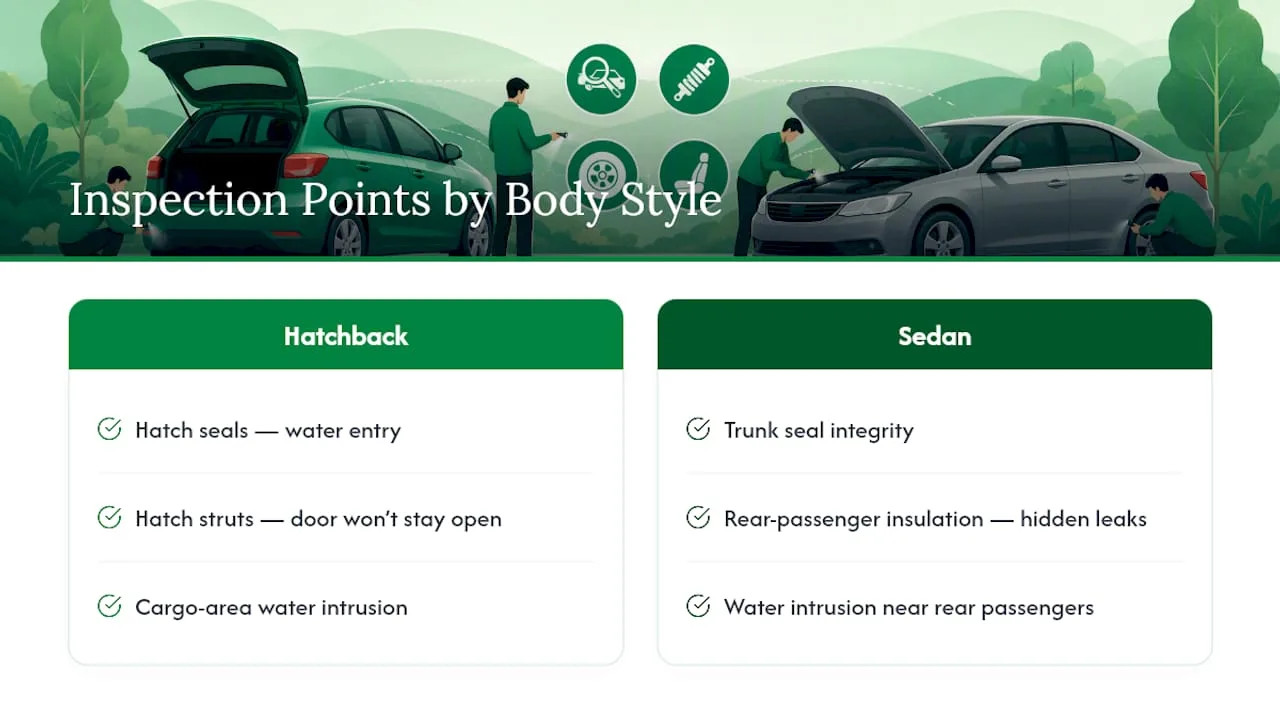
Body style changes what can go wrong on a used car, and it changes what a thorough inspection should catch. Hatchback buyers should have someone check the hatch seals and struts, since worn struts mean the rear door won't stay propped open, and cracked seals let water into the cargo area. Sedan buyers should check the trunk seal integrity and look for signs of water intrusion around the rear-passenger insulation, an easy spot for leaks to hide unnoticed for months.
That's part of why some dealerships provide a full inspection and history report before any vehicle hits the lot, so you're not the one discovering a bad hatch strut weeks after buying. If you already know you want a specific configuration, whether that's a hatchback with a particular trim or a sedan with a certain seat package, our vehicle sourcing service can track one down instead of making you settle for whatever's sitting on a lot.
Pro Tip: On the test drive, roll down every window at highway speed for thirty seconds. Road noise differences between hatchback and sedan versions of the same model show up far more clearly at 60 mph than they do idling in a parking lot.
Impact on Insurance Costs and Coverage Differences
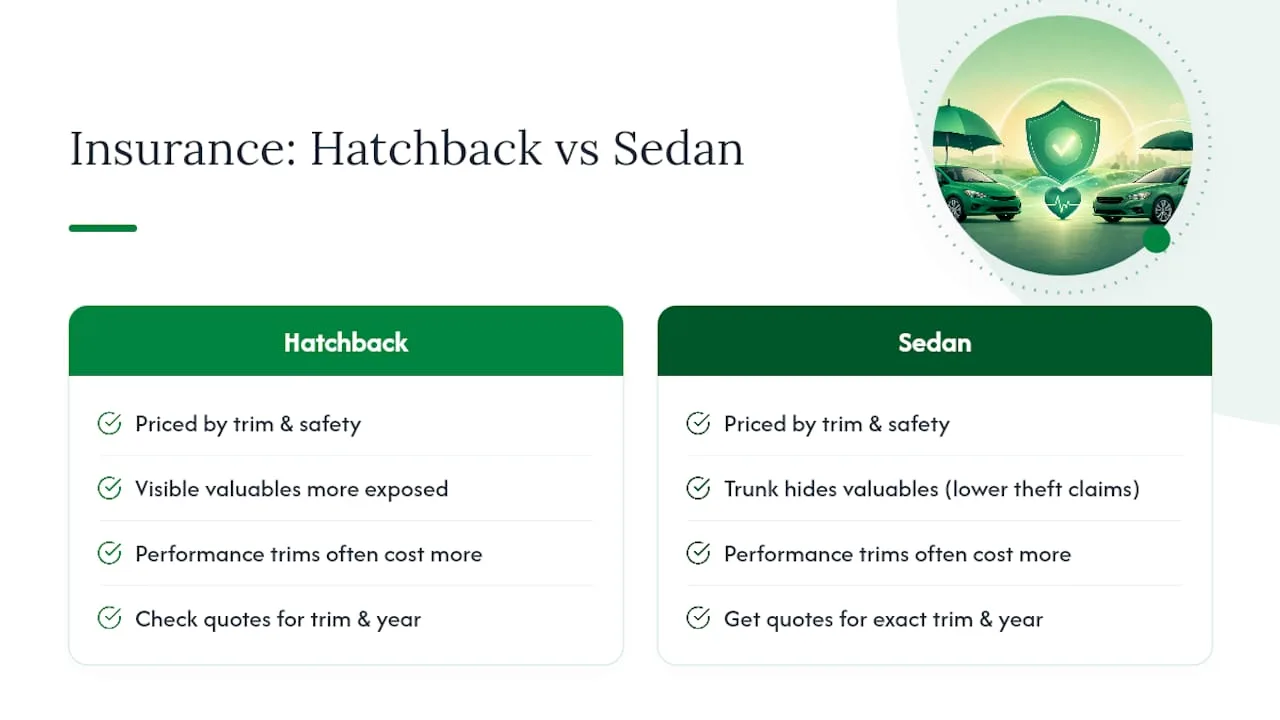
Insurance companies price policies primarily by trim, safety equipment, repair-cost history, and theft rates, not by whether a car is a hatchback or a sedan. Two versions of the same model, one hatch and one sedan, often land in similar insurance brackets because insurers weigh the shared platform, shared safety systems, and shared repair-parts pricing more heavily than the shape of the rear end.
That said, a few patterns show up often enough to check before you buy either body style. Performance-oriented hatchback trims, the kind with upgraded wheels, sport suspension, or a hotter engine tune, sometimes carry higher premiums than a base sedan trim of the same nameplate, simply because insurers price those trims as higher-risk or higher-repair-cost. A sedan's separate trunk can also mean lower theft-related claims for visible valuables, since nothing sits exposed through the rear glass the way it might in a hatchback packed with gear.
Before assuming one body style saves you money, get quotes on the specific trim and year you're cross-shopping. Ask your insurer directly whether they price hatchback and sedan versions of the same model differently, and if so, why. Often the honest answer is that the difference comes down to the wheel package or the safety-tech bundle on that particular trim, not the body style itself. If you're financing the purchase, it's worth folding an insurance quote into your total monthly budget conversation before you sign anything; our financing page walks through how that budget math works in practice.
Market Trends and Popularity Shifts Between Hatchbacks and Sedans
Sedans have spent the last decade losing ground to taller, boxier body styles in the American market, and hatchbacks have felt some of that same pressure, even as they've carved out a loyal following among buyers who value their cargo flexibility. Several mainstream manufacturers have trimmed their sedan lineups in recent years, shifting production toward crossovers and SUVs that offer a higher seating position and similar cargo versatility to a hatchback without the smaller footprint.
That shift has an upside for used-car shoppers. As fewer new sedans and hatchbacks reach dealer lots, well-maintained used examples of both body styles often represent strong value, since demand for them hasn't disappeared even as new-vehicle production has narrowed. Hatchbacks in particular have held a steady niche among buyers who want SUV-like cargo flexibility without the higher price tag, taller ride height, or worse fuel economy that often comes with a compact SUV.
Regional preferences still matter here. Hatchbacks remain more popular in dense, urban markets where parking and maneuverability carry real weight, while sedans continue to hold appeal among buyers who want a traditional, understated look and don't need maximum cargo flexibility. If you're shopping used, that regional demand swing is exactly why checking local listings, not just national averages, gives you a truer read on what a specific hatchback or sedan is worth in your market right now.
Environmental Impact: Emissions and Recyclability
Body style alone doesn't determine a vehicle's environmental footprint. Engine size, weight, and aerodynamics drive emissions far more than whether the trunk is enclosed or open, which is consistent with the earlier point that shared-platform hatchback and sedan variants post similar fuel economy and, by extension, similar tailpipe emissions.
Where body style can make a small difference is aerodynamic drag. A sedan's tapered rear end typically cuts through air slightly more efficiently than a hatchback's blunter tail, which can translate into marginally lower emissions per mile in highway driving, though the gap is small enough that trim-level differences (tires, weight, options) usually matter more.
Recyclability comes down to materials and manufacturing standards set by the automaker, not body style. Both hatchbacks and sedans built by the same manufacturer typically share the same recycled-content targets and end-of-life recycling programs, since those policies apply at the brand or platform level rather than varying by trunk design.
The more meaningful environmental decision for most buyers isn't hatchback versus sedan at all. It's how long you keep the vehicle on the road and how efficiently you drive it. A well-maintained used car, hatchback or sedan, generally has a smaller lifecycle footprint than replacing a vehicle every few years, since manufacturing a new car carries its own significant environmental cost before it ever turns a wheel.
A Local Dealer's View on How Buyers Actually Decide
Most buyers walk in thinking they want one body style and end up choosing based on something they didn't expect, usually rear-seat headroom or how a trunk lid swings versus a hatch. We've found the test drive settles more arguments than any spec sheet. Load your actual gear into the back before you decide, ask for the inspection report, and don't let a "bigger number" on a window sticker override what your own hands and eyes tell you in the driveway.
— CL Auto
Sources
- Hatchback vs. Sedan: What Are the Differences? — Car and Driver
- Hatchback Vs. Sedan Face-Off: What Body Style Is Best For You? — CarBuzz
- Hatchback vs Sedan — Mazda USA
FAQ
What is better, a hatchback or a sedan?
Neither is universally better. Hatchbacks fit city driving and bulky cargo needs, while sedans suit buyers who want a quieter cabin and a sealed trunk. The right choice depends on your routine, not on which body style scores higher on paper.
What are the disadvantages of a hatchback car?
Hatchbacks generally expose cargo to view through the rear glass, unlike a sedan's enclosed trunk, and some models let in more road noise at highway speeds. Sportier hatchback trims can also carry higher insurance premiums due to upgraded wheels or performance equipment.
Is a hatchback or sedan safer?
Body style alone doesn't determine crash safety; engineering and materials matter far more. Hatchbacks tend to offer better rear visibility thanks to their shorter rear deck, while sedans offer a quieter cabin, so check IIHS or NHTSA ratings for your specific model year rather than assuming either shape is inherently safer.
Is a hatchback good for a long drive?
Yes, a hatchback works fine for long drives, especially if you value the extra cargo flexibility for luggage or gear. Sedans tend to have a slight edge in cabin quiet on long highway stretches because of their enclosed trunk, but the difference is usually modest between shared-platform models.