5 NMVTIS Backed Steps to Verify a Clean Title for Used Car Buyers
A clean title means the vehicle's paperwork carries no salvage, rebuilt, flood, junk, or insurer total-loss brand on record. It does not mean the car is mechanically perfect or accident-free. Before you hand over a deposit, match the VIN across the title and history report, pull an NMVTIS-backed vehicle history report, and book an independent inspection.
TL;DR:
- A clean title only indicates no recorded brands like salvage or flood, but does not guarantee the car's mechanical condition or repair history.
- Title brands such as salvage, rebuilt, or flood are permanent records that can still be visible through NMVTIS reports, even if a car is retitled in another state.
- Insurers often do not brand a vehicle unless damage exceeds total-loss thresholds, so serious issues can still exist behind a clean title.
- Verifying a vehicle's history requires matching the VIN across documents, running multiple reports, and conducting an independent inspection before purchase.
- Branded titles can restrict financing, increase insurance costs, and decrease resale value, making proactive lender and insurer confirmation essential.
Table of Contents
- What a clean title actually means on paper
- Salvage, rebuilt, flood, and other brands you'll run into
- Why a clean title still isn't a guarantee
- How to verify a car's title and history step by step
- How title status affects loans, insurance, and resale
- A pre-purchase checklist you can run in ten minutes
- Why transparent sellers hand you the history report first
- How Clearwater Largo Automotive makes clean titles easy to verify
- Tools worth running before you sign anything
- Sources
- FAQ
What a clean title actually means on paper
A clean title is a legal statement about the vehicle's record, not a promise about its condition. When we say a title is clean, we mean the state has not stamped it with a brand like salvage, rebuilt, flood, or junk, and no insurer has ever declared the car a total loss. That's it. It says nothing about whether the transmission is slipping or the frame was tweaked in a fender bender that never triggered a total-loss claim.
Title branding and lien status are two separate things, and buyers mix them up constantly. A lien means a bank or credit union has a financial claim on the car until the loan is paid off. A brand means the state has recorded a specific type of damage or loss history. You can have a clean title with an active lien, and you can have a paid-off car with a branded title. They live on different lines of the paperwork.
States also don't always use the same words. What one DMV calls "clear," another calls "clean," and a few use "unbranded." That's why the NMVTIS system matters: it's the federal database that standardizes these definitions across state lines and keeps a permanent record of brand history, even when a car gets retitled somewhere new.
A few quick facts worth locking in:
- Clean title refers to brand history, not mechanical condition.
- Lien status and title branding are recorded separately and don't affect each other.
- NMVTIS standardizes how states report brands, which helps prevent a branded car from quietly becoming "clean" in another state.
Salvage, rebuilt, flood, and other brands you'll run into
Once you start shopping, you'll see title brands that sound similar but carry different weight. Knowing the difference helps you understand what you're actually being offered.
- Salvage title: the insurer declared the car a total loss, usually because repair costs exceeded a set percentage of its value.
- Rebuilt title: a salvage vehicle that's been repaired and passed a state inspection, allowing it back on the road, though the brand stays on record.
- Flood title: water damage was significant enough to total the car, which often means corrosion and electrical issues down the line.
- Junk title: the vehicle is considered unfit to drive and typically can't be re-registered at all.
- Odometer not actual: the mileage reading is known or suspected to be inaccurate, often due to a broken odometer or tampering.
- Manufacturer buyback: usually a lemon-law repurchase, meaning the manufacturer took the car back after repeated unresolved defects.
Here's the part buyers often miss: once a car is branded, that brand typically follows it for good. A rebuilt title doesn't erase the salvage history, according to NMVTIS's FY2023 annual report, and many states require the rebuilt designation to stay visible on the paperwork for as long as the car is registered.
That permanence is exactly why some sellers try "title washing," moving a branded car to a state with looser reporting in hopes the new title comes back clean. NMVTIS was built partly to stop this by preserving the vehicle's full title history across state lines, so a wash attempt usually still shows up if you check the right source. If you're weighing a rebuilt or salvage car anyway, our guide on what to demand when buying rebuilt or salvage cars walks through the questions to ask before you commit.
Why a clean title still isn't a guarantee
A clean title tells you what didn't happen on paper. It doesn't tell you what happened in real life. Insurers only brand a title when damage crosses their total-loss threshold, so a car that was in a serious crash but repaired below that line can carry a spotless title forever.
A history report is not a replacement for a physical inspection. NMVTIS's own consumer disclaimer states plainly that a vehicle history report is not a substitute for an independent inspection, because the system doesn't capture detailed repair history and some damage never gets reported as a total loss in the first place.
That gap leaves room for real problems to hide behind a clean title:
- Structural frame damage that was repaired informally, without an insurance claim.
- Flood exposure that never reached total-loss dollar thresholds but still corroded wiring.
- Odometer rollback that a basic report doesn't catch if it predates digital tracking.
- Aftermarket structural work, like frame or unibody repairs, done outside a certified shop.
Reporting lag adds another wrinkle. States update their records at different speeds, and a very recent brand or lien might not show up yet in a report pulled the same week. Treat the history report as your starting point, not your final word.
How to verify a car's title and history step by step
Confirming a clean title takes about the same effort as ordering a large coffee if you follow the order below. Skip a step and you're gambling on the parts you didn't check.
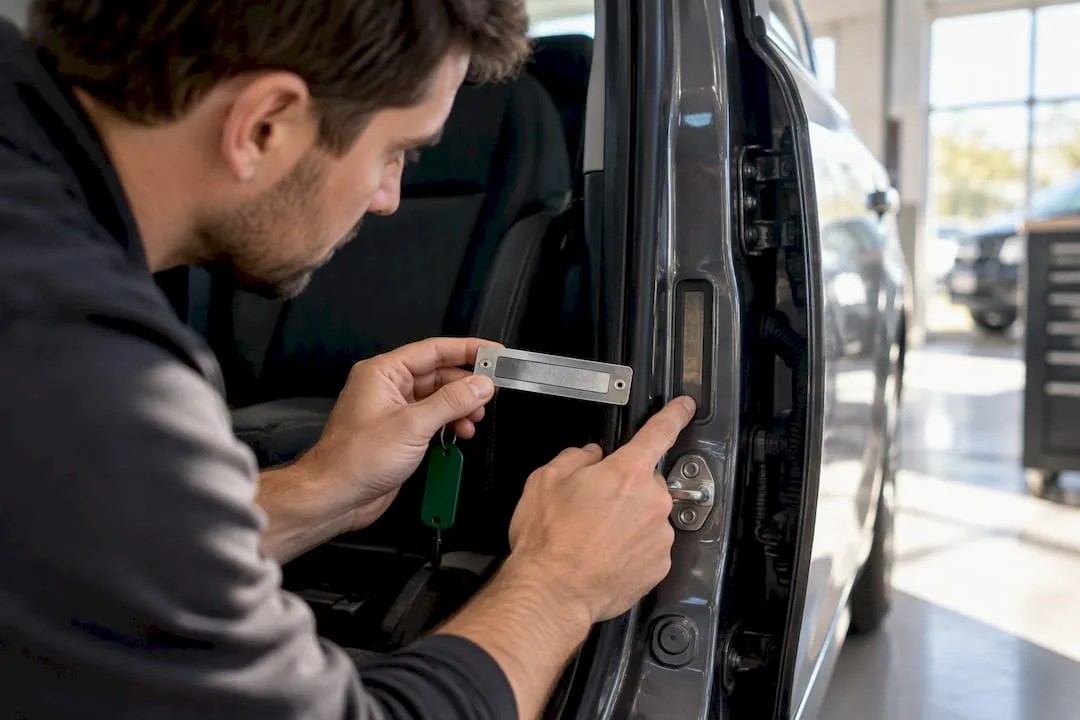
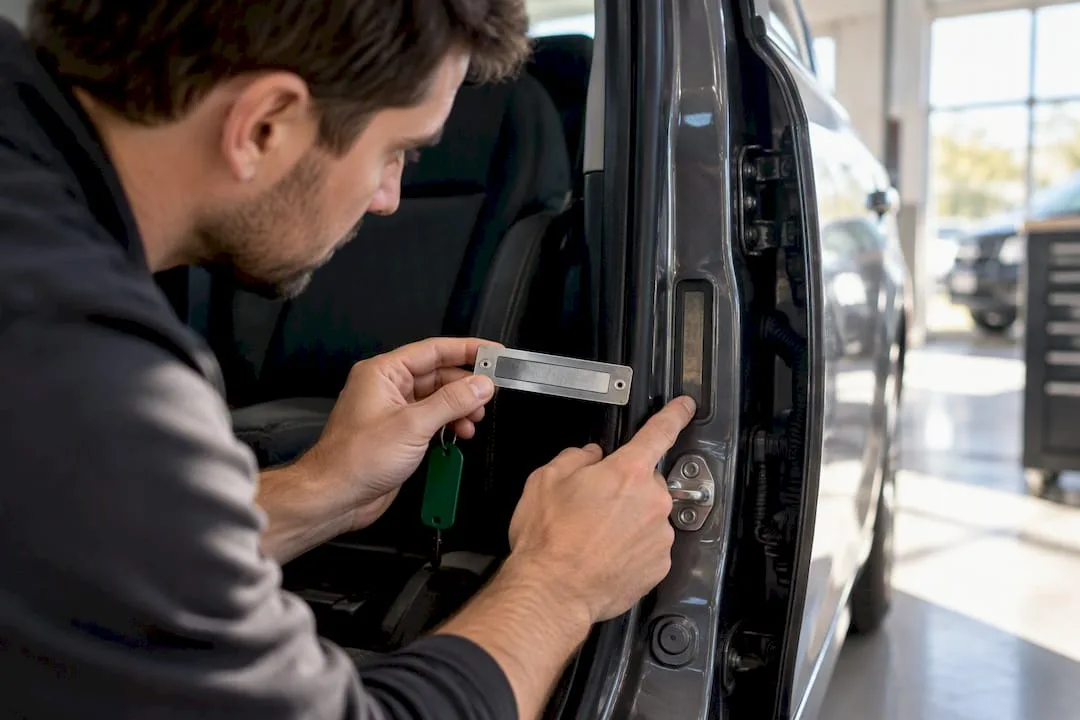
- Match the VIN in three places. Check the VIN on the dashboard or door jamb against the paper title and the history report. All three should read identically, character for character.
- Run an NMVTIS-approved history report and a free NICB check. Look at the brand field, total-loss field, and mileage history. Then run the VIN through NICB VINCheck, a free tool that flags whether a VIN has been reported as salvage or stolen.
- Check state DMV title records directly. Some states let you look up brand and lien status online. If the labeling looks different from what the seller told you, ask them to explain it in writing.
- Book an independent inspection. Have a mechanic check the frame, look for flood residue in the wiring and under the carpet, and test the electronics. Ask for receipts on any major repairs the seller mentions.
- Confirm lien satisfaction in writing. If there was ever a loan on the car, get proof the lien was released before you pay a dollar.
Pro Tip: Bring a magnet. A cheap fridge magnet won't stick to filler used to mask rust or collision damage, and it takes ten seconds to check a fender.
Running all five steps costs you an afternoon. Skipping any one of them can cost you thousands after the sale, once you're the one holding a car with a history nobody disclosed.

How title status affects loans, insurance, and resale
A branded title changes more than what you paid at the counter. It follows the car through financing, coverage, and the day you try to sell it.
- Many lenders limit or refuse financing on salvage and rebuilt titles, since the car's collateral value is harder to pin down.
- Insurers often cap coverage on branded vehicles to liability only, or charge more for comprehensive coverage if they offer it at all.
- Resale value drops sharply on branded titles because the next buyer faces the same financing and insurance hurdles you did.
- Clean-title vehicles hold value better simply because more buyers, lenders, and insurers are willing to work with them without extra paperwork.
If you're seriously considering a branded-title car, call your lender and insurance agent before you shop, not after you fall in love with a listing. Ask directly whether they'll finance or fully cover that specific brand. Our financing page breaks down how loan approval typically works for clean-title vehicles, which is worth comparing against what a branded-title lender would quote you.
A pre-purchase checklist you can run in ten minutes
Before you sign anything, work through this list at the dealership or the seller's driveway.
- Confirm the VIN matches across the car, the title, and the history report.
- Pull an NMVTIS-approved history report and a free NICB VINCheck.
- Schedule or complete an independent inspection covering the frame, flood signs, and electronics.
- Confirm any lien has been released and get it in writing.
- Verify the title is properly assigned to the seller, with a bill of sale and valid seller ID ready.
Pro Tip: Ask the inspector to specifically check for uneven panel gaps and mismatched paint texture, two signs of prior bodywork that a basic look-over often misses to evaluate repair quality and realistic repair expectations at FIX-A-DENT.
Watch for these red flags: a VIN that doesn't match across documents, a seller who resists an inspection or won't let you run a history report, title paperwork with inconsistent names or dates, and any major repair the seller can't back up with a receipt. If our local checklist for the Clearwater area is more your speed, we cover nine specific things to check in buying a used car in Clearwater.
Why transparent sellers hand you the history report first
A seller who volunteers the VIN history report and inspection summary before you ask is telling you something important: they've got nothing to hide. That kind of disclosure protects you and speeds up the whole transaction, because you're not spending your test drive interrogating the seller about damage history.
A trustworthy seller should hand you, without prompting, a history report link, a written inspection summary, a price with no hidden fees layered on afterward, and clear financing terms if you need them. If a seller can't produce these on request, treat that as your answer. Our approach to hand-inspected, transparent used cars walks through exactly what that disclosure should look like from the seller's side.
— CL Auto
How Clearwater Largo Automotive makes clean titles easy to verify
Vehicles are inspected, and history disclosures are provided prior to listing. Prices shown are final with no undisclosed additional fees.
If you don't see the right car in stock, our vehicle sourcing service will track down a specific make, model, and title status to your spec. We also offer in-house financing through multiple lenders, which matters more than most buyers realize once a title brand enters the picture.
- Vehicles are inspected and history reports are disclosed prior to listing.
- Pricing is transparent.
- Personalized customer assistance is provided.
- Vehicle sourcing services are offered to help locate specific vehicles.
Browse our current inventory or use our payment calculator to see what a clean-title vehicle could cost you monthly before you ever step onto the lot.
Tools worth running before you sign anything
Check the NMVTIS consumer pages for approved report providers, run a free NICB VINCheck for salvage or theft flags, and confirm brand and lien status through your state's DMV title lookup portal.
Sources
- For consumers | VehicleHistory (NMVTIS)
- NICB VINCheck
FAQ
Does a clean title mean the car is paid off?
No, a clean title only reflects brand history, not loan status. A lien is a separate record showing whether a lender has a financial claim on the vehicle, so always confirm lien release in writing before paying.
What are the three types of titles?
Definitions vary by state, but the most common categories are clean (or clear), branded (salvage, rebuilt, flood, junk), and lienholder titles, where a lender holds an interest until the loan is paid. Some states also issue electronic titles that function the same way as paper ones.
Can a car with a clean title have problems?
Yes. A vehicle history report is not a substitute for an independent inspection, because not all damage gets reported as a total loss. That's why a physical inspection matters even when the paperwork looks spotless.
Should I buy a car with no clean title?
A branded title isn't automatically a dealbreaker, but it usually means tighter financing options, higher insurance costs, and lower resale value. Check with your lender and insurer before committing, and get an independent inspection regardless of what the title says.