Buying a Car Out of State: Your Step-by-Step Checklist
You will register the car in your home state, pay sales/use tax there, and you need to complete a short list of actions before you sign anything or drive off the lot. Here is what that list looks like in practice.
Before and during pickup, complete every one of these steps:
- Run a Carfax or AutoCheck report and verify the VIN matches the title and the vehicle itself.
- Arrange a pre-purchase inspection with an independent mechanic near the seller.
- Confirm your auto insurance covers the vehicle the moment you take ownership, or add it to your policy before pickup.
- Secure a temporary transit permit or dealer-issued temporary tag so you can legally drive the car home.
- Collect a signed title (or Manufacturer's Certificate of Origin for a new car), a bill of sale, and an odometer disclosure statement.
- Photograph the emissions label inside the door jamb or under the hood before you pay.
- Keep the dealer's sales-tax receipt or stamped title documents in your file. According to Car and Driver, these documents are what prevent DMV rejections when you go to register back home.
- Plan to pay any remaining sales/use tax and registration fees at your home-state DMV.
Sales tax is almost universally owed to the state where the vehicle will be registered, not where you bought it. Dealers sometimes collect and remit it for you; private sellers never do. Keep that distinction in mind as you read through the steps below.
Key Takeaways
Buying a car out of state is manageable when you collect the right documents at pickup and understand that your home state, not the seller's, is where you will register the vehicle and pay sales/use tax.
| Point | Details |
|---|---|
| Tax is paid at home | Sales/use tax is owed to your home state at registration, not the purchase state. |
| Dealers reduce paperwork | Licensed dealers often handle temporary tags and tax remittance; private sellers do not. |
| Emissions check is critical | Verify the emissions label before purchase; a non-compliant vehicle may be impossible to register at home. |
| Documents win at the DMV | Bring a signed title, bill of sale, odometer disclosure, tax receipt, and emissions label photo to registration. |
| Clearwaterlargoauto simplifies it | Pre-inspected inventory, transparent pricing, and a vehicle sourcing service reduce the risk of long-distance buying. |
Table of Contents
- Is buying a car out of state actually worth it for you?
- Dealer vs. private seller: how the paperwork changes
- The full step-by-step checklist for buying a car out of state
- How sales/use tax, title transfer, and registration actually work
- Checking emissions and safety before you commit
- Driving it home vs. shipping it: options, costs, and insurance
- Due diligence you must complete before you pay
- How financing and lenders work across state lines
- How Clearwaterlargoauto supports buyers navigating out-of-state purchases
- What buying a car out of state actually feels like
- Clearwaterlargoauto makes the out-of-state process manageable
- Useful resources for out-of-state car buyers
- Sources
Is buying a car out of state actually worth it for you?
The honest answer: sometimes yes, often no. The potential upside is real. You get access to a wider inventory, rare trims, lower-mileage examples, and occasionally a meaningfully lower sticker price than anything available locally. For specialty vehicles or specific configurations, crossing state lines can be the only way to find exactly what you want.
The downside is just as real. Transport costs, a day or two of travel, temporary tag fees, and the administrative work of registering in your home state all chip away at the savings. Emissions and safety inspection surprises can turn a good deal into an expensive headache.
Pros of an out-of-state purchase:
- Broader selection, including rare models and better-equipped trims.
- Potential price advantages in markets with higher supply or lower dealer markups.
- Access to vehicles that simply do not exist in your local market.
Cons to weigh carefully:
- Transport costs (fuel and lodging if you drive, or carrier fees if you ship).
- Extra paperwork, especially for private-party purchases.
- Emissions and safety compliance differences that may prevent registration at home.
- Time away from work and the risk of discovering problems after you have already traveled.
The only way to evaluate the real savings is to compare the full out-the-door price, including transport, temporary tags, taxes, and registration fees, against local alternatives. Forbes Advisor recommends using out-the-door pricing as the only meaningful comparison metric across state lines. Use Kelley Blue Book to benchmark the vehicle's fair market value before you start negotiating.
Pro Tip: If the net savings after transport and fees amount to less than a few hundred dollars, the time and risk usually outweigh the benefit. Run the full cost calculation before you book a flight or arrange a carrier.
Dealer vs. private seller: how the paperwork changes
This distinction matters more than most buyers expect. Buying from a licensed dealer and buying from a private party are two very different administrative experiences, and knowing which one you are dealing with shapes your entire checklist.
Dealers generally handle most of the paperwork for out-of-state buyers, including issuing temporary registrations or transit permits and, in many cases, collecting and remitting sales tax to your home state. That does not mean you can be passive. Confirm explicitly that the dealer will file for your home state, not theirs, and ask for a written sales-tax receipt before you leave the lot.
Private sellers hand you the keys and walk away. Everything else is your responsibility: arranging a temporary transit permit through your home state's DMV or the seller's state, paying sales/use tax at your local DMV, and handling any lien payoff if the seller still owes money on the vehicle.
Practical differences at a glance:
| Task | Dealer | Private Seller |
|---|---|---|
| Temporary plate or transit permit | Usually provided | Buyer arranges it |
| Sales tax collection and remittance | Often handled for buyer | Buyer pays at home DMV |
| Vehicle history report | Often provided | Buyer orders it |
| Pre-purchase inspection | Buyer should still request one | Buyer arranges independently |
| Title processing | Dealer typically files | Buyer handles transfer |
For a private-sale pickup, bring or confirm these documents:
- Signed title with the seller's name matching their ID.
- Bill of sale showing the purchase price, date, and both parties' names.
- Odometer disclosure statement (required for most vehicles under ten years old).
- Notarized bill of sale if your home state requires it.
- Lien-release documentation if a lender is listed on the title.
Note that some dealerships may refuse out-of-state sales or require financing through preferred lenders. Confirm the dealer's out-of-state sales policy before you invest time in negotiating.
The full step-by-step checklist for buying a car out of state
Follow this sequence from the moment you find a vehicle through the day you pick up your permanent plates.
1. Pre-offer due diligence (before you commit)
Verify the VIN against the title and any listing photos. Order a Carfax or AutoCheck report and review it for prior damage, title brands (salvage, flood, lemon law buyback), and ownership history. Request a photo of the emissions label. Ask the seller for recent maintenance records.
2. Arrange a pre-purchase inspection
Find an independent mechanic near the seller using a service like RepairPal or Yelp, and pay for a full inspection before you travel. Request a written checklist and photos. A history report tells you what happened; a mechanic tells you what is happening right now.
3. Confirm your insurance before pickup
Call your insurer and confirm that your policy extends to a newly acquired vehicle, and for how long. If it does not, add the vehicle to your policy before you take the keys. No coverage gap is acceptable.
4. Arrange your temporary tag or transit permit
If buying from a dealer, confirm they will issue a temporary tag valid in your home state. If buying privately, contact your home-state DMV or the seller's state DMV to obtain a transit permit before pickup day.
5. At pickup: collect and verify every document
Confirm the signed title or Manufacturer's Certificate of Origin. Collect the bill of sale, odometer disclosure, and dealer sales-tax receipt if the dealer remitted tax. Photograph the emissions sticker and the VIN plate. Do a final walkaround and compare the vehicle's condition to the inspection report.
6. Getting the car home
Drive it home using your temporary permit, or arrange a carrier. If shipping, confirm the carrier's cargo insurance limits and purchase a rider if the coverage falls short of the vehicle's value.
7. After you return home
Submit the title transfer application to your home-state DMV. Pay any remaining sales/use tax. Schedule an emissions or safety inspection if your state requires one for registration. Apply for permanent plates.
The typical timeline from pickup to permanent plates runs two to six weeks, depending on your state's DMV processing speed and whether a lender is mailing the title. Budget for these cost components when calculating your total:
| Cost Component | Notes |
|---|---|
| Purchase price | Negotiate from out-the-door, not sticker |
| Sales/use tax | Paid to your home state at registration |
| Dealer processing or doc fees | Varies by dealer; ask for the exact amount upfront |
| Temporary tag fee | Usually a small fee at the dealer or DMV |
| Transport (drive or ship) | Fuel and lodging, or carrier quote |
| Home-state registration and title fees | Varies by state and vehicle value |
How sales/use tax, title transfer, and registration actually work
The core rule is simple: you cannot avoid your home-state sales/use tax by buying in a lower- or no-tax state. Your home state will collect the tax, or the difference between what you paid elsewhere and what you owe locally, when you register the vehicle.
Here is how that plays out in practice. Say you buy a $25,000 vehicle in a state with no sales tax. At registration, you owe $1,500. You will not pay the full amount twice, but you will pay the difference.
Sales tax is almost universally owed to the state where the vehicle will be registered, and dealers sometimes collect it on your behalf while private sellers do not. That dealer-collected receipt is your proof at the DMV.
Title transfer steps to follow:
- Obtain the signed title from the seller (or the Manufacturer's Certificate of Origin for a new vehicle).
- If a lender holds the title, get written payoff instructions and confirm the timeline for the lender to release the title.
- Check whether your home state requires a notarized bill of sale; some do.
- Submit the title transfer application, proof of insurance, and tax payment to your home-state DMV.
Pro Tip: Keep the dealer's sales-tax receipt and any stamped title documents in a dedicated folder. Your home-state DMV clerk will ask for them, and missing paperwork means a second trip.
Checking emissions and safety before you commit
Emissions compliance is the most common reason an out-of-state purchase fails at registration. State emissions rules vary widely and can prevent registration in another state, particularly when states follow California's stricter emissions standards. A vehicle sold legally in one state may not be registerable in yours.
Here is how to check before you buy:
- Ask the seller or dealer for a clear photo of the emissions label, typically found on a sticker inside the driver's door jamb or under the hood.
- Confirm whether your home state follows federal EPA standards or California Air Resources Board (CARB) standards.
- Run the VIN through the National Highway Traffic Safety Administration (NHTSA) recall database to check for open safety recalls.
- Contact your home-state DMV or emissions testing authority to confirm whether the vehicle's label meets local requirements.
- If your state requires a safety inspection at registration, ask the seller what the vehicle's current condition is relative to those standards.
If the car fails your state's emissions or safety requirements after purchase, retrofitting to meet standards can cost anywhere from a few hundred dollars for minor adjustments to several thousand for catalytic converter or fuel-system work. In some cases, a vehicle simply cannot be made compliant, and you cannot register it at all.
Pro Tip: Make emissions label verification a condition of your offer. If the seller cannot produce a clear photo of the sticker, treat that as a red flag and require an independent emissions check before you finalize the sale. Put that contingency in writing.
Driving it home vs. shipping it: options, costs, and insurance
Once you own the car, you have two choices: drive it home yourself using a temporary transit permit, or hire a professional transport carrier. Each has real tradeoffs.

Driving it home is the lower-cost option if the distance is manageable. You get to experience the car immediately, spot any mechanical issues on the road, and avoid carrier scheduling delays. The risks are mechanical failure on an unfamiliar vehicle and the cost of fuel, tolls, and possibly a night's lodging.
Shipping it makes sense for long distances, high-value vehicles, or situations where you simply cannot take the time to drive. Open transport is the standard and less expensive option. Enclosed transport costs more but protects the vehicle from road debris and weather, which matters for classic cars or low-clearance vehicles.
Shipping checklist:
- Vet carriers through the Better Business Bureau and read recent reviews on Transport Reviews or similar platforms.
- Get at least three written quotes and compare cargo insurance limits, not just price.
- Confirm the carrier's cargo coverage limit; federal law requires basic liability, but cargo coverage limits can fall well below your vehicle's actual value.
- Purchase an insurance rider if the carrier's cargo coverage is insufficient.
- Do a documented inspection with the driver at both pickup and delivery, noting any pre-existing damage in writing.
Insurance during transit: Most personal auto policies extend coverage to a newly acquired vehicle for a short grace period, typically seven to thirty days. Call your insurer before pickup and confirm the exact terms. For shipped vehicles, your personal policy may not cover the car while it is on a carrier's trailer, which is why the carrier's cargo insurance and any rider you purchase matter.
Pro Tip: Do not assume your existing policy covers a car you just bought. Call your insurer the day before pickup and get the coverage confirmation in writing or via email.
Due diligence you must complete before you pay
Buying from a distance means you cannot rely on a quick test drive and a gut feeling. These checks protect you from inheriting someone else's mechanical or legal problems.
Vehicle history report: Order a Carfax or AutoCheck report as soon as you have the VIN. Review it for accident history, title brands (salvage, flood, lemon law buyback), prior-state registrations, and odometer rollback flags. A thorough vehicle-history report and a pre-purchase inspection are both necessary because a history report shows what happened on paper, while a mechanic finds what is happening under the hood right now.
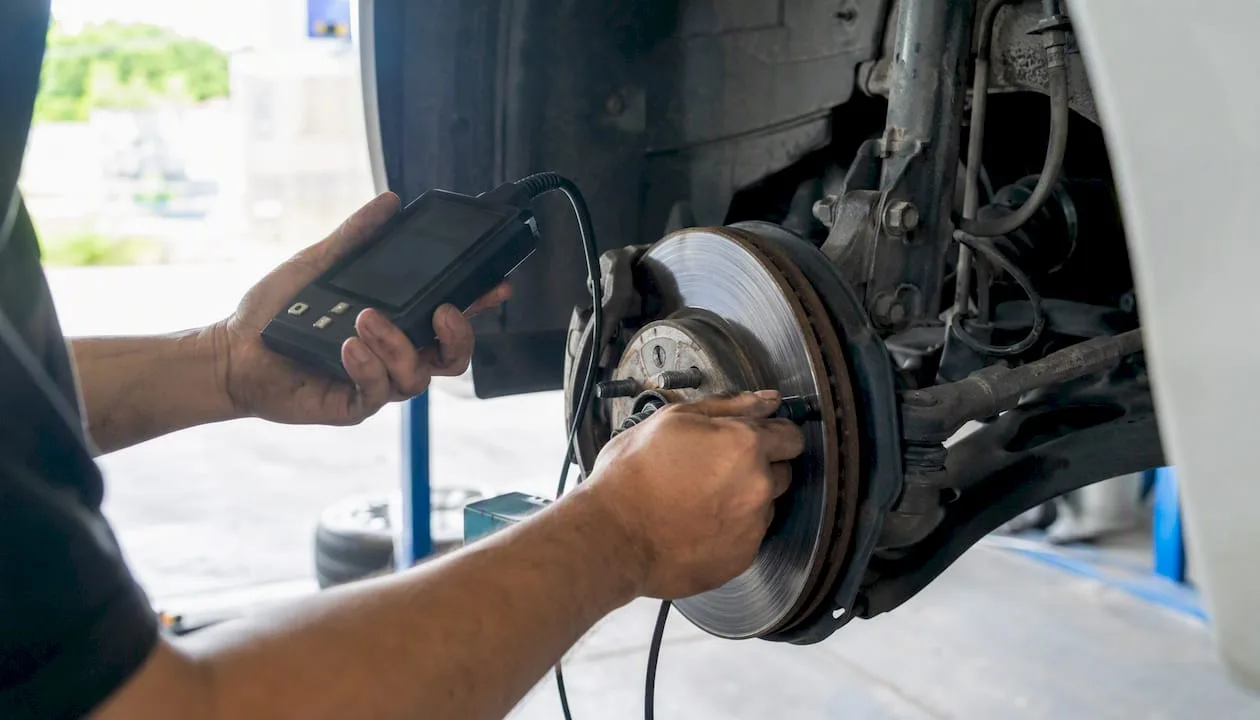
Mechanic inspection: Hire a local independent mechanic near the seller for a pre-purchase inspection. Ask for a written report with photos. This usually costs a moderate amount and is worth the investment. Our used car inspection checklist covers the key items a mechanic should examine.
Title and lien verification: Ask the seller to confirm they hold a clear title. If a lender is listed, request the lender's contact information and written payoff procedures. Never pay the seller directly to "clear the lien" without confirming the payoff with the lender first.
Document checklist before you hand over payment:
- Signed title with no alterations or corrections.
- Bill of sale showing the agreed purchase price, vehicle description, and both parties' signatures.
- Odometer disclosure statement (required for most vehicles under ten years old under federal law).
- Emissions label photo.
- Dealer sales-tax receipt if the dealer is remitting tax on your behalf.
- Lien-release letter if the seller recently paid off a loan.
Pro Tip: Even if a dealer says they will handle your home-state paperwork, verify any filings they submit and keep copies of everything. Dealers may not be fully familiar with your home state's specific forms or emissions rules, and the DMV will hold you responsible for any gaps.
How financing and lenders work across state lines
Financing an out-of-state purchase adds a layer of complexity that catches many buyers off guard. The core issue is that the car will be titled and registered in your home state, but the loan may originate with a lender in the seller's state.
If you are financing through the dealer, ask upfront whether they work with lenders who accept out-of-state collateral. Some dealerships require financing through their in-house or preferred lenders for out-of-state sales, which can affect your interest rate and paperwork timeline. Get the financing terms in writing before you commit to the deal. Clearwaterlargoauto's financing page explains how in-house financing partnerships work and what documentation you will need.
Bringing your own financing is often cleaner. Contact your bank or credit union before you travel and confirm they will accept a vehicle titled in your home state that was purchased elsewhere. Most national lenders handle this routinely; some smaller credit unions have geographic restrictions.
Title handling when a lender is involved:
- Confirm the lender will accept out-of-state collateral and ask for their title-filing instructions in writing.
- Understand who files the title with your home-state DMV: you, the dealer, or the lender.
- Ask for the lender's expected timeline for mailing the title after payoff (if you are paying cash for a vehicle with an existing lien).
- Track the title's progress. Titles mailed across state lines can take four to eight weeks to arrive.
Checklist for financed purchases:
- Confirm lender accepts out-of-state collateral before finalizing the deal.
- Get payoff instructions in writing if the seller has an existing lien.
- Clarify who files the title with your home-state DMV and by what deadline.
- Keep the lender's contact information and loan number accessible until the title arrives.
How Clearwaterlargoauto supports buyers navigating out-of-state purchases
At Clearwaterlargoauto, we have worked with buyers who came to us specifically because they were tired of managing the paperwork and uncertainty of long-distance purchases on their own. Here is what we do differently.
Every vehicle in our inventory has been through a thorough pre-listing inspection, and we provide a vehicle history report before you ask for one. Our pricing is listed clearly on every vehicle, with no hidden fees added at the last minute. When you contact us, you speak with a real person, not a call center script.
Services that directly help out-of-state buyers:
- Vehicle sourcing on request: tell us exactly what you want, and we find it. You do not scroll through hundreds of listings that do not match.
- Pre-listing inspections and history reports included with every vehicle.
- Transparent, all-in pricing so you can calculate your true out-the-door cost before you travel.
- Personalized assistance with paperwork questions, including guidance on temporary registration and title transfer steps.
- Transport coordination support for buyers who cannot drive the vehicle home.
If you are considering an out-of-state purchase and want someone in your corner who knows the process, we are worth a conversation. Browse our current inventory or use our find my car service to tell us exactly what you are looking for.
What buying a car out of state actually feels like
The first time you do it, the paperwork feels like a lot. You are coordinating a mechanic you have never met, an insurance call, a temporary permit from a DMV in a state you do not live in, and a seller who may or may not have all the documents ready. Then you drive four hours home wondering whether you missed something.
What actually saves you at the DMV is the folder. Every buyer who walks in with a signed title, a bill of sale, an odometer disclosure, a sales-tax receipt, and an emissions label photo gets through the process in one visit. Every buyer who shows up without one of those documents makes a second trip.
The lesson: the checklist in this article is not bureaucratic busywork. It is the exact set of documents your home-state DMV clerk will ask for. Collect them at pickup, photograph everything as a backup, and you will have no surprises.
One practical tip you can use immediately: before you travel to see the vehicle, email the seller a list of the documents you will need at pickup. Sellers who have everything ready are sellers who have nothing to hide.
Clearwaterlargoauto makes the out-of-state process manageable
Searching for a vehicle across state lines means managing inspections, paperwork, transport, and tax questions all at once, often without a local contact who knows the process. Clearwaterlargoauto offers a straightforward alternative: a hand-inspected, transparently priced used car from a dealer that handles the details with you, not around you.
Every vehicle we sell comes with a pre-listing inspection and a vehicle history report already completed. Our pricing shows the full number upfront, no surprise doc fees added at signing. If you cannot find what you want in our current inventory, our vehicle sourcing service lets you describe exactly what you need and we locate it for you. Use our payment calculator to estimate your total cost including taxes and fees before you commit to anything.
Ready to skip the long-distance search? Browse our used car inventory in Clearwater, FL or reach out directly and a real person will respond, usually the same day.
Useful resources for out-of-state car buyers
These are the tools and sources you will actually use as you work through the process.
State DMV lookup: Visit your home state's official DMV website to confirm registration fees, title transfer requirements, emissions testing rules, and temporary permit procedures. Every state publishes this information; the specifics vary enough that checking your own state's site is the only reliable approach.
Vehicle history services:
- Carfax: the most widely recognized vehicle history report service; recommended for any out-of-state purchase.
- AutoCheck (by Experian): an alternative history report that uses a scoring system and covers auction records in detail.
Pricing and valuation:
- Kelley Blue Book (KBB): use it to benchmark fair market value and confirm you are not overpaying before you negotiate.
Emissions and safety compliance:
- NHTSA VIN lookup (nhtsa.gov): check for open safety recalls on any vehicle before purchase.
- Your home state's emissions testing authority: confirm whether the vehicle's emissions label meets local standards before you commit.
Transport carrier vetting:
- Better Business Bureau (bbb.org): check carrier ratings and complaint history before booking.
- Transport Reviews (transportreviews.com): a dedicated platform for auto transport carrier reviews.
Cost estimation:
- Clearwaterlargoauto payment calculator: estimate your total monthly payment including taxes and fees for any vehicle you are considering.
Sources
- Buying a Car Out of State: What to Know - NerdWallet
- How To Buy a Car From Out of State - Kelley Blue Book
- How to Buy a Car From Another State - Consumer Reports
- Buying a Car Out of State | Progressive
- How to Buy a Car Out of State - CARFAX
Recommended
- Buying a first car for a teenager in Clearwater and Largo | Clearwater Largo Automotive
- Buying a Used Car in Clearwater: 9 Things to Check Before You Pay | Clearwater Largo Automotive
- Buying advice from a Clearwater dealer | Clearwater Largo Automotive
- Sell your car in Clearwater, FL | Clearwater Largo Automotive