How Much to Put Down on a Used Car: A Practical Guide
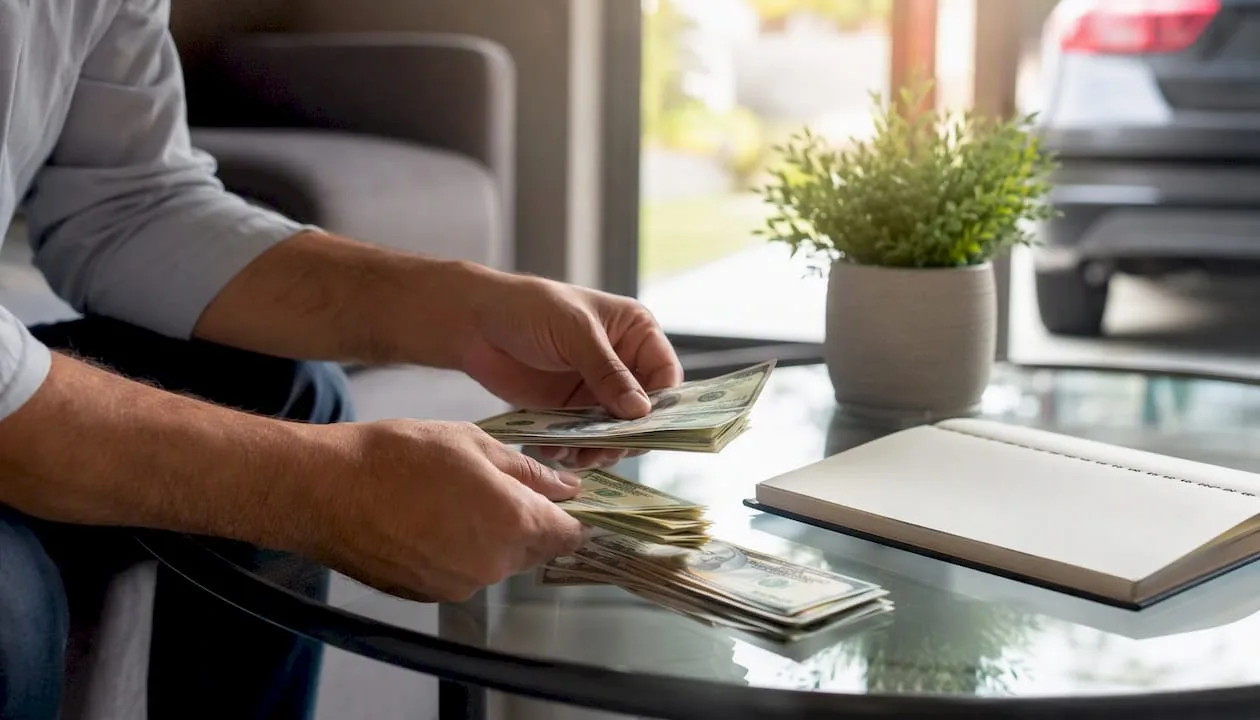
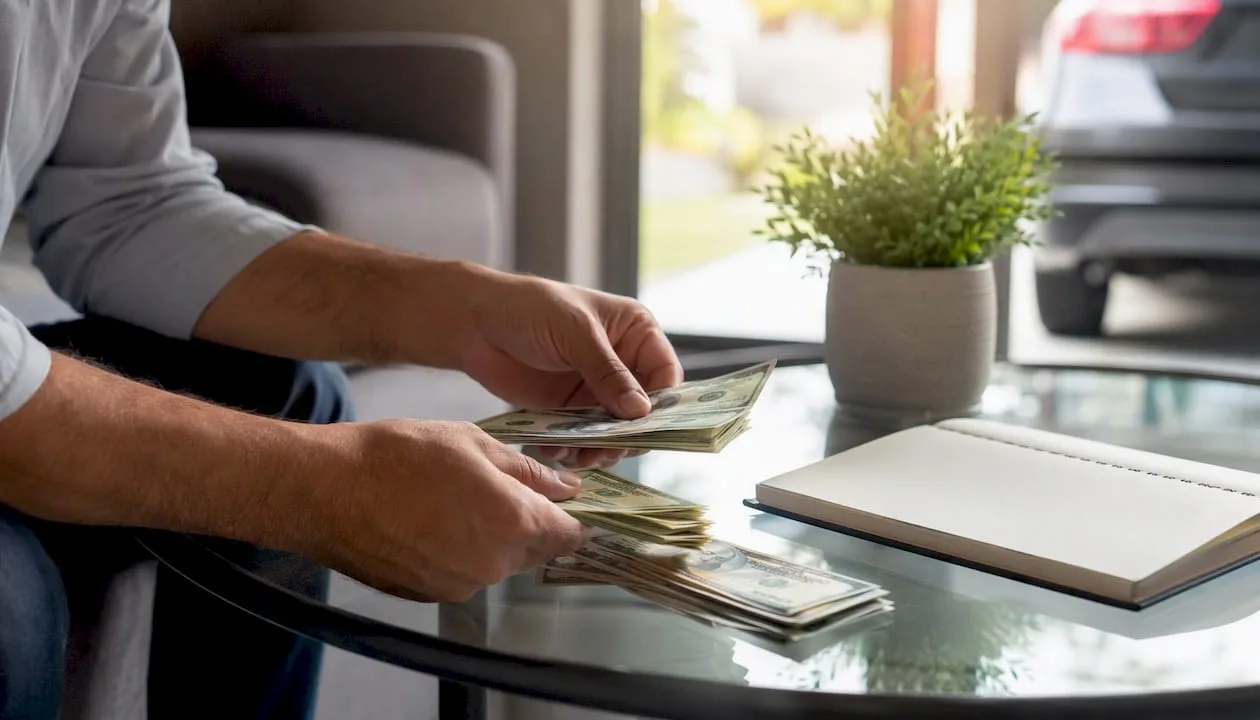
Aim for a down payment of around ten percent on a used car. If you can afford more, such as up to about twenty percent, that can be beneficial. That single decision shapes your monthly payment, your total interest, and whether you stay financially ahead of the loan. For example, on a $25,000 used car, putting down about ten percent means a $2,500 upfront payment, reducing the loan amount accordingly. A larger down payment reduces the loan principal and interest paid over time. Experian's guidance confirms that 10% is the practical baseline for used vehicles, helping buyers secure better rates and reduce the amount financed.
- A down payment around ten percent is commonly recommended as a practical minimum for a used car
- A higher down payment, such as around twenty percent, can be a better target if your budget permits
- Various sources such as cash, trade-in equity, and rebates may be combined to form your down payment
Pro Tip: Never drain your emergency fund to hit a down payment target. Keeping two to three months of expenses in reserve protects you far more than a slightly lower loan balance.
Key Takeaways
Putting down an amount around ten percent on a used car can reduce the loan balance, lower monthly payments, and help prevent owing more than the vehicle's value early in the loan.
| Point | Details |
|---|---|
| 10% minimum, 20% ideal | Aim for 10% down on a used car; 20% if your budget allows, to maximize interest savings. |
| Every — more down saves ~$15–$18/month | Adding to your down payment can reduce monthly payments by about fifteen to eighteen dollars per thousand dollars, though exact savings depend on the loan details. |
| Cash, trade-in, and rebates all count | Your down payment can combine cash, net trade-in equity, and qualifying rebates — confirm treatment with your lender. |
| Preserve your emergency fund | Never drain savings to hit a down payment target; financial stability matters more than a slightly smaller loan. |
| Clearwaterlargoauto offers local financing help | Use the payment calculator and in-house financing partnerships at Clearwaterlargoauto to find the right down payment for your situation. |
This article is general information, not a substitute for advice from a qualified financial advisor. Consult a qualified financial professional about your own circumstances before acting on anything here.
Table of Contents
- What counts as a used car down payment?
- What down payment range do lenders actually recommend for used cars?
- Why a larger down payment improves your loan terms
- Can you buy a used car with zero down?
- How trade-ins, rebates, and dealer incentives affect your down payment
- What if you have poor or limited credit?
- Leasing versus buying: why down payment logic works differently
- How different down payments change your monthly payment and total interest
- What to do before you hand over your down payment
- How Clearwaterlargoauto helps you work through down payment and financing
- Sources
What counts as a used car down payment?
A down payment is the upfront amount you put toward the purchase price before financing the rest. The CFPB explains that it can take several forms, and lenders generally treat all of the following as valid contributions:
- Cash: The most straightforward form. You hand over money at signing, and the loan amount drops by that exact figure.
- Net trade-in value: If you trade in a car worth $8,000 with a $3,000 payoff remaining on your current loan, the dealer applies the $3,000 to settle that loan first. The remaining $5,000 in equity goes toward your new purchase.
- Manufacturer or dealer rebates: Some automakers and dealers offer cash-back incentives that can be applied to the purchase price or directly to the down payment. Ask your lender specifically how they treat rebates, because some count them toward the down payment while others apply them only to the sale price.
- Combined sources: You can mix cash, trade-in equity, and rebates. A $1,500 cash contribution plus $3,500 in trade-in equity equals a $5,000 effective down payment.
One thing to verify before signing: confirm in writing exactly how your trade-in payoff is handled and whether any rebate reduces your financed amount or just the sticker price.
What down payment range do lenders actually recommend for used cars?
The general industry practice is often to recommend around ten percent down on used cars and about twenty percent down on new cars. The gap exists for a good reason. New cars lose a significant portion of their value the moment they leave the lot, so a larger down payment protects buyers from immediately owing more than the car is worth. Used vehicles have already absorbed that steepest depreciation, which is why Bankrate's guidance and most lenders set the floor lower for pre-owned purchases.
CNBC Select notes that while real-world averages have drifted below the 10/20 rule in recent years, those benchmarks remain the most widely cited guideline for good reason: they keep your loan-to-value ratio (LTV) in a range that lenders reward with better rates.
To illustrate, consider various down payment percentages on a $20,000 used car:
That math compounds over five years in ways that are easy to underestimate when you're focused on the sticker price.
Why a larger down payment improves your loan terms
Loan-to-value ratio is the number lenders watch most closely. LTV is simply your loan amount divided by the car's value. Lower LTV means the lender is taking on less risk, and lenders price that risk directly into your APR.
For buyers with strong credit, a larger down payment can push an already-good rate slightly lower. For buyers with marginal credit, it can be the difference between approval and rejection. A few concrete benefits:
- Lower monthly payment: Less financed means less owed each month.
- Less total interest: Interest accrues on the outstanding balance. A smaller starting balance means less interest accumulates over the loan term.
- Reduced upside-down risk: Being "upside-down" means you owe more than the car is worth. A solid down payment gives you an equity cushion from day one.
- Better approval odds: Lenders view a larger down payment as a commitment signal, especially for buyers near the edge of approval thresholds.
As a practical rule of thumb, NerdWallet notes that as a general estimate, each additional thousand dollars put down can decrease the monthly payment by a modest amount, often in the range of about fifteen to eighteen dollars, depending on the loan's details.. Increasing your down payment can reduce your monthly payments and total interest paid over the loan term, depending on specifics like term length and APR.
Can you buy a used car with zero down?
Yes, and plenty of buyers do. Kelley Blue Book is direct about it: Although zero-down financing options exist, they are usually discouraged because they increase the risk of owing more than the vehicle's value and often carry higher interest costs.
When zero down might be reasonable:
- You have excellent credit and a short ownership timeline (you plan to sell or trade within two to three years before depreciation outpaces payoff).
- A promotional 0% APR offer applies, making the cost of financing minimal.
- You need to preserve cash for a specific near-term expense and plan to make a large early payment once that clears.
When zero down is a real risk:
- Your credit is already strained, meaning the lender will charge a higher rate on a larger balance.
- You're buying a vehicle that depreciates quickly, leaving you underwater almost immediately.
- You have no gap insurance. If the car is totaled in month three, you could owe thousands more than the insurance payout covers.
Pro Tip: If you're putting little or nothing down, gap insurance is worth the cost. It covers the difference between what you owe and what the car is worth if it's totaled or stolen before you've built meaningful equity.
How trade-ins, rebates, and dealer incentives affect your down payment
Trade-ins are one of the most misunderstood parts of the down payment conversation. The number the dealer quotes you for your trade-in is not automatically what goes toward your new purchase. If you still owe money on that vehicle, the dealer pays off your existing loan first. Only the remaining equity, the net value after payoff, applies to the new deal.
Say your trade-in is appraised at $9,000 and you owe $6,500 on it. The dealer clears the $6,500 loan, and $2,500 flows toward your down payment. That's a meaningful contribution, but it's less than the headline appraisal number suggests.
Before you sign anything, ask these questions:
- Is the trade-in payoff amount included in the deal, and how is it being applied?
- Are any rebates reducing the purchase price, or are they being applied to the down payment?
- What is the total out-the-door price after all credits, taxes, and fees?
- Is any negative equity from my trade-in being rolled into the new loan?
That last point deserves a warning. Rolling over negative equity from a trade-in into a new loan increases the financed amount beyond the vehicle's value, potentially leading to longer-term financial risk. You're essentially paying off your old debt with a new, longer loan, and interest compounds on the full amount. It's a hole that takes years to climb out of.
You can get a sense of your trade-in's market value before walking into any dealership by checking the sell your car page at Clearwaterlargoauto, where we give you a straightforward appraisal without the runaround.
What if you have poor or limited credit?
Credit score still drives most APR outcomes, but a larger down payment can move the needle significantly for buyers who don't have a strong credit history. Lenders sometimes require minimum down payments for borrowers with lower credit scores, which could be a percentage of the purchase price or a fixed minimum amount. Confirm the exact requirement during pre-approval so there are no surprises at the table.
Steps worth taking if your credit is thin or damaged:
- Save more before buying. A larger down payment reduces lender risk and can tip a borderline application toward approval.
- Shop multiple lenders. Credit unions, community banks, and online lenders often have more flexible underwriting than large national banks.
- Consider a co-signer. A co-signer with strong credit can improve your approval odds and potentially lower your rate, though they take on full liability if you miss payments.
- Look into credit-builder loans. If your timeline allows, spending six months building credit before applying can meaningfully improve the rates available to you.
Pro Tip: Get pre-approved before you set foot on any lot. Pre-approval tells you exactly what lenders will offer, so you negotiate from a position of knowledge rather than guessing at what you can afford.
Leasing versus buying: why down payment logic works differently
Most of this guide applies to purchasing a used vehicle, and that's intentional. Used-car leases exist but are far less common than new-car leases, and the down payment math works very differently for leases.
On a lease, you don't own the vehicle. You're paying for the right to use it for a set period. Putting a large amount down on a lease is generally a bad idea, and Kelley Blue Book's guidance explains why: if the car is totaled early in the lease, you typically cannot recover that upfront cash. The insurance payout goes to the leasing company, not to you.
Key differences to keep in mind:
- Lease: Lower upfront cash required; no equity built; large down payment is recoverable only if the lease runs its full term without incident.
- Purchase: Down payment builds equity immediately; larger down payment reduces total interest; you own the asset at the end.
- Risk if totaled: On a purchase, gap insurance covers the difference between loan balance and car value. On a lease, a large capitalized cost reduction (the lease equivalent of a down payment) may simply be lost.
For used-car buyers, the purchase model is almost always the more relevant scenario.
How different down payments change your monthly payment and total interest
These are illustrative figures based on standard amortization math; plug your actual APR and term into the payment calculator at Clearwaterlargoauto for exact numbers.
A few things stand out. These figures assume a fixed APR; if a larger down payment also earns you a lower rate, the savings grow further.
Your lender's actual rate and any origination fees will shift these numbers.
What to do before you hand over your down payment
Getting the down payment amount right is only part of the job. How you hand it over and what you confirm beforehand matters just as much.
- Get a written purchase agreement before transferring any money. The agreement should state the sale price, down payment amount, trade-in value and payoff, and all fees.
- Confirm trade-in payoff handling. Ask the dealer to show you in writing how the existing loan is being cleared and what net equity is being applied.
- Secure lender pre-approval. Know your rate, term, and maximum loan amount before negotiating. Pre-approval also speeds up the signing process.
- Verify APR and loan term. Read the loan agreement line by line. Confirm the rate matches what you were quoted and that no extras were added to the financed amount without your knowledge.
- Check the vehicle history and inspection report. A clean history report and a pre-purchase inspection protect you from buying a problem that immediately erodes the value of your down payment.
- Confirm the total out-the-door price. Tax, title, registration, and dealer fees can add $1,500–$3,000 or more to the final number. Know the full cost before committing.
Pro Tip: Pay by check or bank transfer rather than cash when possible, and keep a copy of every document you sign. If a dispute arises later, that paper trail is your protection.
It's a modest cost that prevents a worst-case scenario from becoming a financial crisis.
How Clearwaterlargoauto helps you work through down payment and financing
At Clearwaterlargoauto, we work with buyers at every stage of the down payment decision, not just at the moment of signing. Here's what we offer that's directly relevant to what you've read:
- In-house financing partnerships: We work with multiple lenders, which means we can shop your application and find terms that match your down payment and credit situation. Check our financing options page for details.
- Trade-in appraisals: We give you a clear, honest number for your current vehicle and show you exactly how the net equity applies to your purchase. No guesswork, no buried payoff math.
- Vehicle inspections and history reports: Every car we list has been inspected and comes with a history report, so your down payment goes toward a vehicle you can trust.
- Personal assistance: Every inquiry is handled by a real person. If you want to run numbers or talk through your financing situation before visiting, we're here for that conversation.
Our take on down payments
We've walked a lot of buyers through this decision, and the most common mistake we see is treating the down payment as a number to minimize rather than a lever to use. A few thousand dollars upfront can save you real money over five years and keep you from being stuck in a loan that no longer fits your life. If you want to run your numbers before you come in, start with our payment calculator or reach out directly for a pre-approval conversation.
Ready to put your down payment to work?
Clearwaterlargoauto gives you a concrete advantage over the typical dealership experience: transparent pricing on every listing, no hidden fees, and in-house financing partnerships that let us match your down payment to a loan that actually fits your budget.
Here's how to take the next step. Use our payment calculator to see exactly how your down payment changes your monthly cost. Browse our current inventory to find a vehicle in a price range where your down payment makes sense. Or contact us directly to start a pre-approval conversation with a real person who knows your local market. We're in Clearwater, FL, and we're ready to help you get into the right car at the right terms.
Sources
- How much of a down payment should you make on a car? | Experian
- What Is the Best Down Payment? | Kelley Blue Book
- How does a down payment affect my auto loan? | Consumer Financial Protection Bureau
- How much is the typical car down payment? | CNBC Select
- Down payment calculator - Bankrate