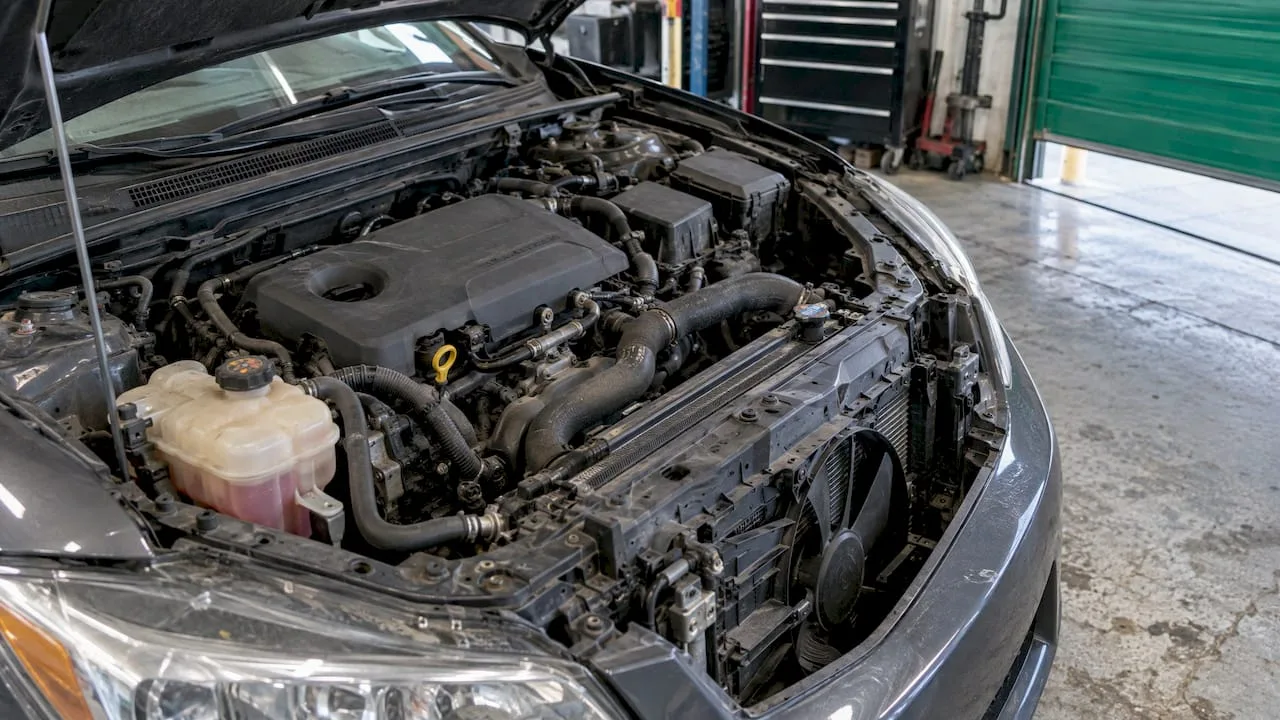
A cooling system check takes about ten minutes and needs no tools: with the engine cold, read the coolant reservoir, look at the hoses and the ground under the car, and compare what you see to your owner's manual. In Clearwater, where a stalled engine in summer traffic is a real risk, that routine is cheap insurance. It is also the first thing we look at when we hand-inspect a used car before listing it, and the same checks tell you a lot about a car you are thinking of buying.
This guide walks you through the check in order, explains the warning signs, tells you what to do if the gauge climbs, and covers how often coolant should be tested or changed.
TL;DR
- Check the coolant reservoir only when the engine is cold, on level ground, and never open a hot radiator or reservoir cap.
- Look for the usual warning signs: a gauge heading toward red, a sweet smell, steam, or fluid under the car.
- Check the level every few months and test the coolant twice a year, then follow your owner's manual for the change interval, which differs by vehicle.
- On a used car, ask what the cooling system history is and look for low or dirty coolant, damp hoses, and stains.
- If the car runs hot, pull over and shut it off. Don't keep driving to "make it home."
Table of Contents
- What the cooling system does, in one paragraph
- The 10-minute cooling system check
- Signs of overheating and cooling trouble
- What to do if your car starts overheating
- How often to check, test, and change coolant
- Cooling system check when you are buying a used car
- A simple yearly routine
- Where we come in
- Our view: a cooling system tells you how a car was cared for
- FAQ
- Sources
What the cooling system does, in one paragraph
Your engine makes a lot of heat. Coolant (a mix of antifreeze and water) circulates through the engine, picks up that heat, and carries it to the radiator, where airflow cools it down. Hoses, a pump, a thermostat, a radiator cap, a fan, and a reservoir keep the whole loop sealed and moving. The system is pressurized, which is why hot coolant can spray out violently if you open it too early. If any part fails or the fluid runs low, the engine overheats, and overheating is one of the fastest ways to turn a reliable car into a repair bill.
If you want the bigger picture on summer driving here, our Clearwater hot weather car care guide covers more than coolant.
The 10-minute cooling system check
Do this with the car parked on level ground and the engine fully cold, ideally before the first drive of the day.
Make sure the engine is cold. This is the safety rule that matters most. A 2017 Mazda CX-5 owner's manual tells owners to check the reservoir with the engine cool, and warns that removing a cooling-system cap on a hot engine can release pressurized coolant or steam and cause serious burns. Other makes carry the same warning. If you have just driven, wait. Don't guess.
Make sure the fan isn't running. The same manual cautions that an electric cooling fan may keep running after the engine is shut off, so confirm it has stopped before you reach near it. Keep hands, sleeves, and loose items clear of the fan and belts.
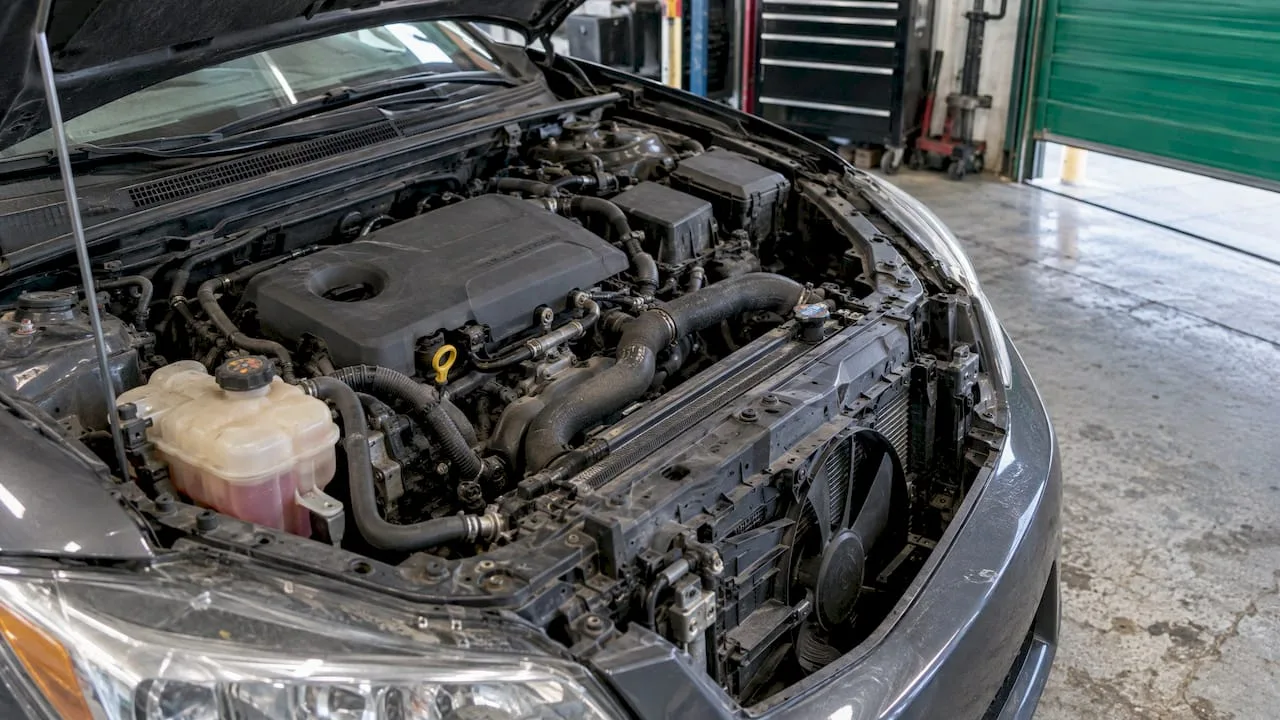
Find the coolant reservoir. It is a translucent plastic tank near the radiator, usually with a cap that has a warning symbol. You don't need to open anything to read it. AAA's guide to car fluids says to read the level against the marks on the tank: the lower mark is for a cold engine and the upper mark is for hot.
Read the level. On a cold engine, the coolant should sit at or just above the lower mark. If it is below it, the system needs coolant. AAA says to top up only to the lower mark and to use the coolant your vehicle specifies. More is not better, because the fluid needs room to expand when it heats up.
Look at the color and clarity. Coolant is usually bright green, orange, pink, or blue depending on the type. It should look clean. Rust-brown color, floating particles, or sediment mean it is time for a flush-and-fill assessment, according to Old World Industries' 2025 maintenance guide. An oily film or sludge is a different problem and needs a professional look right away.
Squeeze-check the hoses, by eye first. Look at the large hoses running to and from the radiator and the smaller heater hoses. You are looking for cracks, bulges, a spongy or swollen look, and white or crusty residue at the connections. The Mazda manual says to replace swollen or deteriorated hoses. Never squeeze a hose that has just been running, because it is hot and under pressure.
Check the ground and the belts. Look under the front of the car for drips or a puddle. Coolant under the car points to a leak in a system that should be sealed, per AAA's overheating guide. Old World Industries also suggests looking over visible belts, pumps, hoses, and connections for wear or looseness while you are there.
Write down what you found. A quick note or phone photo with the date and the level gives you a baseline. If the level drops between checks, you have spotted a problem early, and that is the whole point of the routine.
Adding coolant, if you need to
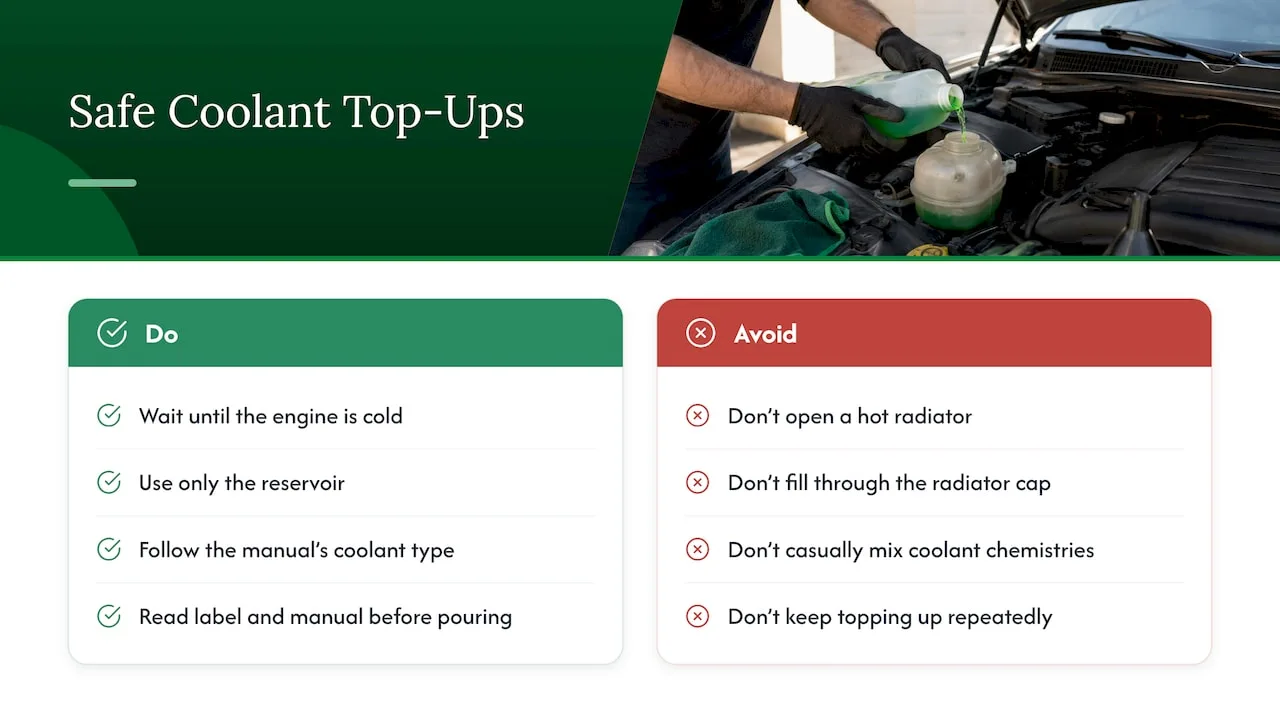
Top up only after the engine is cold, and only through the reservoir, not by pulling the radiator cap. Old World Industries cautions against opening or filling a hot radiator during routine checks because the hot, pressurized fluid can spray out and scald you.
Use the coolant type listed in your owner's manual. Toyota's coolant guide notes that the vehicle manual governs the right fluid and schedule, and different coolant chemistries should not be casually mixed. Many vehicles take a 50/50 coolant-and-water mix, and some coolants come premixed, so read the label and the manual before you pour.
If you find yourself topping up again and again, stop adding fluid and have the car looked at. The Mazda manual says to see a dealer if the reservoir is empty or new coolant is needed frequently. Coolant that keeps disappearing is going somewhere.
Signs of overheating and cooling trouble
Most people first notice the cooling system when something goes wrong. AAA's overheating guide lists these signs:
A red temperature gauge or warning light. The most obvious one. Treat it as an instruction to stop, not a suggestion.
A sweet or burning smell. AAA says a sweet smell can come from burning coolant. If fumes get into the cabin, open the windows.
Thumping or ticking from the engine. Noises together with a hot gauge are a bad combination.
Coolant under the car. Bright, slick fluid on your driveway or parking spot is a leak.
Steam from under the hood. Pull over right away.
Reduced engine power or an unusually hot hood. The engine may be protecting itself or already struggling.
AAA adds a useful point: if other overheating signs show up, don't count on a normal-looking gauge to tell you everything is fine.
Losing coolant with no puddle
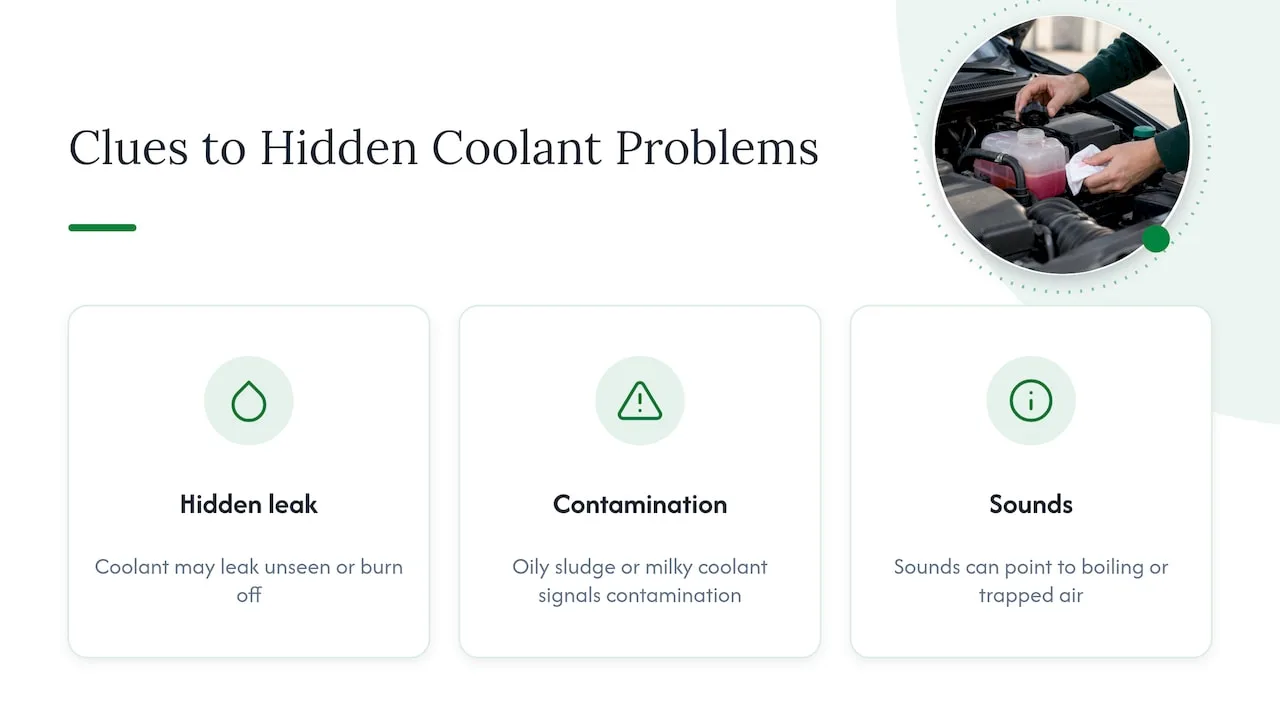
A dry driveway doesn't prove the system is sealed. Coolant can leak where you can't see it, or burn off. If you are adding fluid but never find a drip, the cause can be hidden inside the engine or in small cracks. Oily sludge in the reservoir or a milky look can signal contamination that needs a technician's diagnosis. Hissing, bubbling, or gurgling after shutdown can point to boiling coolant or trapped air. In that case, don't open the radiator cap. Let the car cool and have it checked.
White smoke: two different things
White steam from under the hood usually goes with an engine that is already overheating. White smoke from the tailpipe is different and can mean coolant is burning inside the engine, according to Midas's cooling system page. Either one means the car should not keep being driven.
What to do if your car starts overheating
Stay calm and work through this in order.
Pull over safely and turn the engine off. AAA says that when the gauge reaches red, you should pull over and shut the engine off immediately. Turning on the cabin heat full blast can pull some heat off the engine while you look for a safe place to stop, but don't push on for miles.
Leave the hood closed while steam is coming out. Steam can burn you the moment you pop it.
Wait. Christian Brothers Automotive advises allowing 15 to 30 minutes for the engine to cool before looking, and never opening the radiator cap early.
Look, don't touch. Once cool, check the reservoir and look for obvious leaks.
Know when to stop. If you can't resolve the problem, or you feel unsafe, call roadside assistance or arrange a tow. Driving an overheating engine can warp parts and cause damage that costs far more than the original problem.
Once you are back home, bring the car to our service department in Clearwater so the cause gets found rather than topped up and forgotten.
How often to check, test, and change coolant
There are two separate jobs here: looking and replacing.
Looking (level and condition). Old World Industries recommends checking the reservoir every three to six months with the car level and the engine cold. Getting in the habit of checking at the start of summer is easy to remember in Florida. The Mazda manual recommends checking antifreeze protection and level at least annually, before winter and before trips where temperatures could fall below freezing. That matters if you are driving north for the holidays.
Testing. Old World Industries suggests testing coolant twice a year, at the start of summer and the start of winter. Test strips or a tester measure how well the coolant still protects the engine.
Changing (the flush interval). This is where people get tripped up, because there is no universal number. Here is what manufacturers actually say:
Honda: for one referenced vehicle, Honda's owner's manual calls for coolant replacement at 36 months or 45,000 miles, whichever comes first, then every two years or 30,000 miles after that. That is specific to that model.
Toyota: Toyota's October 2026 article says silicate-containing coolant is generally changed every two years or 30,000 miles, while extended-life coolant may last up to five years or 100,000 miles. The vehicle manual sets the real schedule.
Your car: open the owner's manual to the maintenance schedule. If there is no manual, the service department can look up the interval for your exact model and year.
The takeaway: a car with extended-life coolant and a car with conventional coolant can need changes years apart, so never assume your interval matches a friend's.
Cooling system check when you are buying a used car
If you are shopping, the cooling system is one of the best places to spot how a car was treated. An overheated engine can leave damage that doesn't show for months, so look closely.
Ask for the cooling system history. Has the coolant been changed? Have hoses, a radiator, or a water pump been replaced? Receipts are better than promises. We make the same point about belts in our guide on timing belts and chains.
Check the reservoir on a cold engine. Ask the seller not to run the car before you arrive. A low level, dirty coolant, or oil in the coolant are all red flags.
Look under the car and around the hoses. Fresh drips, crusty residue, or damp spots near hose connections suggest a slow leak.
Watch the temperature gauge on the test drive. It should rise to the normal range and then stay there in traffic and at idle. Use our test drive checklist to cover the rest, and run the A/C too, since it adds load on the cooling fan.
Check that the cabin heat works. Weak heat can point to low coolant or air in the system.
Look for a full inspection report. Our used car inspection checklist for Florida buyers and our explanation of what a multipoint inspection covers show what a proper inspection should include. For the wider list, see 9 things to check before you pay.
A simple yearly routine
If all this feels like a lot, boil it down to a short calendar.
Start of summer: check the level and condition with the engine cold, test the coolant, and look over hoses and belts.
Mid-year: quick level check and a look under the car.
Before winter or a trip north: test freeze protection and check the level again.
Whenever the manual says: change the coolant on its schedule, not on a hunch.
Any time something looks off: a rising gauge, a sweet smell, or a puddle gets looked at that week, not next month.
Where we come in
We sell hand-inspected used cars in Clearwater, and every listing shows its price with no hidden fees, along with the vehicle's history report. If you are shopping, you can browse our used cars in Clearwater and ask us anything about a car, including its cooling system. A real person answers, not a call center.

If you can't find the car you want, tell us what you need and we will source specific vehicles on request, so you only see cars that match. If you need a loan, we work with multiple lenders through our financing page.
Our view: a cooling system tells you how a car was cared for
We have a simple opinion about coolant: it is the cheapest part of the engine to look after and one of the most expensive to ignore.
When we look over a used car before listing it, the cooling system is one of the places we pay attention. Clean coolant at the right level, hoses that look healthy, and a dry ground under the engine tell a story about an owner who paid attention. Dirty fluid and crusty connections tell a different one.
That is why we believe buyers deserve to see the whole picture before they decide: the price on the listing, the inspection, the history report. First-time buyers especially shouldn't have to guess what a warning light means or whether a dealer is being straight with them.
If you own a car and want a second set of eyes on your cooling system, or you are buying one and want to know what you are really getting, reach out. You will talk to a person who can answer.
CL Auto
FAQ
Can I add coolant to my car myself?
Yes, if the engine is completely cold. Add coolant through the reservoir, never by opening a hot radiator cap, and only up to the lower mark, according to AAA. Use the type your owner's manual specifies. If you have to add coolant often, have the system inspected.
Can you lose coolant without a leak?
It can seem that way. Coolant can seep out slowly where you don't see a puddle, or burn off through tiny cracks in the radiator or inside the engine. Oily sludge or a milky look in the coolant calls for a professional diagnosis. Repeated top-ups with no visible drip are a reason to book an inspection.
How do you know if there is air in the cooling system?
Hissing, gurgling, or bubbling sounds after shutdown, a gauge that swings up and down, and weak cabin heat can all point to trapped air or boiling coolant. Don't open the radiator cap to find out. Let the engine cool and have the system checked.
How often should I check my coolant?
Every three to six months is a sound habit, plus a test at the start of summer and winter, per Old World Industries. Always do it with the engine cold and the car on level ground.
When should the radiator be flushed?
It depends on your car. Manufacturers publish different intervals, from about every two years or 30,000 miles to as much as five years or 100,000 miles with extended-life coolant. Your owner's manual sets the schedule.
Sources
- 2017 Mazda CX-5 owner's manual, Owner Maintenance
- AAA: Car Fluids, How to Check and Maintain Them
- AAA: Car Overheating, 8 Causes and Solutions
- Old World Industries: Car Cooling System Maintenance
- Honda owner's manual: Cooling System
- Toyota: How Often to Change Engine Coolant
- Midas: Engine Cooling and Radiator Service
- Christian Brothers Automotive: What to Do When Your Car Overheats