Yes, frame damage can often be repaired. Most structural damage can be measured and pulled back to factory specification, according to a Washington collision shop. But the repair is only as good as the shop doing it, and a car with a repaired frame is a different purchase than one that never had the problem. Below, we explain how repairs work, when a car is totaled, how to spot frame damage and structural rust, and what to do if you are shopping for a used car in Clearwater.
TL;DR
- Many bent or twisted frames can be repaired when the shop follows the manufacturer's repair procedure. Some sections cannot be repaired at all.
- A "total loss" is a money decision, not a verdict that the car is unsafe. It depends on repair cost compared with what the car is worth.
- Surface rust is usually minor. Rust on the frame, rocker panels or underbody is a different matter.
- A clean history report does not prove a car has no structural damage. Get an independent inspection before you pay.
- If you want a used car with no structural surprises, we hand-inspect every car before we list it.
Table of Contents
- What frame damage actually means
- How shops repair frame damage
- When frame damage means a total loss
- Surface rust vs. structural rust
- How to spot frame damage on a used car
- What "structural damage" on a CARFAX report means
- Should you buy a car with frame damage?
- What a frame inspection should cover
- Perspective
- Let us find a car you can trust
- FAQ
- Sources
What frame damage actually means
Older trucks and some SUVs sit on a separate steel ladder frame. Most modern cars are "unibody," where the body and structure are one welded unit. The Michigan Secretary of State's consumer guide explains that unitized bodies rely on lightweight, high strength steel panels welded together for strength. It also warns that even accidents that look minor can damage the structure, and that the repair facility needs proper training and equipment to diagnose it.
So "frame damage" on a modern car usually means damage to structural rails, pillars, floor sections or crumple zones. One repair guide sorts the damage into five types:
- Bent: structural members are deformed but not broken, so straightening is possible.
- Twisted: torsional damage, often from a side impact.
- Crushed or crumpled: sections are shortened by impact and need to be cut out and replaced with welded-in sections.
- Cracked or torn: the steel has failed, and replacement is needed.
- Compromised crumple zones: these need new sections designed to collapse properly in the next crash.
That breakdown comes from an auto body repair guide. Treat it as a useful way to think about severity, not a repair quote.
How shops repair frame damage
A proper repair is a sequence, not a single pull on a chain. In general it goes like this:
- Measure. The shop documents the damage and measures the structure against factory dimensions.
- Mount the car on a frame machine. The car is anchored so force can be applied in a controlled direction.
- Pull and re-measure. Hydraulic pulls bring the structure back toward specification, with measurements repeated as it moves.
- Replace what cannot be pulled. Some sections are cut out and replaced, following a specified method.
- Restore corrosion protection. Seam sealer, cavity wax and coatings removed during the work have to go back on.
The manufacturer's procedures decide what happens after measuring. According to Fix Auto Gig Harbor, some sections are designed to be pulled back into tolerance, others are sectioned and replaced, and a few are marked not repairable. Those procedures exist because the structure is a safety system. The goal is for it to behave correctly in the next collision, not just to look straight.
The last step matters more than most people think. I-CAR, the collision repair training group, notes that corrosion protection removed during repairs must be restored, because corrosion can weaken panels and the vehicle's structural integrity.
One more point from Grand National Collision: neither repairing nor replacing a section is automatically safer. The safer path is the one that follows the vehicle manufacturer's structural procedure.
Not every shop can do it
Kelley Blue Book's Russ Heaps advises that if the frame's integrity can be returned to its pre-collision state, it should be fixed. He also says not every body shop has the equipment or knowledge to do that, and some damage is too severe to restore to a safe structure. If you own a damaged car, ask the shop which manufacturer repair procedures it follows and whether it can show you the before and after measurements.
When frame damage means a total loss
People often assume a totaled car is a dead car. It is not that simple. A total loss is a financial decision: it happens when the repair cost approaches what the car is worth, as Fix Auto Gig Harbor puts it. A car can be structurally repairable and still an economic total loss once airbags, suspension, electronics, paint, rental and diminished value are added in, according to Grand National Collision.
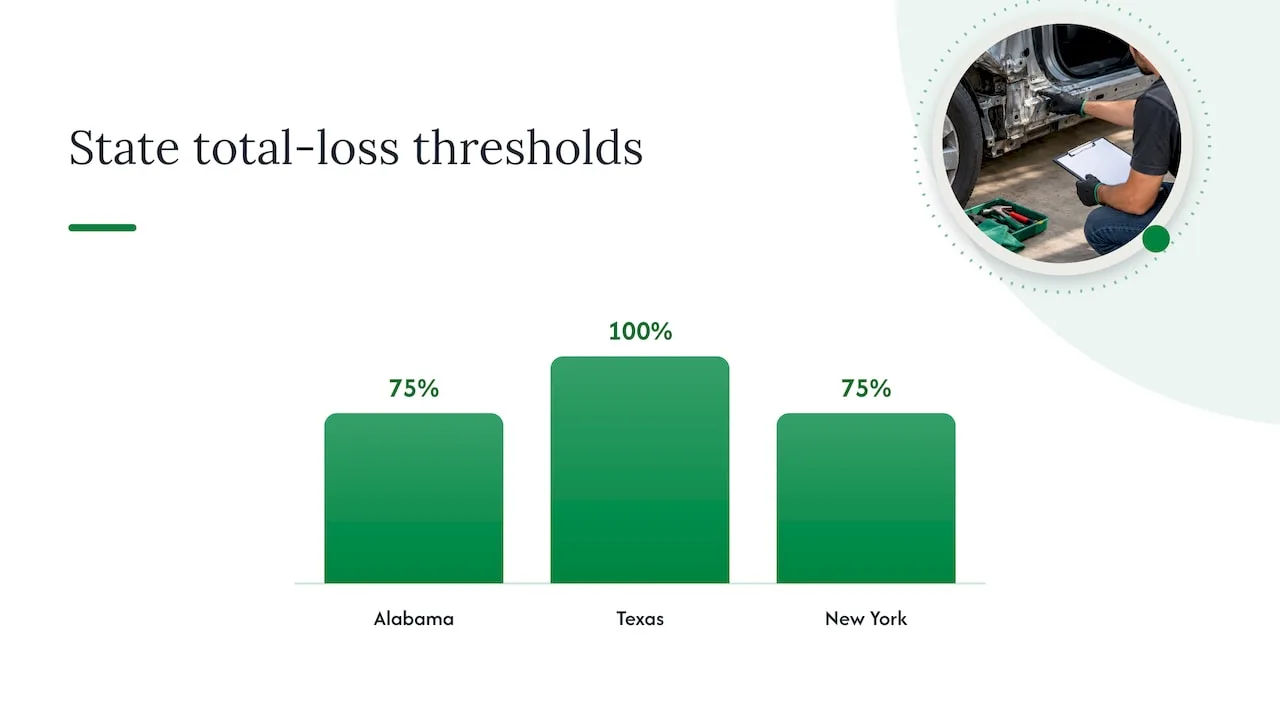
The line also moves from state to state. GEICO explains that some states set a threshold, typically around 70 to 75 percent of actual cash value, and gives Alabama at 75 percent and Texas at 100 percent as examples. A multi-state chart from MWL Law shows the same split: a car with damage equal to 75 percent of its value is totaled in New York but repairable in Texas.
The practical result is that an older, lower-value car reaches the total-loss line sooner. Frame repairs that make sense on a newer truck can exceed the value of an older sedan. That is why used cars with a repair history show up at every price level.
Surface rust vs. structural rust
Rust is the other way a frame gets weak, and it does not need a crash. Here is how to tell the difference.
Surface rust is a light orange film on metal that is still solid. According to Capital One's used car guide, surface rust on underbody parts such as suspension and exhaust components is relatively minor.
Structural rust eats into metal that carries load: frame rails, rocker panels, floor pans, suspension mounts. The same guide says rust affecting the underbody or frame is more serious, and holes in a rocker panel point to weakened metal.
Here is what to look for when you inspect a car:
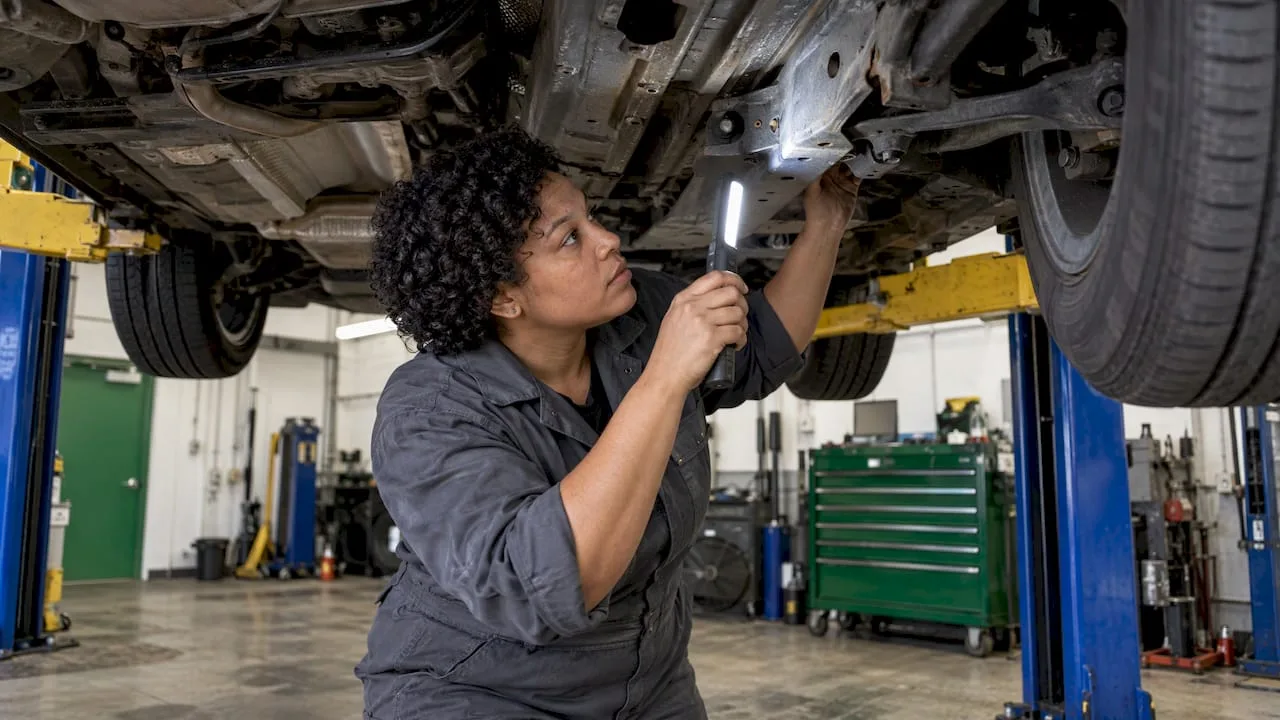
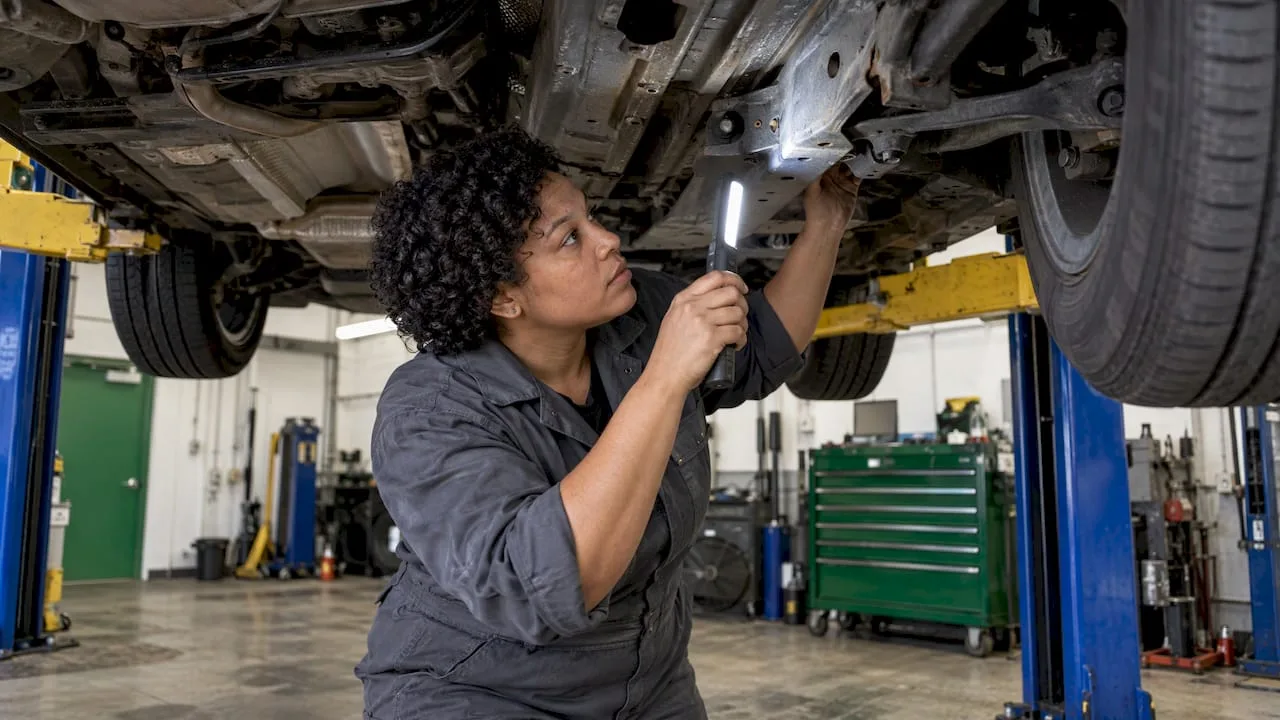
- Look underneath. AAA advises checking the undercarriage and under the hood because rust in those areas can cause structural problems that affect safety. A lift makes this far easier than a flashlight on the ground.
- Check the paint. AAA also says blistered paint can mean rust underneath.
- Lift the carpets. Capital One suggests checking under carpets, including in the trunk, for rust spreading from the inside out, and around the windshield, where debris under the seal can cause it.
- Tap and probe. On classic cars, one restoration shop notes that thinned metal can flex or sound dead when tapped, while sound metal rings. The same idea applies to any suspect spot, but leave heavy probing to a technician.
- Ask where the car has lived. A car that spent years in a salty, humid or flood-prone area deserves a closer look underneath.
If a spot of surface rust has a flaky edge, a bubble or a soft feel, treat it as more than surface until a technician says otherwise.
How to spot frame damage on a used car
You do not need tools for a first pass. Kelley Blue Book lists these warning signs:
- Unusual tire wear.
- The car tracking at a diagonal when you drive straight.
- Panels and parts that fit poorly, including at the door, trunk and hood seams.
- Doors that stick or do not close smoothly.
- Steering that pulls to one side even after an alignment.
- New rattles or squeaks.
Consumer Reports adds that misaligned panels or large gaps can point to sloppy assembly or shoddy repair work, welding on the frame may mean a section was replaced or cut out, and fresh undercoating can hide recent structural repair.
A small magnet helps too. An Autobody News report describes a technician's tip: if a magnet does not stick to a steel panel, there may be filler where original metal should be. Run it along fenders, quarter panels and rocker areas. It will not tell you everything, but it is a cheap first check.
Our test drive checklist walks through the tracking, steering and noise checks on the road.
What "structural damage" on a CARFAX report means
When a history report says structural damage was reported, someone (an insurer, a shop, a police report, a state agency) reported an event involving the structure. It does not tell you how bad it was or whether the repair was done right.
The reverse matters just as much. The Federal Trade Commission says a vehicle history report is not a substitute for an independent inspection. Reports may list accidents and flood damage but typically will not list mechanical problems. Reports depend on what third parties document, so damage that nobody reported can escape them entirely. The Autobody News story above describes a buyer whose car had a clear CARFAX report but carried layers of body filler over a major structural crack.
Reports can also be hard to dispute. A KUTV investigation followed a driver whose report showed structural damage that neither insurer nor the body shop had reported, and who could not learn the source.
Use the report as one input. Pair it with a title check (our guide to verifying a clean title with NMVTIS shows how) and a physical inspection.
Should you buy a car with frame damage?
It depends on what you mean by it. A car with an accident on record that was repaired to the manufacturer's procedure, with paperwork to show it, is a different situation than a car with a bent rail and no documentation. If you are weighing a car with a known structural history, here is a sensible order:
- Get the repair records. Ask for the shop's invoices, measurement printouts and photos.
- Pay for an independent inspection. Consumer Reports recommends a pre-purchase inspection by a mechanic, which typically costs $100 to $150, and says to ask for a written report on condition, problems and repair costs.
- Check the title status. Salvage and rebuilt titles change price, insurance and financing. NerdWallet reports these cars typically sell for 20% to 40% less according to Kelley Blue Book, many insurers offer only limited coverage or none, and banks rarely finance them.
- Think about resale. The next buyer will run the same history report you did.
- Call your insurer first. Confirm coverage before you commit.
Our guide on what to demand when buying rebuilt or salvage cars covers the paperwork in more detail, and using a pre-purchase inspection to negotiate shows how to turn findings into a better price.
What a frame inspection should cover
A good inspection goes beyond a visual check. Ask the inspector to cover these items:
- Panel gaps and paint thickness, front to back and side to side.
- Frame rails, strut towers and core support for kinked, wrinkled or re-welded metal.
- Weld quality and seam sealer that looks different from the factory's.
- The underside on a lift, including rust on rails, mounts and rocker panels.
- Tire wear and alignment readings that suggest the car is not tracking true.
- Airbag, suspension and steering components near any repaired area.
If a shop finds something, ask for it in writing. That written report is also your negotiating tool. For what a broader walk-through includes, see our explanation of the multipoint inspection.
Perspective
We buy and sell used cars in Clearwater every week, and structural questions come up more than almost any other. Our view is simple: you should never have to guess about what is under a car.
That is why we hand-inspect every vehicle and pull a history report before it is listed. We look at the things this article covers: panel fit, tire wear, how the car tracks, what the underside looks like. The price is on the listing, with no hidden fees, so the car in front of you is the car you are paying for.
A history report is a starting point, not a verdict, and we say so. If you want to see a car on a lift or take it to your own mechanic, that is a normal part of buying.
If you are looking for something specific, tell us. We will search for the car that fits your needs so you only see ones worth your time. Every question is answered by a real person.
CL Auto
Let us find a car you can trust
If you would rather skip the guesswork, start with our hand-inspected used cars. Each one is checked and has a history report before we list it, and the price shown is the price you pay.

Can't find what you want? Tell us about the car you need through vehicle sourcing, and we will look for it. We also offer financing through multiple lenders, and we buy cars from individuals if you are ready to sell yours. For more guides, see our buying advice from a Clearwater dealer.
FAQ
Can a damaged frame be fixed?
Often, yes. Shops measure the structure and pull it back to factory specification, and replace sections that cannot be pulled. The result depends on the shop following the manufacturer's repair procedure, and some sections are marked not repairable.
Is a car still drivable with frame damage?
Sometimes it runs, but that does not mean it is safe. Collision damage can affect structural integrity and degrade steering and braking, Consumer Reports notes. Have a qualified collision shop measure the car before you keep driving it.
What is the $3,000 rule for car repairs?
It is a rough rule of thumb, not a law, and we could not find an official source that defines it. What does matter is your state's total loss threshold and your car's value. Frame repair on a lower-value car can reach that line quickly.
Will insurance cover a rotted frame?
Usually not. Standard auto policies generally treat rust and rot as wear over time rather than a covered event, though policies differ. Check your own policy wording or ask your insurer before you rely on coverage.
Is surface rust on a used car a dealbreaker?
Not by itself. Light surface rust on suspension or exhaust parts is relatively minor, according to Capital One. Rust on the frame, rockers or floor needs a technician's opinion before you buy.
Sources
Frame Damage and Total Loss, Fix Auto Gig Harbor
Consumer's Guide to Collision Repairs, Michigan Secretary of State
Back-To-Basics: Corrosion Protection Inspection, I-CAR
Car Frame Repair vs Frame Replacement, Grand National Collision
Car Frame Damage, Kelley Blue Book
Car Frame Repair: Types, Cost and When to Total the Vehicle
Totaled Car: What It Means, GEICO
Automobile Total Loss Thresholds in All 50 States, MWL Law
Rusty Cars: How To Tell When a Car Has Too Much Rust, Capital One
What To Look For When Buying A Used Car, AAA
Structural Rust vs Cosmetic Rust on a Classic Car
How to Inspect a Used Car, Consumer Reports
Hidden Structural Damage Found After Magnet Test, Autobody News
Buying a Used Car From a Dealer, FTC
Who is reporting your car's damage to Carfax, KUTV
How to Avoid Hidden Damage on a Used Car, Consumer Reports
What Is a Salvage Title and Should I Buy a Car With One, NerdWallet