Multipoint Inspection: What It Covers and Why It Matters
A multipoint inspection is a structured, head-to-toe check of a vehicle's major systems, done by a trained technician who rates each item as fine, worn or needing attention. AAA describes it as a physical for your car. If you own the car, it helps you catch small problems early. If you're buying a used car, it's a useful start, but it is not the same as an independent inspection, and the difference can cost you real money.
We're an independent used car dealer in Clearwater, so we see both sides of this. Here is what the inspection covers, what it costs, what it misses, and how to use it when you shop.
TL;DR
- A multipoint inspection (MPI) is a technician's checklist review of fluids, tires, brakes, suspension, battery, lights and more, with each item rated by condition.
- It costs anywhere from nothing to over $100, depending on the shop and how deep it goes, according to Allstate.
- A seller's own inspection prepares a car for sale. For a used car, Consumer Reports recommends a separate pre-purchase inspection, typically $100 to $150, from a mechanic you pick.
- A passing checklist does not rule out flood damage, intermittent electrical faults or worn internal transmission parts.
Table of Contents
- What a multipoint inspection actually is
- What's on a multipoint inspection checklist
- What a multipoint inspection costs
- The used car problem: whose inspection is it?
- What a standard checklist can miss
- How to use a multipoint inspection when you buy
- Our view at CL Auto
- Looking for a car that's already been checked?
- FAQ
- Sources
What a multipoint inspection actually is
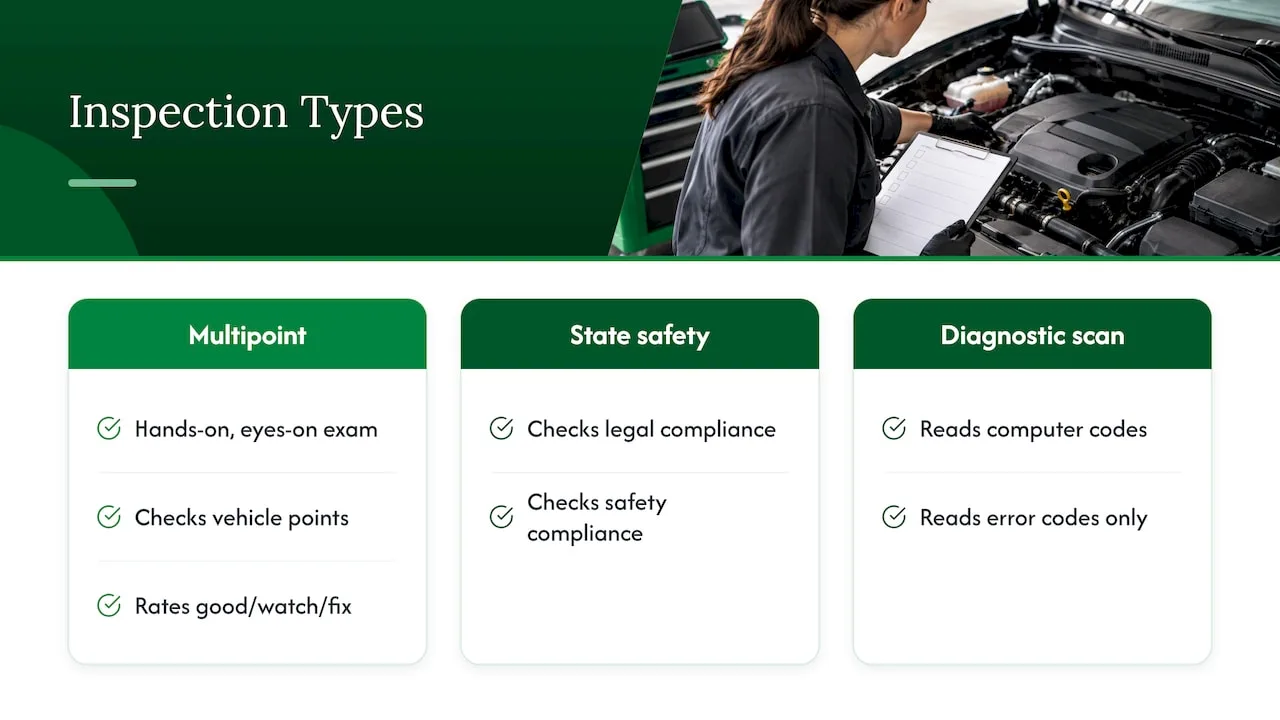
The name is literal. The technician works through a list of "points" on the vehicle and records the condition of each one. Most shops use a printed or digital form with a simple rating: good, watch this, or fix now. Some shops send photos and notes to your phone.
The goal is to find two kinds of problems. The first is anything unsafe right now, like brakes worn to the limit. The second is anything that will need money soon, like tires that are getting thin but aren't dangerous yet. J.D. Power frames it as a budgeting tool: knowing about a worn part early gives you time to save instead of facing a surprise repair bill.
It also helps to know what an MPI is not. Per AAA, it differs from a state safety inspection, which focuses on legal and safety compliance, and from a diagnostic scan, which only reads the computer for error codes. An MPI is a hands-on, eyes-on exam.
What's on a multipoint inspection checklist
Every shop's form is a little different, and the number of points varies. Dealers advertise 27, 50, 120 points and up, but Consumer Reports' advice on certified pre-owned checklists is not to get hung up on the count. What matters is whether the right things get checked by someone who knows what they're looking at.
Most checklists group the work like this:
- Fluids. Engine oil, transmission fluid, brake fluid, coolant, power steering fluid and washer fluid. The technician checks level and condition, since dark, gritty or milky fluid tells a story.
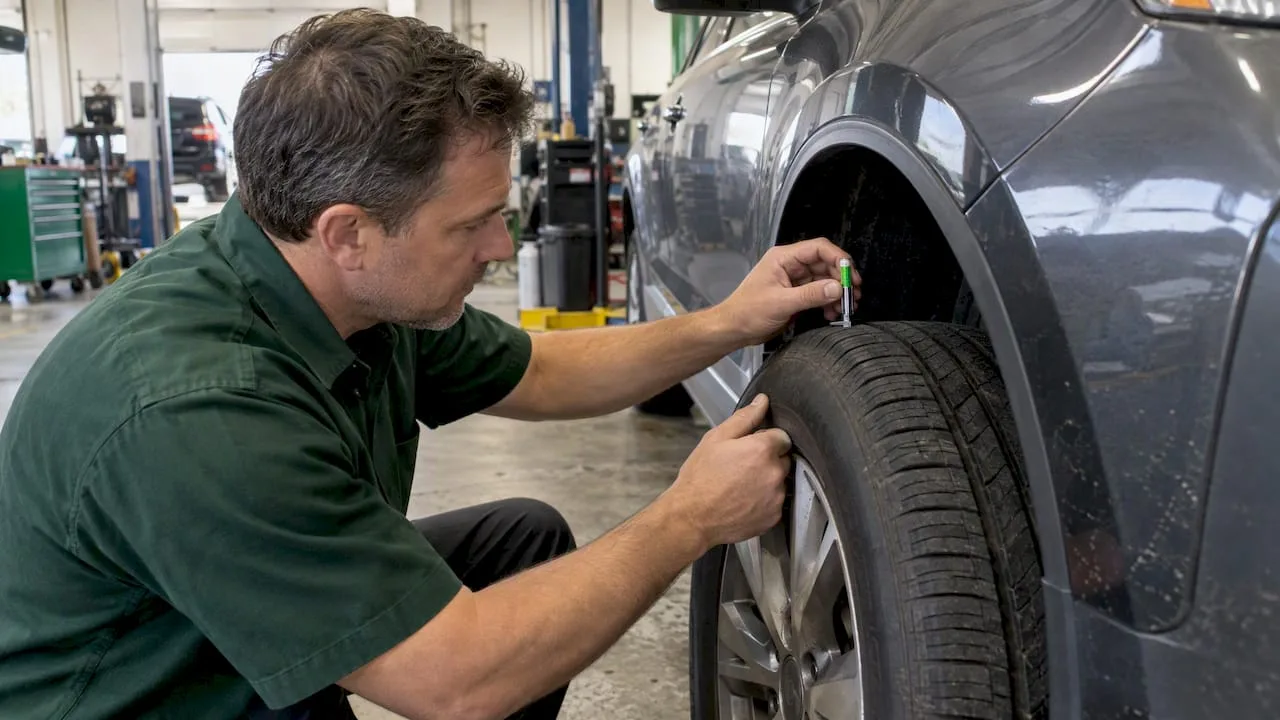
- Tires. Tread depth, uneven wear, age, damage and air pressure. Uneven wear often points to alignment or suspension trouble.
- Brakes. Pad and rotor thickness, and signs of leaks or glazing.
- Suspension and steering. Shocks, struts, ball joints, tie rod ends and boots. Torn rubber boots and leaking shocks are common finds.
- Battery and charging system. Terminal corrosion, battery age and a load test. We cover this in more detail in our piece on what a battery health check should tell you before you buy.
- Belts and hoses. Cracks, fraying, bulges and soft spots.
- Lights and wipers. Headlights, brake lights, turn signals and wiper blades.
- Exhaust and underbody. Leaks, rust, damage and loose hangers.
- Filters. Engine air filter and cabin filter.
A DIY version of this list is available if you want to learn the basics yourself. CheckEngine's DIY multipoint guide walks through it step by step.
What a multipoint inspection costs
There's no single price. Allstate notes that some service centers offer an MPI for free, while more in-depth inspections can run over $100. Free ones usually come bundled with an oil change or scheduled service. Some new-vehicle maintenance plans include them too. For example, ToyotaCare covers normal factory scheduled maintenance for 2 years or 25,000 miles, whichever comes first.
That free check is built for an owner. It tells you what your own car needs. It was never meant to be a buyer's protection on a car someone else is selling.
The used car problem: whose inspection is it?
This is the part most MPI pages skip. When you're buying, the question is who the inspection works for.
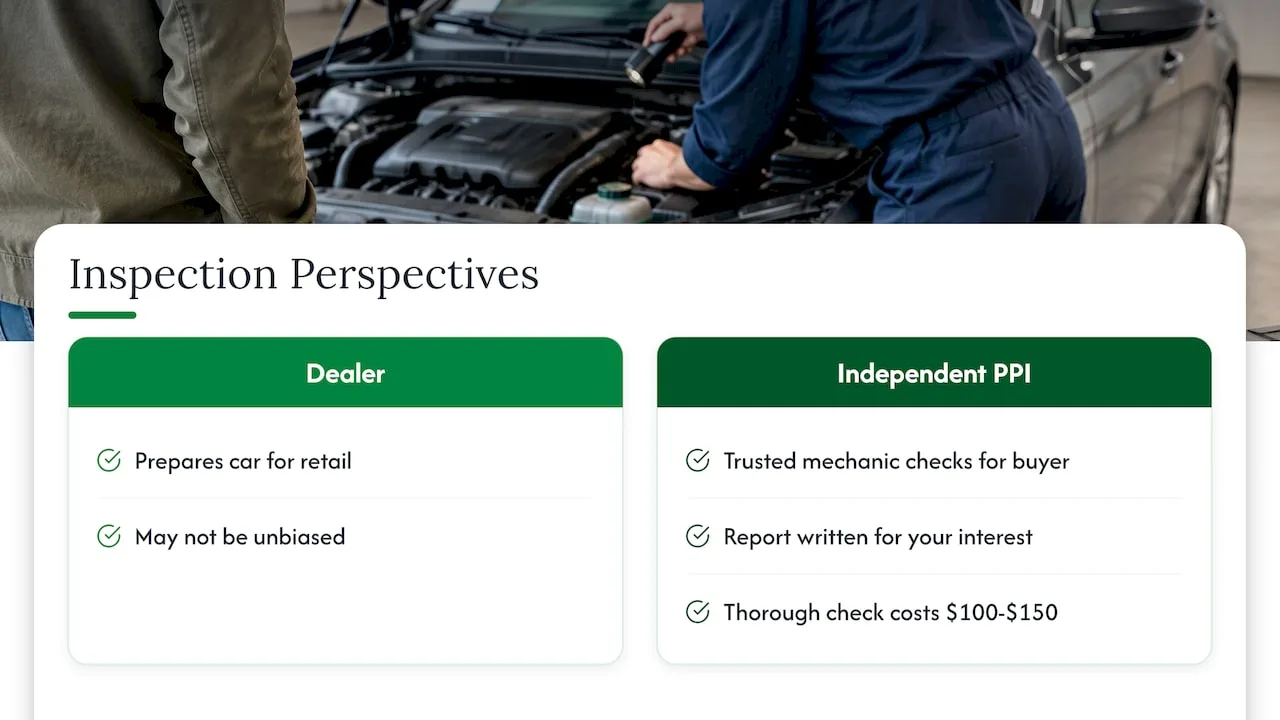
A dealer's inspection of a used car usually exists to get it ready for retail. Consumer Reports mechanics point out that on a non-certified used car, that check often isn't an unbiased assessment of condition. That's why they recommend an independent pre-purchase inspection (PPI) from a trusted mechanic, a report written only for your interest.
Expect to pay about $100 to $150 for a thorough PPI. On a car that costs thousands, that's cheap insurance. If you want a walkthrough of the process, this four-step pre-purchase inspection guide covers arranging a third-party check and judging the car on the road.
We say this as a dealer, and we mean it. Ask any seller, us included, about taking the car to your own mechanic. A seller who gets nervous about that question has told you something.
What a standard checklist can miss
A stationary, visual inspection has limits. Technicians quoted by AAA wish buyers understood that a passing result doesn't guarantee a fault-free car. Intermittent electrical gremlins, worn internal transmission parts and hidden flood damage often don't show up on a checklist. That's why a proper road test with a mechanic matters.
Flood damage
This one matters in Tampa Bay. Water can ruin electronics, lubricants and mechanical systems, and Consumer Reports warns that problems can take months or even years to surface as corrosion reaches vital electronics such as airbag controllers. A car can drive fine on the lot and fail later.
What to look for:
- Milky, milkshake-looking residue on the oil fill cap or dipstick.
- Mud, silt or rust in places water shouldn't reach, like behind engine components or inside trim panels.
- A musty smell, or fresh air freshener covering one.
- Rust on seat rails, under the dash or on screws that should be clean.
If you see these signs, Consumer Reports advises walking away no matter how well the car runs right now.
Replaced air bags
History reports have gaps too. NHTSA says that dangerous aftermarket air bag inflators are not tied to a vehicle's VIN, so a standard recall search can't detect them. NHTSA tells buyers to review the history report for air bag deployment, prior crashes or total loss events, theft, and repairs at non-certified shops. If the air bag deployed, NHTSA urges that the car be inspected to confirm genuine inflators. Ask a reputable mechanic to do that specifically. A general MPI form won't.
Smaller things that add up
A basic checklist may note a windshield chip and move on. On newer cars with driver-assist cameras, glass damage can bring extra work. This windshield crack and ADAS guide explains when a crack is repairable and when it isn't. Put it in your price math before you sign.
How to use a multipoint inspection when you buy
Here's the order we'd follow if we were shopping for a friend.
- Read the price and the fees first. Know the full out-the-door number before you spend time on a car.
- Ask for the inspection and history report. Read both. Look for deployed air bags, title brands, and gaps in service records.
- Do your own walk-around. Wear clothes you don't mind getting dirty. Consumer Reports suggests being ready to get on the ground and handle dirty components, and bringing thin gloves.
- Take a real test drive. City streets, a highway stretch, a few hard stops. Listen for noises, feel for pulling or shuddering, and test every switch.
- Book an independent PPI. Choose a mechanic you found yourself, not one the seller recommends.
- Use the results. A worn set of tires or due brakes is a reason to negotiate. Signs of flood or structural repair are a reason to leave.
Our 9 things to check before you pay and used car checklist go deeper on the shopping side. If you're comparing certified and non-certified cars, see our certified pre-owned vs used breakdown.
Our view at CL Auto
We don't think a dealer's inspection should be something you have to take on faith. That's why we hand-inspect every car and run a vehicle history report before it's listed, and why the price is shown on every listing with no hidden fees. You should be able to see what we saw.
But we also know that trust is built by checking. A dealer inspection tells you what the dealer found. An independent one tells you what a stranger with no stake in the sale finds. When both agree, you can buy with confidence. When they don't, you've saved yourself a bad purchase, and we'd rather you hear that before you sign than after.
Most of the frustration buyers describe with dealerships comes from not knowing: what's in the price, what's wrong with the car, who you're really talking to. Every inquiry here is answered by a real person, not a call center, and you can ask us anything about a car's condition and history.
— CL Auto
Looking for a car that's already been checked?
Browse our hand-inspected used cars with the price on every listing. If you don't see what you want, our vehicle sourcing service finds a specific car for you, so you only see ones that fit your list. You can also run numbers with the car payment calculator or look at our financing options.
FAQ
What does multipoint inspection mean?
It means a technician checks many points on a vehicle, such as fluids, tires, brakes, suspension, battery and lights, and records the condition of each. Think of it as a checkup, not a repair. The shop then tells you what's fine, what's wearing, and what needs attention.
Is a multipoint inspection the same as a pre-purchase inspection?
No. A multipoint inspection is a general condition check, often done by the shop or dealer that services or sells the car. A pre-purchase inspection is done for the buyer by a mechanic with no stake in the sale. Consumer Reports recommends the independent version on any used car.
How often should I get a multipoint inspection?
AAA suggests having one a few times each year so you catch small problems early. Many owners pair it with each oil change. Your owner's manual and your driving habits should guide the timing.
Can a multipoint inspection tell me if a used car was in a flood?
Not reliably. Flood damage often hides in places a stationary checklist doesn't reach, and electronics can fail months later. Check for milky oil residue, silt and rust in odd places, and have a mechanic look closely, especially on cars sold around Florida.
Sources
- What Is a Multipoint Inspection for Vehicles? (AAA Club Alliance)
- What Is a Multi-Point Car Inspection? (AAA)
- Multi-Point Inspections for Your Car, Explained (Allstate)
- What Is A Multipoint Inspection? (J.D. Power)
- How to Inspect a Used Car to Avoid Costly Repairs (Consumer Reports)
- Where to Buy Used Cars That Best Fit Your Needs and Budget (Consumer Reports)
- Beware a Flood of Flooded Cars (Consumer Reports)
- Deadly Air Bag Inflator Replacements: What to Know (NHTSA)
- Used Car Warning: Dangerous Replaced Air Bag Inflators (NHTSA)
- ToyotaCare brochure (Toyota)
- What to Check in a DIY Multipoint Inspection (CheckEngine)