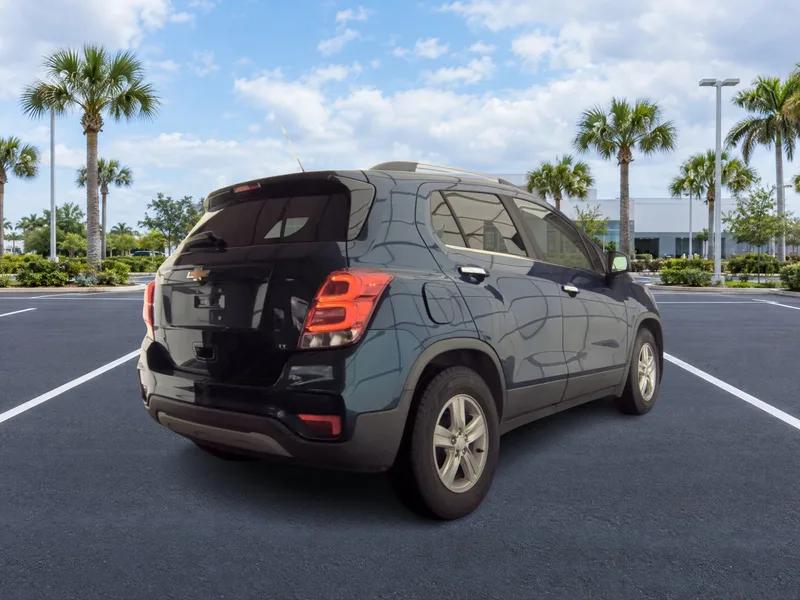
A flood damaged car can look clean, smell fine and still be hiding a wiring harness full of corrosion. You can protect yourself with four things: a close look at the car's hidden spots, a VIN check, a licensed mechanic's inspection, and a seller who puts everything in writing. This guide walks you through each one, in the order you would do them. Here in Clearwater, where hurricane season is a fact of life, we think every buyer should know the routine. Every car we list has been hand-inspected and run through a history report first, and the price is on the listing with no hidden fees.
TL;DR
- Flood damage hides. NHTSA says a flooded vehicle can look fine after cleanup, and problems can show up years later.
- Check the hidden spots: under the carpet, in the trunk, under the dash, in the headlights and on bare metal underneath.
- Run the VIN, but treat a clean report as incomplete evidence, not proof.
- Florida law requires a seller to disclose flood status in writing before the sale is completed, but a car flooded in another state can arrive with a clean title.
- Get everything in writing and have a licensed mechanic look at any car you are serious about.
Table of Contents
- Why flood cars matter more in Tampa Bay
- Signs of flood damage you can check yourself
- How to run a flood check on the VIN
- What a clean history report can miss
- Get a mechanic's eyes on the car
- What Florida law says about selling flood vehicles
- Buying after a hurricane in the Tampa Bay area
- Our perspective
- Find a car you can feel good about
- FAQ
- Sources
Why flood cars matter more in Tampa Bay
Salt water, storm surge and heavy rain put cars under water every hurricane season along the Gulf Coast. Most of those cars are never driven again. Some are cleaned up and put back on the market, here or in other states.
Water does the most harm to the parts you cannot see. Modern cars run on sensors, control modules and long wiring runs. Once water gets into connectors, corrosion starts, and it keeps going after the car dries out. NICB's August 2026 warning lists the electrical system, engine, transmission, brakes and safety features as the areas at risk.
That last item is the one that matters most to a first-time buyer. A car that stalls is an expense. A car whose airbag or anti-lock brake system fails at the wrong moment is a danger. That is why this is worth an afternoon of your attention before you sign anything.
Signs of flood damage you can check yourself
You do not need tools or a mechanic's training for the first pass. You need a flashlight, a little patience and the willingness to say no. Go through these in order.
Smell the cabin first. A musty, moldy odor is the classic sign. So is a strong air freshener or a cleaning-chemical smell that seems too heavy for a used car. NHTSA lists both as things to look for.
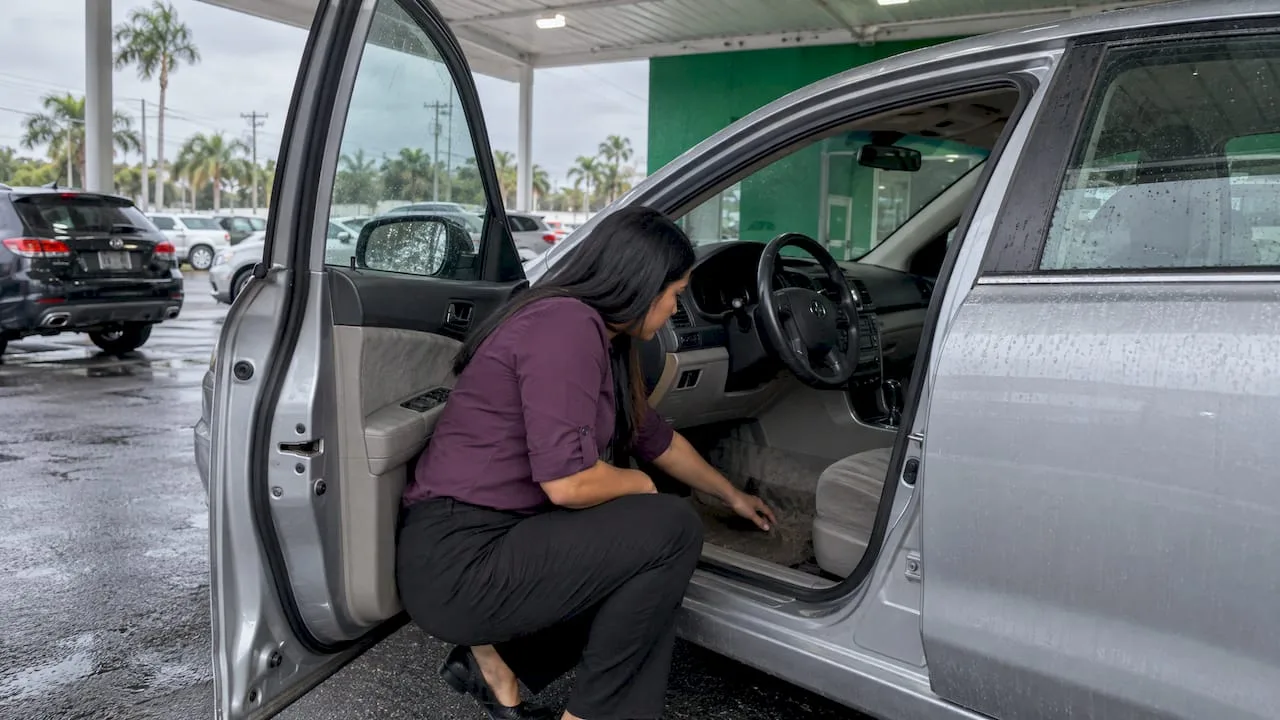
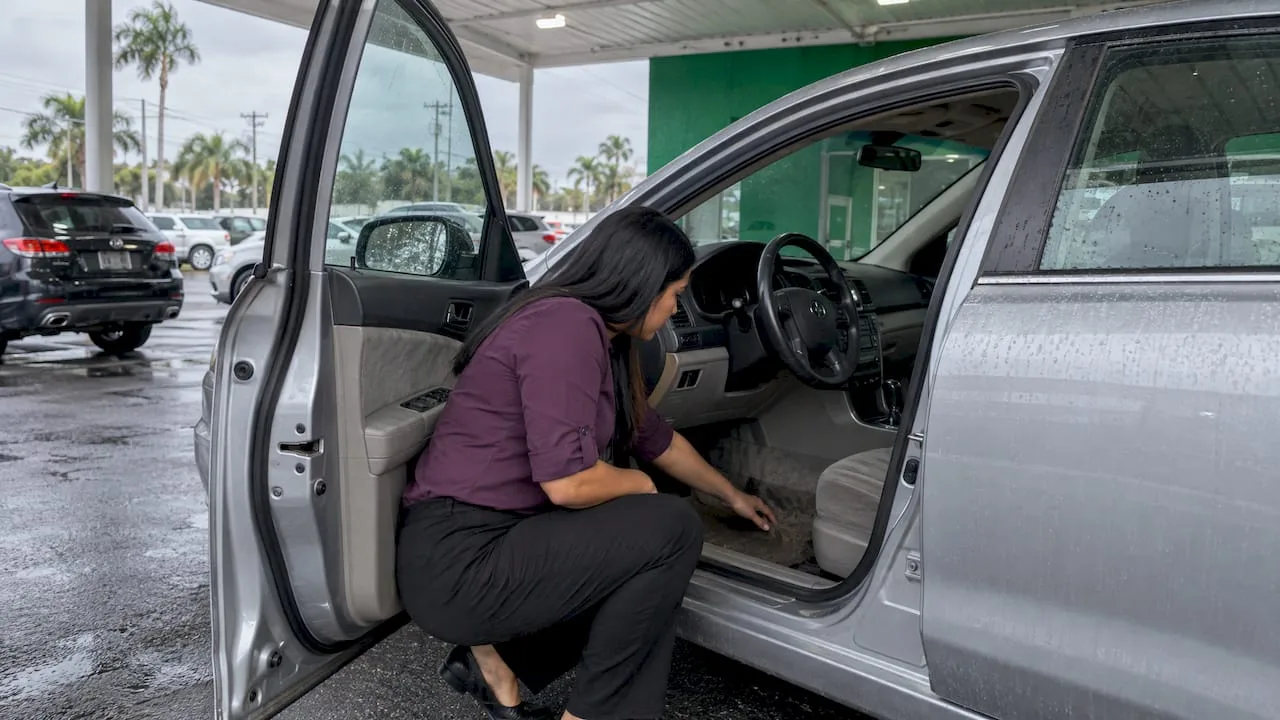
Lift the carpet and check what is underneath. Look in the trunk, the glove box and under the dashboard for mud, silt, sand or a visible waterline. Pinellas County's flood-vehicle page also points to grass, mud or sand debris and moisture under the carpets. If the carpet looks newer than the rest of the interior, ask why.
Look at the upholstery and seat belts. Discolored or stained fabric is a flag. Pull a seat belt all the way out. Pinellas County says gritty or sticking belts can be a warning sign, because silt dries inside the mechanism.
Check the headlights and taillights for moisture. Fog or a water line inside the lens is hard to fake and easy to see in daylight.
Inspect the metal in places that should not rust. Screws, hinges, springs, latches and brackets under the seats and in the trunk should not show corrosion on a car of normal age. Pinellas County names these exact parts. Surface rust on a bolt that has swollen up like a peanut, deep inside the cabin, tells you water sat there.
Check the engine oil. Pull the dipstick. A change in color or thickness can mean water got into the oil, according to Pinellas County. Milky or frothy oil is a reason to walk away.
Test every electrical item. Windows, locks, wipers, radio, heated seats, dash lights, turn signals, A/C. Run each one more than once. Flood damage often shows up as something that works, then does not.
Take a real test drive. Pinellas County suggests driving over different terrain and at different times of day, because electrical problems can come and go. Do not settle for one lap around the block.
Our used car inspection checklist for Florida buyers goes through the rest of a walkaround, including the parts that have nothing to do with water.
Why a clean car is not a safe car
NHTSA says flood vehicles may look fine after cleanup and that effects can cause mechanical problems years later rather than immediately. A detailed interior and fresh shampoo cover the first layer. They do not touch corroded connectors inside a door or under a seat. So a pass on your own inspection is a good start, not a finish.
How to run a flood check on the VIN
The VIN, or vehicle identification number, is the 17-character code stamped on the dash near the windshield and printed on the door jamb sticker and the title. Every history lookup starts there. Make sure the number on the dash, the door and the paperwork all match before you spend anything.
Start with the state. For a Florida-titled car, the Florida Highway Safety and Motor Vehicles department (FLHSMV) lets you enter a VIN or title number in its Motor Vehicle Information Check to see the car's description and any brands. A brand is a label on the title for the car's current or prior condition, such as flood, salvage or junk. See FLHSMV's flooded vehicle advisory for how it works.
Check the national title database. NMVTIS, the National Motor Vehicle Title Information System, reports title, most recent odometer reading, brand history and applicable theft data. FLHSMV points to it, and NHTSA says it can help trace title history when a title looks suspicious. Our guide to five NMVTIS-backed steps to verify a clean title covers the details.
Run the free insurer lookup. NICB's VINCheck tells you whether participating member insurers reported a car as salvage or total loss, or as stolen and not recovered. In its August 13, 2026 release, NICB said participating insurers covered more than 92% of the market.
Pull a commercial history report. It combines title, service, accident and ownership records in one place. Our guide to reading a vehicle history report shows what each section means.
Compare the story to the records. Where the car has lived matters. If the history shows registration in a county or state that was hit by a recent storm, and the seller cannot explain the gap, take that seriously.
What a clean history report can miss
This is the part many buyers do not hear. A report only knows what someone told it.
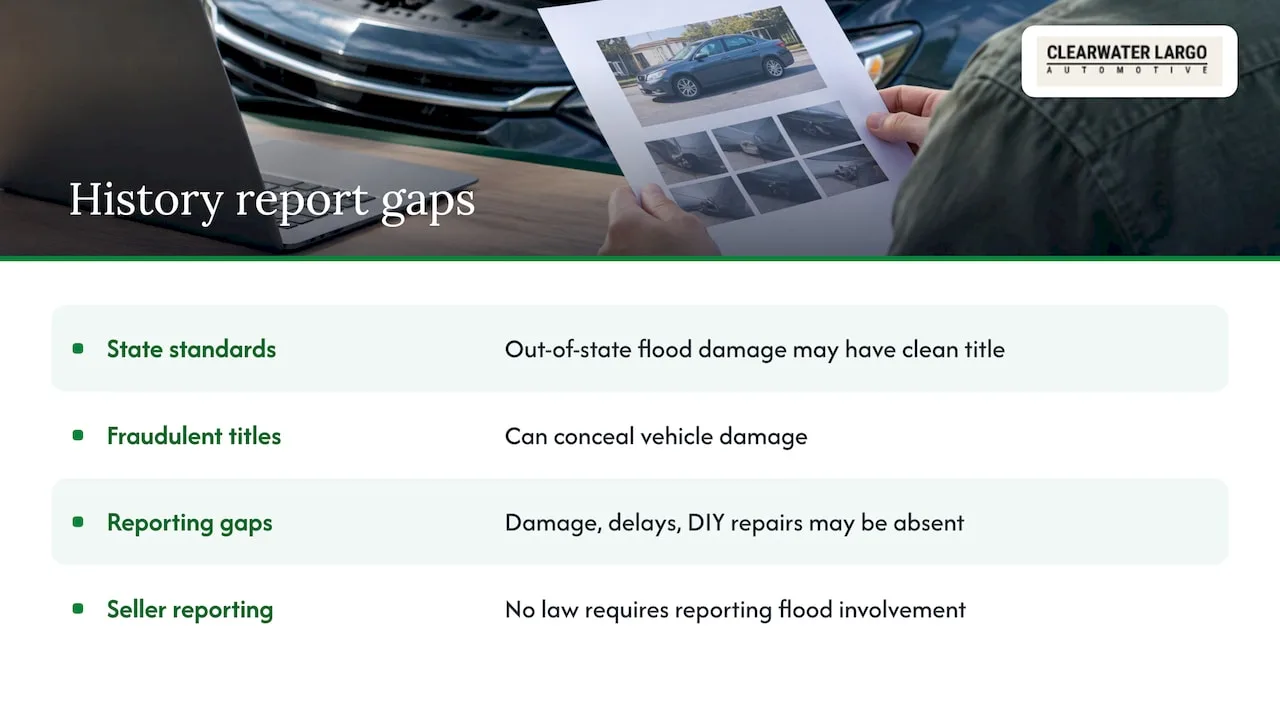
FLHSMV warns that state branding standards differ, so a flood-damaged vehicle that started in another state may be sold in Florida with a clean title. NHTSA likewise warns that fraudulent titles can conceal damage.
The gaps are well documented. AAA explains that history data depends on information being reported, so unreported flood damage, reporting delays and do-it-yourself repairs may not appear. A report that comes back clean is incomplete evidence, not proof that a car never saw water.
A Carfax representative made a similar point in a 2023 NBC 6 report on South Florida flooding: not every flood vehicle is reported, and no law requires every seller to report flood involvement. The report also noted that uninsured owners may clean a car and resell it without any record.
The FTC's used-car guide adds that report information may be incomplete and suggests checking a second provider if something seems missing or fabricated. That is why the records and your own inspection work as a pair. Neither one is enough by itself.
Get a mechanic's eyes on the car
For any used car you are serious about, and especially one bought from a private seller or a lot you do not know, the FTC recommends an independent mechanical inspection, even on a dealer-certified car or one sold with a warranty. Pinellas County says the same, advising a reliable, licensed mechanic, and says not to rely only on what a seller promises.
Here is what makes that inspection worth the money:
Ask for a written estimate. The FTC suggests getting a written repair estimate that names the make, model and VIN. That turns an opinion into a document you can use.
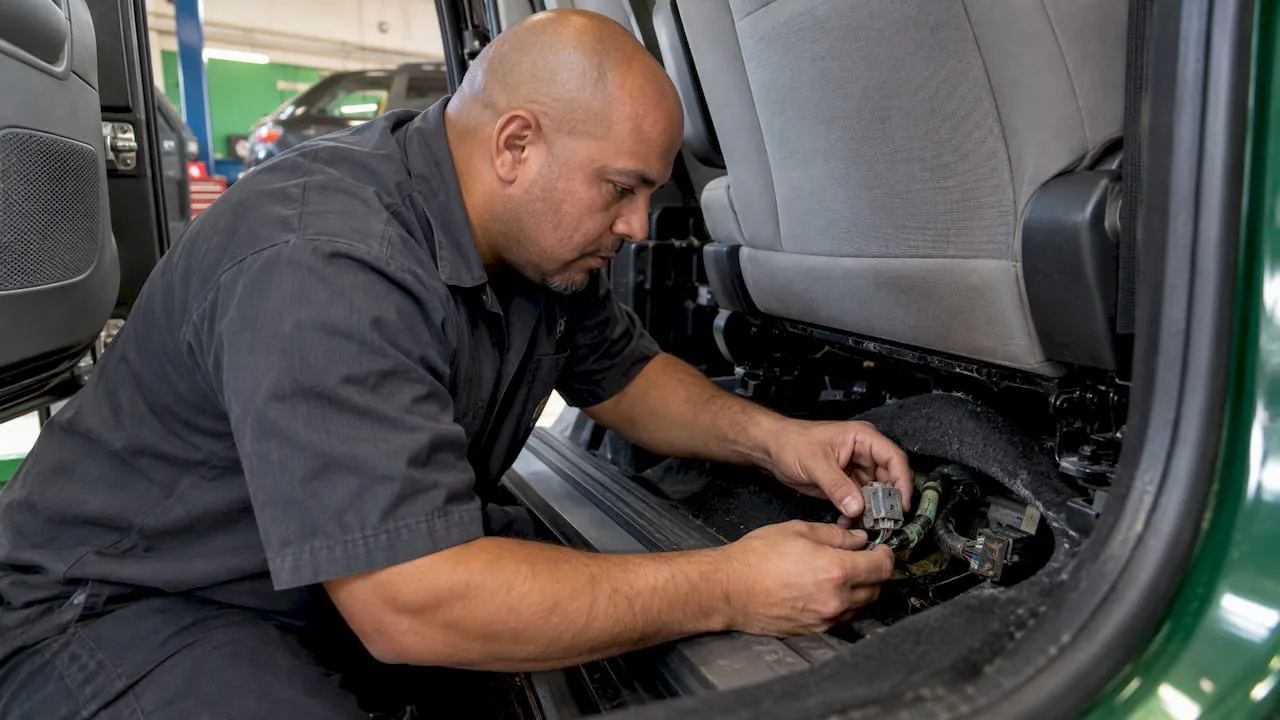
Ask for the specific checks. Request a look at the wiring harness, connectors under the seats, the underside of the car, the brake system, the transmission fluid and the airbag module. Here is what a pre-purchase inspection covers and what it costs, so you know what to expect when you book one.
Expect to move the car or bring the mechanic. The FTC says you can request a mobile inspection or have the car taken to a facility you choose, and that if a seller will not allow an independent inspection, you should consider another seller.
Know what "as-is" means. Pinellas County cautions that an as-is purchase is in the car's current condition and places repair responsibility on you, whatever the seller said out loud. If a promise matters, it belongs on paper.
A lot of buyers skip this because the price is good and the seller is friendly. A flood car is exactly the kind of deal that looks good and friendly.
What Florida law says about selling flood vehicles
You do not need to read the statute, but you should know the outline.
Under Florida Statutes chapter 319 (2025 text), a flood vehicle is one declared a total loss because of water damage, and its title must conspicuously identify its flood status. The same statute, in section 319.14, prohibits knowingly transferring such a vehicle without written disclosure to the purchaser before the transaction is completed.
FLHSMV adds that when an insured vehicle is reported as flooded, the insurer brands it and reports it to the state.
What that means in practice:
A flood brand on the title is a disclosure you can read. If you see it, you know what you are looking at.
No brand does not mean no flood. Uninsured owners, other states' rules and title fraud all leave gaps, as covered above.
Written disclosure is your protection. If a seller says a car has never been in water, ask them to put that in writing on the paperwork. Their reaction tells you something.
Some buyers deliberately choose a rebuilt or salvage vehicle to save money. That is a legitimate decision when it is made with open eyes. Our article on what to demand when buying rebuilt or salvage cars lays out the paperwork and inspection that should come with one. The trouble with flood cars is the unlabeled ones.
Buying after a hurricane in the Tampa Bay area
After a big storm, flooded cars move quickly through auctions and private listings, and the local market gets noisy. Some quick rules for Clearwater, Largo, Dunedin and the rest of Pinellas County:
Be most careful when a deal looks too good. A price well under market for a late-model car is a reason to slow down, not speed up.
Be wary of urgency. A seller who says three other people are coming today is a seller you can let go.
Ask where the car was during the storm. A direct question deserves a direct answer with details you can check against the records.
Keep the title and the car's story consistent. Title dates, registration location and what the seller tells you should line up. Our nine-point checklist for buying in Clearwater covers more of that paperwork.
Know the local source. Pinellas County keeps a flood-damaged vehicles page with a buyer checklist you can open on your phone while you look at a car.
Our perspective
We have heard the same worry from buyers over and over: "How do I know I am not getting something somebody else gave up on?" It is a fair question, and the honest answer is that nobody can promise you a perfect car. What a dealer can do is cut down the guesswork before you ever see the car.
That is how we work. We inspect each vehicle by hand and pull a history report before it is listed. The price goes on the listing, with no hidden fees, so you can compare cars without a back-and-forth. When you call or write, a real person answers, not a call center.
If you want something specific, such as a certain SUV, a certain budget or a certain feature, you do not have to scroll through listings hoping for a match. We can find the car on request, so you only see vehicles that fit what you asked for. That keeps the pressure low and the choices clear.
Flood risk is part of living on this coast. Our advice is simple: learn the signs, read the title and the report with the right expectations, and buy from people who answer your questions directly.
CL Auto
Find a car you can feel good about
If you are shopping in Clearwater, you can browse our hand-picked used cars, each listed with its price and without hidden fees. Looking for something specific? Tell us what you want through vehicle sourcing and we will look for it. If you need a loan to make the numbers work, we arrange financing with multiple lenders.
If you have a car of your own to sell, we also buy cars directly from individuals.
FAQ
How do I know if a car has flood damage?
Start with your senses: a musty smell, a heavy air freshener, silt or mud under the carpet and dash, and rust on parts that should be clean. Then check the VIN with the state and NMVTIS. Finally, have a licensed mechanic inspect the car, because NHTSA notes the damage can look fine after cleanup.
Is it legal to sell a flood-damaged car in Florida?
Yes, but the seller must disclose it. Florida Statutes section 319.14 prohibits knowingly transferring a flood vehicle without written disclosure to the buyer before the sale is completed, and the title must show its flood status. Ask for any statement about the car's history in writing.
Does a clean vehicle history report mean the car was never flooded?
No. Reports only include what was reported. Unreported damage, delays, do-it-yourself repairs and differences between state title rules can leave a flooded car looking clean. Use the report alongside a hands-on inspection and a mechanic's review.
Can a flooded car from another state be sold in Florida?
It can. FLHSMV warns that branding standards differ between states, so a car damaged elsewhere may reach Florida with a clean title. That is why records alone are not enough, and why a physical inspection matters.
Sources
- Hurricane- and Flood-Damaged Vehicles, NHTSA
- Flood-Damaged Vehicles, Pinellas County
- Flooded Vehicles, Florida Department of Highway Safety and Motor Vehicles
- NICB warning on flood-damaged vehicles, August 2026
- Buying a Used Car, Federal Trade Commission
- Vehicle History Reports: What They Don't Tell You, AAA
- What You Need to Know After Historic Flooding in South Florida, NBC 6
- Chapter 319, 2025 Florida Statutes
- Pre-Purchase Inspection: What It Covers and What It Costs