Lease vs Buy: Which Is Right for You in 2026?
For most drivers, buying is the better long-term deal, and leasing is the better short-term one. Leasing usually means a lower monthly payment and a newer car. Buying means higher payments for a while, then a car you own outright. Which one fits depends on how many miles you drive, how long you keep cars, and whether you want a payment forever.
We are an independent used car dealer in Clearwater, so we have a view on this. We sell cars, we do not write leases, and we will say plainly where leasing wins. Here is how to decide.
TL;DR
- Leasing is renting: lower monthly payments, but no equity, mileage limits and charges for wear at the end.
- Buying costs more per month, but once the loan is paid off you own an asset and drive payment-free.
- Consumer Reports says buying is the better long-term choice for most drivers, especially if you drive more than 12,000 miles a year or keep a car six years or more.
- Whichever way you go, compare the total cost, not the monthly payment.
- If budget is tight, a reliable used car on a sensible loan term is often the cheapest way to get on the road.
Table of Contents
- What leasing and buying actually are
- Lease vs buy at a glance
- When leasing makes sense
- The costs people miss with a lease
- When buying makes sense
- Buying has traps too: the loan term
- What about leasing a used car?
- A worked comparison to run yourself
- Our perspective: why we steer most people toward owning
- How we can help if you decide to buy
- Before you sign anything: a short checklist
- FAQ
- Sources
What leasing and buying actually are
When you buy a car with a loan, you own it once the loan is paid. A lease is an agreement to use a vehicle for a set number of months and miles. The CFPB describes it that way, and notes that a lease can cover a new or a used vehicle.
The key difference is what your payment covers. On a loan, you pay down the full price of the car plus interest. On a lease, you pay for the depreciation during your term, which is the gap between the starting price and the car's expected value at the end. Rent charges, taxes and fees go on top. You are not paying for the whole car, so the payment is lower, but you walk away with nothing.
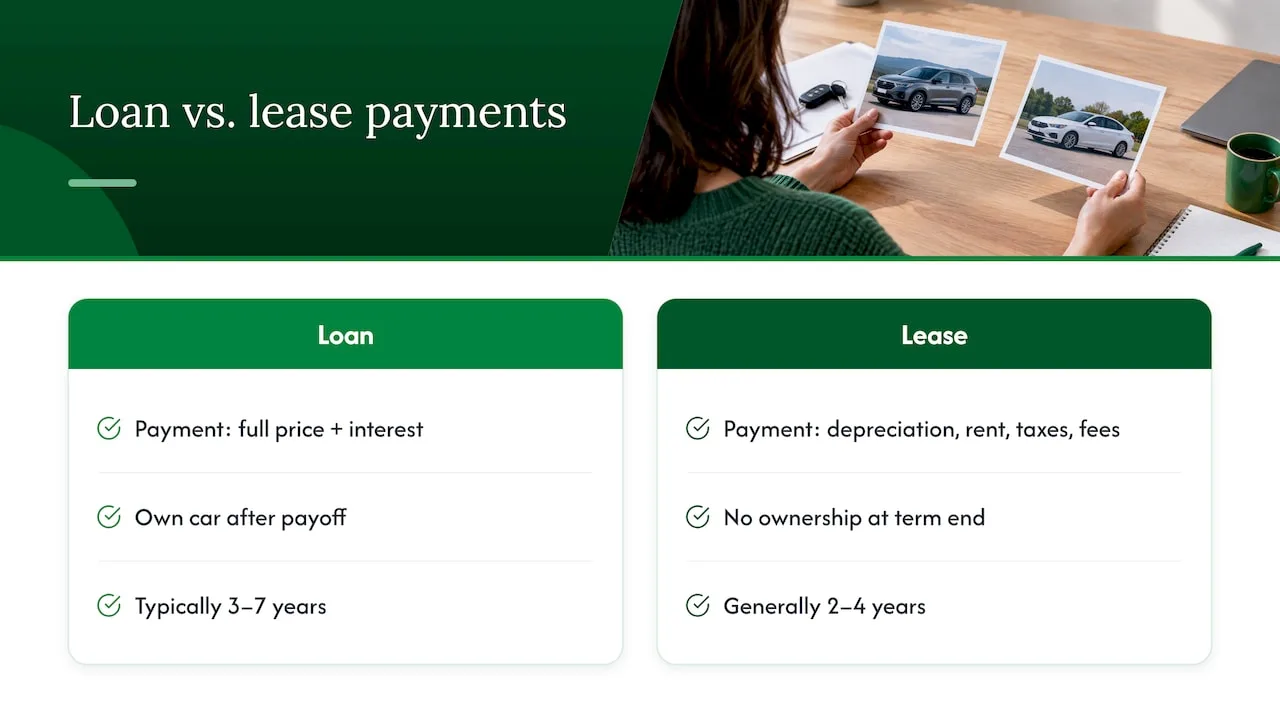
Terms differ too. The CFPB says a lease is generally a two to four year agreement, while an auto loan typically runs three to seven years.
Lease vs buy at a glance
| Leasing | Buying with a loan | |
|---|---|---|
| Monthly payment | Usually lower | Usually higher |
| Ownership | None, you return the car | Yours once the loan is paid |
| Mileage | Typically capped at 10,000 to 15,000 a year | No limit |
| Wear and tear | You can be charged for "excessive" wear | Your call, but it affects resale value |
| Ending early | Often costly | Sell or trade in, watch for negative equity |
| Long-term cost | Payments never end if you keep leasing | Payment-free driving after payoff |
| Customizing | Limited | Anything you like |
The mileage range comes from Consumer Reports. Your own contract sets the real limit, so read it.
When leasing makes sense
Leasing is not a trap. It fits a specific kind of driver.
- You want a new car every few years. If you like new technology and a car always under factory warranty, leasing delivers that.
- You drive modest miles. If your commute is short and you rarely road trip, a mileage cap is no problem.
- You want a lower monthly cost. Edmunds says leasing can suit business professionals who need an upscale vehicle for clients, since it brings a lower monthly cost and possibly tax advantages. Ask your accountant whether that applies to you.
- You are fine with always having a payment. The same Edmunds piece points out that leasing takes a mindset shift, because you will always have a car payment.
If all four sound like you, a lease may be a fine choice. Be honest about number two, because that is where most people get hurt.
The costs people miss with a lease
Wear-and-tear and mileage charges
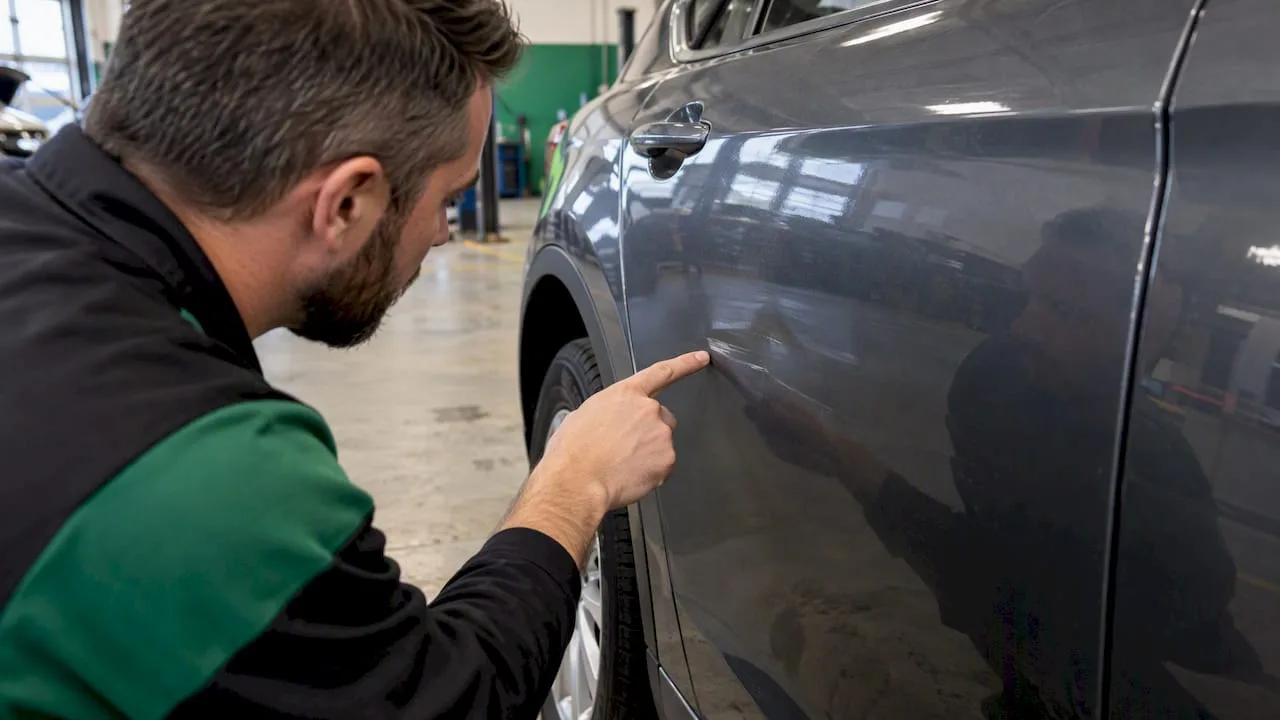
Many people think a lease means no maintenance worries. Lease cars usually stay under factory warranty, but Consumer Reports warns that you stay liable for "excessive" wear at the end of the term. That can catch you off guard if you did not keep the car to the leasing company's standards. Dings, worn tires and stained seats all count. Go over the mileage and you pay for each extra mile.
Ending a lease early
Depreciation hits hardest in the first years. The CFPB explains that ending a lease early can bring substantial early termination charges, because the car loses value faster than your payments cover. So pick a term that matches how long you will really keep the car. Do not stretch it just to shave the payment.
Open-end vs closed-end leases
Most consumer leases are closed-end: you return the car and, if you are within the mileage and wear limits, you walk away. An open-end lease is different. The end-of-term payment depends on the gap between the car's residual value and what it actually sells for, as the Federal Reserve explains. Ask which type you are signing before anything else.
When buying makes sense
Buying fits you if any of these are true:
- You drive a lot. Over 12,000 miles a year puts you in buying territory, per Consumer Reports. Tampa Bay commutes across the Howard Frankland or down US-19 add up fast.
- You keep cars a long time. Six years or more, and the payment-free years are where buying pays you back.
- You want freedom. Roof racks, tint, a new set of tires, a trade-in whenever you want. It is your car.
- You are watching the budget. A paid-off car with only insurance, fuel and maintenance costs is the lowest-cost way to get around.
Buying has traps too: the loan term
Buying is not automatically the safe choice. The trap is stretching the loan to make the payment look small. The FTC cautions that a 72 or 84 month loan raises the total cost of credit through interest and raises the risk of being underwater, owing more than the car is worth.
That is why we push people to look at total cost: price, APR, loan length, add-ons and taxes. If you want to see the difference on your own numbers, we wrote up how a 60 month loan compares with a 72 month loan, and our car payment calculator lets you test terms in a minute. If you are worried about owing more than the car is worth, read about gap insurance and your loan numbers before you sit at the finance desk.
What about leasing a used car?
The CFPB notes a lease can be on a new or used vehicle, but in practice most people see lease ads for new cars, and used leases are less common. Used buying is where the savings are easier to see. A new car loses much of its value early, and a used car has already taken that hit. You pay for a car that has done its steepest depreciating, and you can keep it as long as you like with no mileage cap.
The catch with used is condition. A history report helps but is not a mechanical check. The FTC says these reports can show things like accidents, flood damage or salvage branding but often miss existing mechanical problems, and recommends an independent mechanical inspection, even on certified pre-owned cars. Get one, whoever you buy from. That includes us.
A worked comparison to run yourself
We will not make up numbers for you, because your quotes will differ. Here is how to compare two real offers in six steps.
- Get an out-the-door price for each car. The FTC says to insist on this before talking financing, since it separates the cost of the car from the cost of credit. Our guide to calculating and negotiating the out-the-door price walks through it.
- For the lease, add everything up. Multiply the monthly payment by the number of months, then add the amount due at signing and any fees due at the end.
- For the loan, add everything up too. Monthly payment times months, plus your down payment.
- Subtract what the car is worth at the end. On the loan, estimate what you could sell it for. On the lease, that value is zero to you.
- Compare over the same stretch. If you plan to drive for eight years, compare leasing twice against one purchase plus four payment-free years.
- Stress test it. What if you drive 3,000 extra miles a year? What if you need out in year two?
Most people find the lease looks cheaper in step two and the purchase looks cheaper by step five.
Our perspective: why we steer most people toward owning
We talk to first-time buyers, parents and busy professionals every week, and the same worry comes up: "I just want to know what I will really pay." That is the question that decides lease vs buy too.
A lease payment looks small, but it hides things: a mileage cap, end-of-term charges and a payment that never goes away. A used car purchase is easier to see. The price is on the listing, with no hidden fees, and every car is hand-inspected with a history report before we list it. A real person answers every question, not a call center.
We do not offer leases. We sell used cars and arrange financing, so we are not neutral, and we will tell you when leasing fits better, like a short commute and a love of new cars. But for someone watching the budget, buying a reliable used car on a loan term you can afford, then driving it payment-free, is hard to beat. If you are in that group, tell us what you need and we will find it.
— CL Auto
How we can help if you decide to buy
If buying wins for you, start with what you can afford each month, not the car you want. Our financing page explains the in-house options with multiple lenders. It is also worth checking what counts as a good car loan rate and whether you can pay a loan off early without a penalty.
Then browse our hand-picked used cars. If you do not see what you want, our vehicle sourcing service finds a specific car for you, so you only see cars that match. Already leasing or owning a car you want out of? We also buy cars directly from individuals. Buying a car for a teenager? See our guide to a first car in Clearwater and Largo.
First, get a copy of your credit report. The FTC points you to AnnualCreditReport.com for a free one, because it affects whether you get a loan and what rate you pay.
Before you sign anything: a short checklist
- Decide how many miles you really drive in a year, using last year's odometer readings.
- Decide how many years you want to keep the car.
- Get the out-the-door price in writing.
- Look at total cost, not only the monthly payment.
- For a used car, ask for the history report and book an independent inspection.
- Read every fee line. Our piece on how buyers beat hidden dealer fees shows what to look for.
- If anything feels rushed, walk away. A good deal is still there tomorrow.
FAQ
Is leasing better than buying?
Not for most drivers. Leasing wins on lower monthly payments and a new car every few years. Buying wins on total cost over time, unlimited miles and the years you drive payment-free. Consumer Reports favors buying for people who drive over 12,000 miles a year or keep cars six years or more.
Can you lease a used car?
The CFPB says a lease can cover a new or a used vehicle. Used leases are harder to find than new ones, though, and most people looking at used cars are better served by buying one. You skip the steepest depreciation and have no mileage cap.
Why do some people say never to lease?
Mainly because a lease leaves you with no equity and, if you keep leasing, a permanent car payment. Add mileage limits, wear charges and early termination fees, and the lower payment can cost more than it first appears. For a short commute and a taste for new cars, though, a lease can make sense.
Is a longer loan a good way to lower the payment?
It lowers the payment but raises the total you pay. The FTC warns that 72 and 84 month loans add interest and increase the risk of owing more than the car is worth. A shorter term, or a less expensive car, is usually the better fix.
Sources
- Consumer Reports: Buying or Leasing a Car in 2026
- CFPB: What should I know about leasing versus buying a car?
- FTC: Financing or Leasing a Car
- FTC: Buying a Used Car From a Dealer
- Federal Reserve: End-of-Lease Costs, Open-End Leases
- Edmunds: Lease vs Buy Calculator