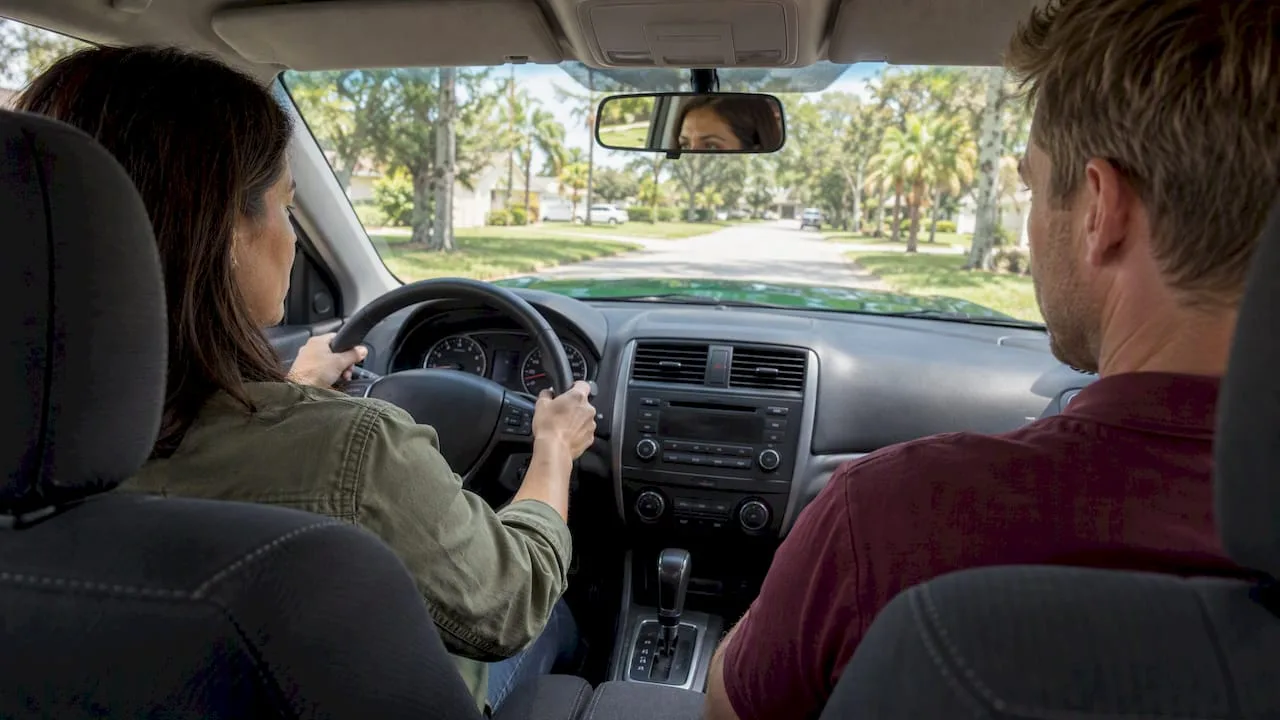
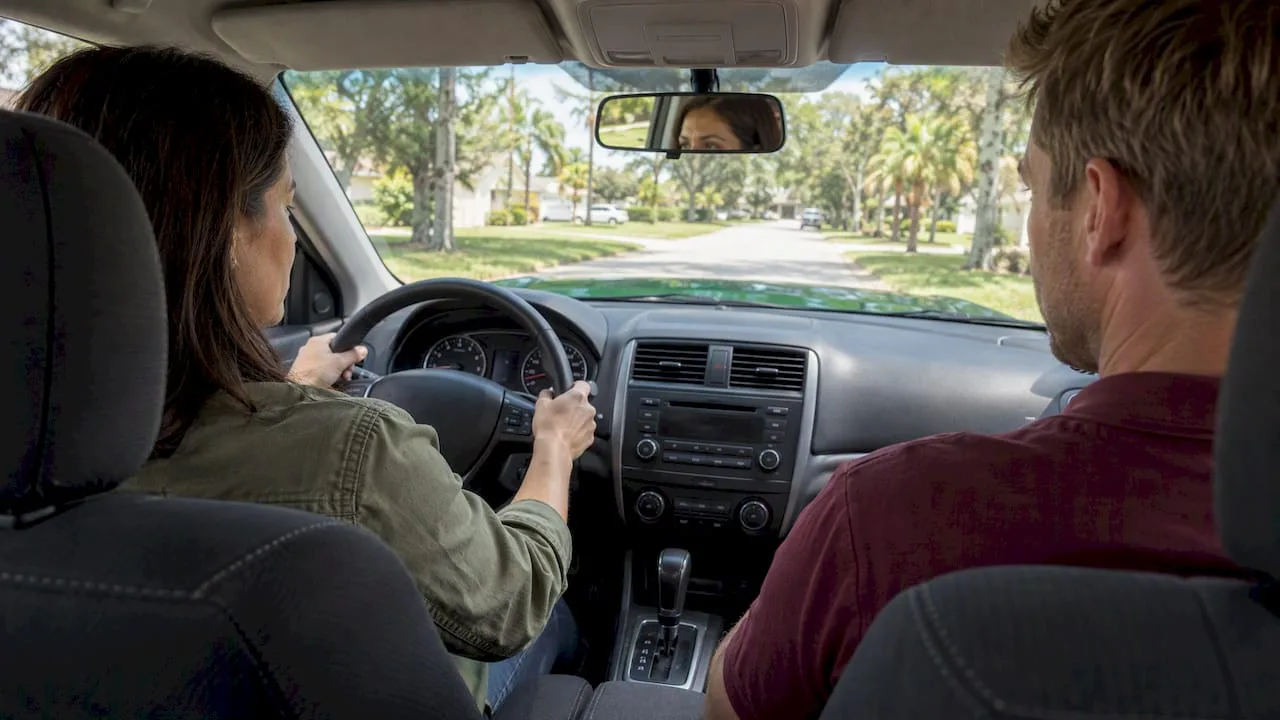
A good test drive takes about 30 minutes and has three parts: a walk-around before you turn the key, a drive on roads you choose, and a few questions and checks afterward. Skip any one of them and you are guessing. Below is the checklist we hand to first-time buyers at our Clearwater lot, in the order you should do it, with the warning signs that mean you should slow down or walk away.
TL;DR
- Look the car over while it is parked and the engine is off: panel gaps, paint, tires, interior, warning lights, and under the hood.
- Plan your own route with city streets, a bumpy stretch and a highway on-ramp, and drive with the radio off.
- Feel for harsh shifts, grabby or weak brakes, steering that wanders, and noises that do not belong.
- Ask for the Buyers Guide, the history report and any service records before you talk price.
- A test drive does not replace an independent mechanic's inspection. Book one before you sign.
Table of Contents
- What to bring to a used car test drive
- Step 1: The walk-around before you start the engine
- Step 2: Plan the route yourself
- Step 3: What to feel, hear and see while driving
- Red flags at a glance
- Questions to ask before you leave the lot
- After the drive: do not decide in the driver's seat
- Our perspective: what we want you to know
- See a car, then drive it your way
- FAQ
- Sources
What to bring to a used car test drive
A little preparation makes the drive more useful and keeps you from being rushed. Bring these:
- Your driver's license. No dealer will hand over keys without it. Kelley Blue Book's test-drive checklist lists it first, along with your phone, a charging cord and a notepad.
- Your phone and cord. You want to pair it, make a call and play music, so you know the connection works and the speakers sound right. Consumer Reports also says to test calls and music connectivity before you drive.
- Proof of insurance. Ask the seller ahead of time whether they need it. Many do not, but it is better to know.
- A friend. A second set of eyes and ears catches things you will miss while concentrating on traffic. Consumer Reports recommends bringing someone along.
- A notepad or a notes app. Write down what you notice at each step. After three cars, the details blur.
- Your own list of must-haves. Think about how you really use a car: car seats, a long commute, tight parking at a beach lot. Test those things.
If you are comparing several cars, Consumer Reports suggests scheduling the drives back-to-back. Your memory of how one car rode against another stays fresh. Call ahead to confirm each car is on the lot and is the trim you want.
Step 1: The walk-around before you start the engine
Do this parked, in daylight, with the engine off. Ask to see the car outside, not in a dim service bay. Nobody should hurry you here. At our dealership you can take as long as you need, and every inquiry goes to a real person, not a call center.
- Check panel gaps and paint. Kelley Blue Book says to look for uneven panel gaps, paint differences and rust. Gaps that are wide on one side of the hood and tight on the other, or a door that is a slightly different shade, can point to a past repair. Crouch and look along the side of the car in the light to spot ripples.
- Look at the tires. Uneven wear on the inside or outside edge can mean alignment or suspension trouble. Check all four tires and look at the brand. Four mismatched cheap tires tell you something about how the car was maintained.
- Do the bounce test. Press down hard on each corner of the car. The Tennessee Motor Vehicle Commission notes that excessive bouncing suggests the shocks need replacing. The car should settle quickly.
- Open the hood. You do not need to be a mechanic. Kelley Blue Book points to oil splatters, corrosion, and loose wires or hoses. Look at the fluid levels and the color of the oil. Do this with the engine cold, if you can. A car that has been warmed up before you arrive can hide a rough cold start.
- Sit inside and test every control. Windows, locks, mirrors, seat adjustments, climate control, wipers, turn signals, headlights, brake lights, sunroof and every USB port. Each one takes seconds, and each is a repair bill if it fails. If the car has a sunroof or moonroof, open and close it and check the listing details so you know what you are actually getting.
- Turn the key and watch the dash. Every warning light should come on briefly, then go out. A light that never comes on may have been disabled. A light that stays on needs an explanation.
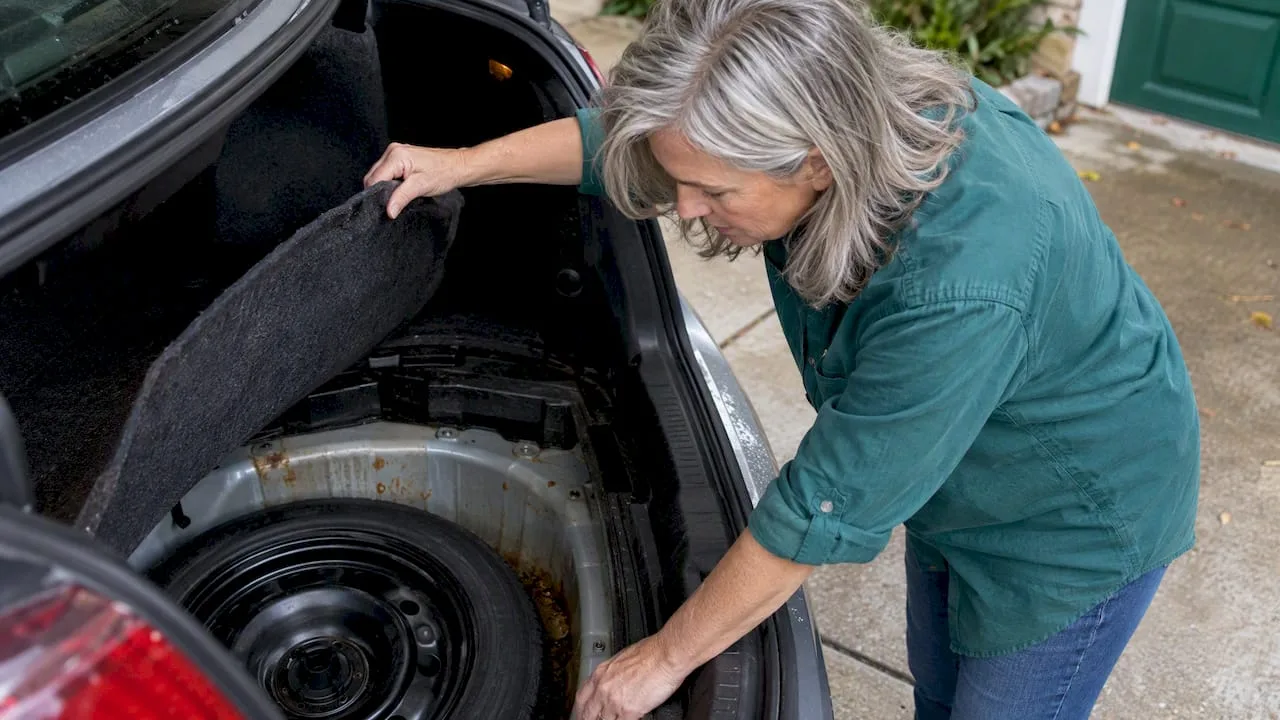
Smells, wet carpet and Florida water damage
In Tampa Bay, flood and storm damage is a real concern, so spend two extra minutes on this. Consumer Reports says musty or mildewy smells, wet carpet, and water or rust in the spare-tire well can all indicate water entry. Lift the trunk floor, press the carpet under the seats with your hand and smell the cabin with the doors closed. Heavy air freshener is a reason to look harder, not a reason to relax.
Mileage that does not add up
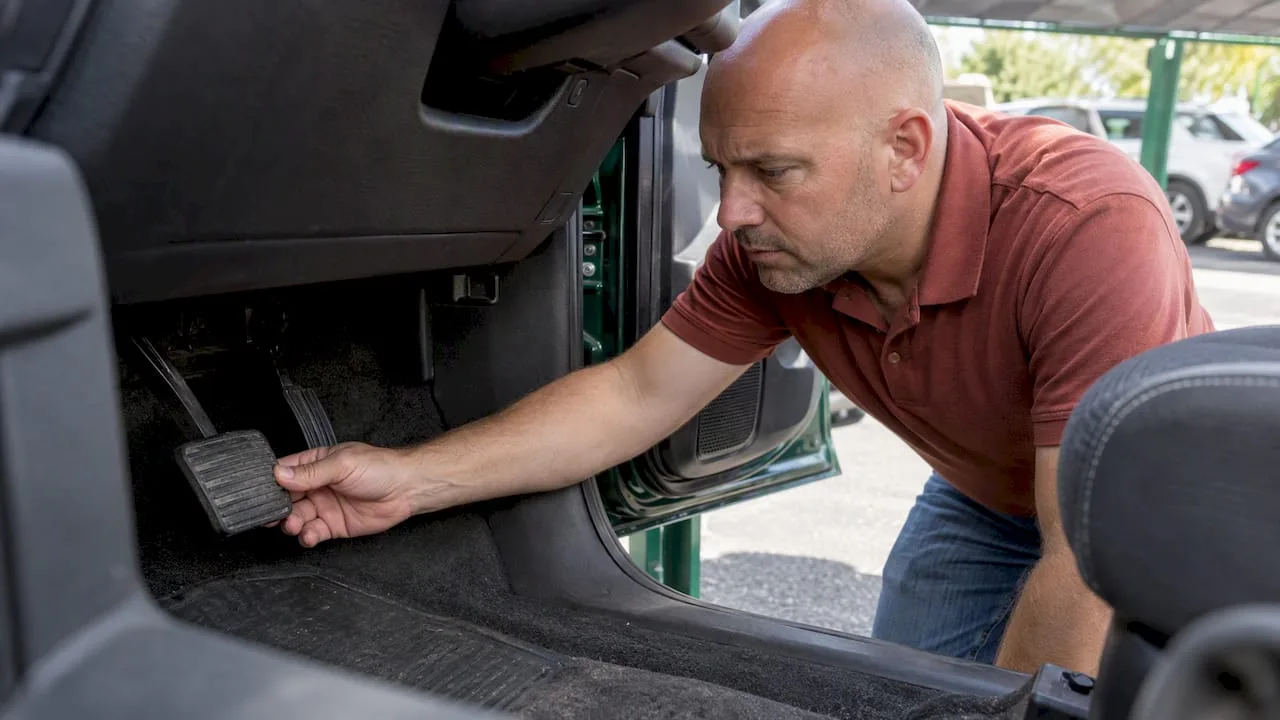
NHTSA estimates that more than 450,000 vehicles are sold each year with false odometer readings. Compare the number on the dash with the wear you see on the pedals, seat and tires, and with maintenance or inspection records. A 40,000-mile car with a shiny, worn brake pedal deserves a question. Consumer Reports also points out that a high-mileage car on a long highway commute may have less wear than one used for short, stop-and-go trips, so miles alone do not tell the whole story.
Airbag warning on previously crashed cars
If the history report shows an airbag deployment, take it seriously. In January 2026, NHTSA warned that used vehicles from crashes with deployed air bags should be inspected for substandard, illegally imported replacement inflators, which can rupture. Ask directly whether the airbags were ever replaced, who did the work and whether there is paperwork. If nobody can tell you, that is your answer.
Step 2: Plan the route yourself
Consumer Reports warns that a salesperson may suggest a route that hides a car's problems, such as a smooth, short loop. Choose your own path instead, with a mix of the following:
- A quiet street or empty parking lot for tight turns, backing up and checking visibility.
- A stretch of rough pavement. Find a patched road, a speed bump or a railroad crossing.
- Stop-and-go traffic. Roads like US-19 or Gulf-to-Bay Boulevard give you real stop-and-go driving where you can feel the transmission and brakes at work.
- A highway on-ramp and a few minutes at speed. Try the Bayside Bridge or the Courtney Campbell Causeway if you want sustained speed. You want to see how the car merges and how it feels at 60 to 65 mph.
- A hill or an overpass, if you can find one. Our part of Florida is flat, so a parking garage ramp works.
Plan on at least 20 to 30 minutes. If a seller will only allow a few blocks, treat that as information.
Step 3: What to feel, hear and see while driving
Turn the radio off, close the windows for the first half, then open them. Ask your friend to listen too. Consumer Reports says to assess acceleration, shifting, braking, steering and handling, ride comfort, cabin noise and visibility. Here is how that breaks down.
Starting and idling
The engine should start promptly and settle into a steady idle. Watch for rough shaking, smoke from the tailpipe or a smell of burning oil or coolant. Let it idle with the A/C on max for a minute and make sure it blows cold. In Florida, an A/C that struggles is not a minor flaw.
Acceleration and transmission
Press the pedal firmly, not just gently. Acceleration should be willing and smooth. Consumer Reports lists unwilling acceleration, clunks and harsh shifts as warning signs. In an automatic, shifts should be barely noticeable. A slip, a delay when you put it into drive or a sudden jerk is worth a note. If you are choosing between transmission types, our guide to used car checks for automatic and manual cars goes deeper.
Steering and tracking
On a straight, flat road, loosen your grip briefly and see whether the car holds its line. It should. Steering that needs continual corrections suggests alignment, tire or suspension problems. Turn the wheel lock to lock in a parking lot and listen for clicking, groaning or whining.
Brakes
Find a safe, empty stretch and brake firmly from about 30 mph, making sure nobody is behind you. The car should stop in a straight line. Consumer Reports flags brakes that feel too grabby or weak as a problem; you want smooth, progressive stopping. A pedal that sinks toward the floor, pulsing or squealing all count as red flags. If the steering wheel shakes when you brake, here is a rundown of likely causes of a shaking steering wheel under braking that you can mention to your mechanic.
Suspension and ride
On the rough stretch, listen for thuds, rattles and squeaks. The car should absorb bumps without floating or crashing over them. Rear-end rattles on a bump are often a loose trim piece, but sometimes they are worn suspension parts. Write down where and when you heard it.
Noise, visibility and comfort
Check blind spots, the backup camera, and how the seat feels after 20 minutes. A car can be mechanically fine and still be wrong for your body or your commute. Wind noise at highway speed, humming from the tires, or a whine that rises and falls with speed are worth noting. If the cabin is far noisier than you expect, ask why.
Red flags at a glance
| What you notice | What it may mean | What to do |
|---|---|---|
| Musty smell, damp carpet | Water entry | Look under trunk floor, consider walking away |
| Harsh or delayed shifts | Transmission wear | Ask for service records, get a mechanic's opinion |
| Pulling to one side | Alignment or tire problem, possibly a past hit | Check tires, ask about accident history |
| Soft or grabby brakes | Worn or poorly serviced brakes | Have a mechanic inspect |
| Warning light stays on | Open fault | Ask for a diagnosis in writing |
| Odometer does not match wear | Possible odometer tampering | Pull a history report and compare to service records |
| Seller limits your route | May hide a problem | Insist on your own route or move on |
Questions to ask before you leave the lot
The drive tells you how the car behaves. These questions tell you where it has been:
- Can I see the Buyers Guide? Dealers must display one on every used car, and it says whether the car is sold as-is or with a warranty. It also lists major systems and some problems to watch for. Our post on the Buyers Guide and lemon law steps explains how to read it, and if you want to understand what an as-is sale really means, see our piece on as-is car sales.
- Is there a vehicle history report, and can I read it? Look at the number of owners, the type of use, accident reports and title brands. Our guide to verifying a clean title with NMVTIS walks through it.
- Do you have service records? Regular oil changes and logged repairs are worth more than a low odometer number.
- Has the car been in an accident or had body or airbag repairs? Ask who did the work.
- Is there a warranty, and what exactly does it cover? The FTC advises getting all promises in writing, since verbal commitments are hard to enforce. If a warranty is on the table, our comparison of used car warranty providers shows what to weigh.
- What is the out-the-door price? Ask for every fee in writing. Our guide on how buyers beat hidden fees shows which line items to question.
After the drive: do not decide in the driver's seat
Sit somewhere quiet for five minutes and read your notes. Then check how you feel: did the car do everything you need, or did you talk yourself into the problems because the price looked good?
The next step matters more than the drive. A history report is not a replacement for a mechanical inspection, because reports typically do not capture current mechanical problems. The FTC says it is always a good idea to pay an independent mechanic to inspect a used car, even one that is certified and comes with a warranty. Ask the seller if you can take the car to your shop, or have a mobile mechanic come to the lot. A seller who objects deserves your suspicion. If you want to see what a thorough pre-purchase inspection covers, a long write-up on one for high-end cars shows how detailed it can get, and the same mindset applies to any car you buy.
Our perspective: what we want you to know
We buy and sell used cars every week, and most test-drive mistakes come from the same two places: being rushed and being shy. Buyers feel they should not take too long or ask too many questions. We say the opposite. Take your time, ask everything and write it down.
Here is how we handle it. Before a car goes on our lot, we inspect it by hand and pull a history report, so you see that information up front rather than having to dig for it. Every listing shows the price, with no hidden fees added at the desk. When you call or message us, a real person answers. If a car you test drive is not right, we want you to say so, and if what you want is not on the lot, we will look for it.
We would still tell you to get an independent inspection on any car you buy, from us or anyone else. A dealer who is confident in the cars should have no problem with that.
— CL Auto
See a car, then drive it your way
If you are ready to put this checklist to work, browse our used cars for sale in Clearwater, where every listing shows its price. Pick two or three, call ahead, and plan your route.
Cannot find the right model, trim or color? Tell us what you want through vehicle sourcing and we will look for it, so you only drive cars that fit your list. If you need to see what a payment looks like first, our payment calculator and financing page are good places to start. Buying for a new driver in the family? See our page on a first car for a teenager.
FAQ
What should I check during a test drive?
Check acceleration, shifting, braking, steering, ride comfort, cabin noise, visibility and comfort, as Consumer Reports outlines. Before you drive, test the controls, the warning lights and your phone's connection. Afterward, ask for the Buyers Guide and history report.
How long should a used car test drive take?
Plan on 20 to 30 minutes at least, and longer if you are serious about the car. That is enough time to drive through city streets, over a rough patch and at highway speed. If a seller wants to limit you to a short loop, ask for more time or move on.
Should I test drive a used car alone?
Bring a friend if you can. One person drives while the other listens for noises, checks the back seat and watches the dash. Consumer Reports recommends it, and a second opinion helps you stay objective about a car you like.
Is a test drive enough to know a used car is good?
No. A test drive shows how the car feels today, not what is wearing out underneath. The FTC advises an inspection by an independent mechanic even on certified cars, and a history report will not reveal current mechanical faults. Use the drive to decide whether the car is worth inspecting.
Sources
Test-Driving a Car: A Checklist, Kelley Blue Book
How to Test-Drive a New or Used Car, Consumer Reports
How to Inspect a Used Car to Avoid Costly Repairs, Consumer Reports
Buying a Used Car From a Dealer, FTC Consumer Advice
Used Car Warning: Dangerous Replaced Air Bag Inflators, NHTSA
Tips for Buying a Car, Tennessee Motor Vehicle Commission
Steering Wheel Shakes When Braking: Causes and How to Diagnose It
Pre-purchase inspection guide, Artec Automotive